
Table of Contents
In short
A host country’s ceremony does three measurable jobs: it triggers a short spending surge, it convenes heads of state, and it recruits the audience for the weeks of competition that follow.
Milano-Cortina’s 6 February 2026 ceremony drew roughly 50 heads of state and government, and 87% of international viewers told IOC researchers it left them more motivated to keep watching.
Overseas Visa cardholder visits to Italy rose more than 60% over the opening weekend, with US spending up 160% year on year.
What it does not do, on the evidence of 2026 analyses, is lift a country’s GDP permanently.
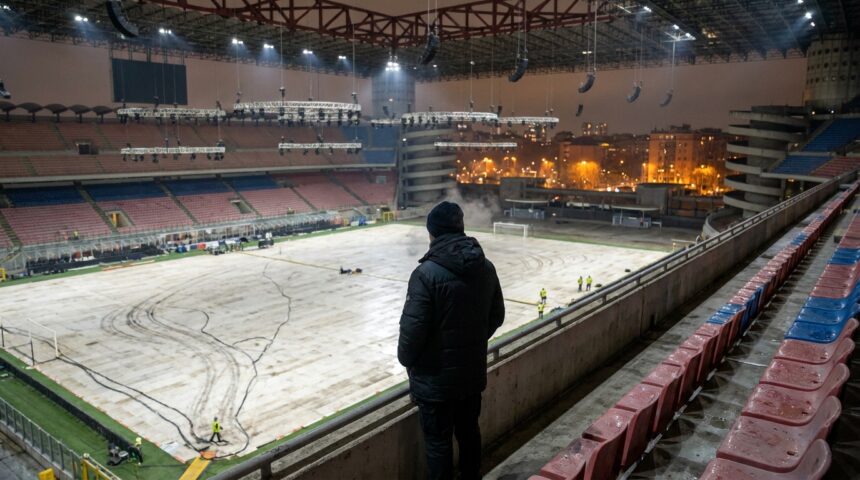
MILAN, 6 February 2026 — Italy opened the Winter Olympics with a ceremony split across four sites, Milan, Cortina, Livigno and Predazzo, directed by Marco Balich on the theme “Harmony” and covered live by CNN.
The spectacle was the smallest part of the transaction. An Opening ceremony at this scale is built to do three jobs a host government can count: open a concentrated window of visitor spending, assemble foreign leaders in one city, and hand broadcasters an audience for the fortnight. A fourth claim, that the evening helps pay for itself over time, does not survive the 2026 economic literature.
How the three hours are engineered
A host organising committee commissions the production, and the production is built to deliver a global broadcast audience, a convening of visiting heads of state, and a spending window. Four components do the work: the cultural segment, which is the host’s self-portrait for export; the parade of delegations; the protocol section, with the host head of state and the governing body’s president; and the broadcast feed sold to rights holders worldwide.
The feed is the commercial engine. Sponsors and rights holders buy an audience, so ceremony viewing figures set the baseline against which the following two weeks are sold. That logic now runs through a single production house: Balich Wonder Studio directed Milano-Cortina’s ceremony and the three 2026 World Cup ceremonies — one studio, two tournaments, the same design grammar.
The diplomatic mechanics are separate and deliberate. A guest list concentrates dozens of leaders in one city for roughly 48 hours, which compresses bilateral business that would otherwise need its own summits. Italy’s foreign ministry treated this as policy rather than protocol, establishing an Office for Sports Diplomacy around the Games — the same instinct that drives states to use shared institutions to trade economic integration and political sovereignty for access.
Both 2026 events also broke the single-stadium model. Milano-Cortina used four sites; FIFA staged three ceremonies in Mexico City, Toronto and Los Angeles in June 2026. The format was designed to reflect “the individuality of each nation and the unity that defines this tournament,” FIFA president Gianni Infantino said.
Milano-Cortina, 6 February 2026
Italy measured the evening rather than reviewed it. Around 50 heads of state and government attended, according to the foreign ministry, and the payments data arrived within days.
Visa published VisaNet figures analysed by Visa Consulting & Analytics. Antony Cahill, chief executive of Visa Europe, reported that overseas cardholder visits rose by more than 60% across the opening weekend, with American cardholders leading on spending and further increases from Chinese, Brazilian and Canadian visitors. The travel demand had been building before anyone lit a cauldron: in January 2026, Paysafe reported flight bookings to Northern Italy up more than 160% on the previous winter. The ceremony date anchors the travel calendar, and the bookings move toward it.
The audience research tells the commercial half of the story. An IOC Insight & Analytics survey across 14 countries found 90% global approval for the ceremony, with 87% of international viewers and 83% of Italian viewers saying it left them more motivated to follow the rest of the Games. For a host, that is not a reputational statistic. Broadcasters and sponsors buy the fortnight on the strength of night one.
Then there is the political framing, which belongs in quotation marks. Antonio Tajani, Italy’s foreign minister, called the event a “powerful instrument of soft power, delivering a durable strengthening of Italy’s international positioning,” and put the overall economic impact of the Games at €5.3 billion. That last figure is a projection by the government that staged the event, not an audited outcome.
| Indicator | Figure | Source |
|---|---|---|
| Overseas Visa cardholder visits, opening weekend | +60% or more | Visa / VisaNet, analysed by VCA |
| US cardholder spending, year on year | +160% | Visa / VisaNet, analysed by VCA |
| Flight bookings to Northern Italy vs previous winter | +160% or more | Paysafe, January 2026 |
| Heads of state and government attending | Approx. 50 | Italian Ministry of Foreign Affairs |
| Global approval rating of the ceremony | 90% | IOC Insight & Analytics, 14 countries |
| International viewers more motivated to keep watching | 87% | IOC Insight & Analytics |
| Projected economic impact of the Games | €5.3 billion (projection) | Antonio Tajani, Italian foreign minister |
Why the numbers matter outside the host city
Ceremonies are financed, directly or indirectly, from host budgets. What they return is a fiscal question before it is a cultural one, and the answer determines whether the next bid gets public support.
The spending surge is real and time-boxed. Hospitality operators, airlines and payment processors plan capacity around the ceremony date because demand peaks there — Paysafe’s booking data moved ahead of 6 February, not after it. A fortnight of compressed consumption is a useful stimulus for a region and a rounding error in national accounts, which is roughly how it fits into the global trade-offs facing central banks in 2026.
For readers following world affairs, the guest list is the story. Fifty leaders in one city produce meetings that would otherwise require separate summits, and Italy institutionalised that function instead of improvising it.
Employment claims need the same care. Deloitte estimated Canada’s World Cup participation and hosting duties at up to C$3.8 billion in output, C$2 billion added to GDP and 24,000 jobs created or preserved. Those are modelled estimates tied to an entire tournament, not to one evening’s production.
Four things hosts get wrong about it
It pays for itself over time. A February 2026 Council on Foreign Relations analysis found short-term gains in international trade but no permanent economic lift from hosting; economists Stephen Billings and Scott Holladay record “no long-term impact of hosting on a country’s GDP.”
The official impact number is the number. Independent estimates put the 2026 World Cup’s economic impact near $9 billion, roughly a third of FIFA’s $41 billion projection. The gap is methodological, and organiser forecasts should be read as advocacy documents.
Splitting the ceremony across cities makes it greener. A July 2026 study in MDPI named the “paradox of decentralised sustainability”: reusing venues in several cities avoids new construction, but international travel and inter-site transit offset much of the saving. The accounting problem is the same one that made Belém a benchmark for global climate finance — who counts what, and when.
It’s only a show. The IOC’s own retention data says otherwise. The evening is the recruitment mechanism for everything that follows.
World Bank Poverty: Mission, Goals & Impact on Global Inequality
- Approximately $41 billion in economic impact for the 2026 World Cup
- Approximately $9 billion — close to three times lower
- Deloitte's narrower model: C$3.8 billion output and 24,000 jobs for Canada
FAQ
Who pays for an Olympic or World Cup opening ceremony?
The host organising committee, funded through a mix of public budgets, governing-body contributions and sponsorship. Production is contracted out: Balich Wonder Studio handled both Milano-Cortina 2026 and the three 2026 World Cup ceremonies. Itemised ceremony costs are rarely published separately from overall Games budgets, so the true unit price is usually unavailable.
Why did the 2026 World Cup hold three opening ceremonies?
Because the tournament had three host countries. FIFA staged ceremonies in Mexico City, Toronto and Los Angeles in June 2026, a format Infantino said reflected “the individuality of each nation and the unity that defines this tournament.” Mexico used the Azteca Stadium event to put indigenous culture and the paper-cut craft of papel picado in front of a global audience.
How is the success of a ceremony actually measured?
By audience research, payments data and attendance, not reviews. The IOC’s Insight & Analytics survey across 14 countries recorded 90% approval and 87% of international viewers more motivated to keep watching. Visa’s VisaNet data, analysed by Visa Consulting & Analytics, tracked cardholder visits and spending over the opening weekend.
Do smaller events run ceremonies the same way?
The template scales down and the functions hold. The Dakar 2026 Youth Olympic Games opened with a ceremony combining cultural performance with protocol for the first African Olympic host, while esports and chess world championships now open with staged events for the same broadcast and sponsor reasons.
The bottom line
Three functions survive measurement: the spending window, the diplomatic convening, the audience handover. The fourth, permanent economic transformation, does not, and the 2026 evidence from Milan and from North America points the same way.
The practical test for the next host is simple. Publish the measured figures after the event alongside the projections made before it, line by line, and let the difference stand. Until a host does that, every Opening ceremony will be sold on forecasts and judged on applause.