
Table of Contents
- What Manila Settled: The Outcome Documents That Carry Machinery
- The ASEAN Maritime Center: A Knowledge Hub, Not a Coast Guard
- The Economic Deliverables: Trade Rules That Took Effect, Not Just Signed
- Myanmar: Reaffirmation Is Not Resolution
- Trump, the Quad and the East Asia Summit: How Outside Powers Showed Up
- What Singapore Inherits: Theme, Priorities and a 60th Anniversary
- The single-market push and the energy and digital links behind it
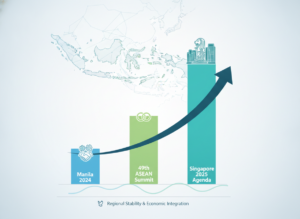
- Manila 2026 Versus Singapore 2027: A Transfer of Responsibility, Not a Reset
- Limitations of This Assessment, and What Could Change It
- Frequently Asked Questions
- Conclusion
- References
Key Takeaway
>
After Manila: What the 49th ASEAN Summit Settled, and What Singapore Inherits comes down to four things.
>
- The summit ran November 15–17, 2026 in Manila under the Philippine theme “Navigating Our Future, Together” and closed with more than 100 outcome documents and 19 priority economic deliverables.
- Concrete settlements included the ASEAN Maritime Center terms of reference, a leaders’ declaration on AI-enabled online child sexual abuse material, the handover of the ASEAN Digital Economy Framework Agreement, and early entry into force of the upgraded ASEAN Trade in Goods Agreement and ASEAN-China FTA 3.0.
- Myanmar remained unsettled; leaders only reaffirmed continued implementation of the Five-Point Consensus.
- Singapore took the chair effective January 1, 2027 under the theme “Deeper Integration, Wider Partnerships”, in ASEAN’s 60th anniversary year.
MANILA / SINGAPORE — November 19, 2026. The 49th ASEAN Summit and Related Summits convened in Manila from November 15 to 17, 2026, hosted by Philippine President Ferdinand Marcos Jr., and closed with more than 100 adopted outcome documents and 19 priority economic deliverables, according to the ASEAN Secretariat’s record of the summit. The Philippines held the 2026 chair only because Myanmar skipped its turn due to its domestic conflict — a sequencing change that consequently moved Singapore’s turn into 2027.
After Manila: What the 49th ASEAN Summit Settled, and What Singapore Inherits separates the agreements that now have institutional machinery behind them from the ones that remain declarations. That distinction is the whole story of the handover, and it is the lens INQ Daily’s world affairs coverage applies to summit outcomes generally. Singapore takes the chair on January 1, 2027 under the theme “Deeper Integration, Wider Partnerships”.
About this analysis
>
This is a news analysis built from official summit documentation, host-government statements and published think-tank assessment, all dated November 2026. It assesses adopted text and declared intent, not implementation, because implementation data for the Manila outcomes does not yet exist.
Transparency note
>
Every date, figure, theme and named official in this article is drawn from the sources listed at the end. Where document counts differ between national hosts and the ASEAN Secretariat, the discrepancy is flagged rather than averaged.
What Manila Settled: The Outcome Documents That Carry Machinery
The 49th ASEAN Summit settled four things with institutional follow-through: the ASEAN Maritime Center concept note and terms of reference, the leaders’ declaration on preventing online and AI-enabled child sexual abuse material, the handover of the ASEAN Digital Economy Framework Agreement, and the early entry into force of both the upgraded ASEAN Trade in Goods Agreement and the ASEAN-China Free Trade Agreement 3.0.
| Outcome | Type | Status after Manila |
|---|---|---|
| ASEAN Maritime Center | Concept note and terms of reference | Adopted; mandate established |
| Declaration on online/AI-enabled child sexual abuse material | Leaders’ declaration | Adopted; no enforcement mechanism |
| ASEAN Digital Economy Framework Agreement | Framework agreement | Handed over, not concluded |
| Upgraded ASEAN Trade in Goods Agreement | Binding trade agreement | Early entry into force |
| ASEAN-China Free Trade Agreement 3.0 | Binding trade agreement | Early entry into force |
| Myanmar Five-Point Consensus | Leaders’ decision on implementation | Reaffirmed; no new mechanism |
| Updated ASEAN emblem and flag | Symbolic | Unveiled and raised |
A terms-of-reference adoption carries more weight than a communiqué line because terms of reference create a standing body with a defined mandate, staffing and a reporting line, which means the Maritime Center outlives the Philippine chairship rather than expiring with it. Marcos Jr. described the chairship as “successful” and “impactful” and framed the agreements as actionable frameworks rather than documents, per the Philippine News Agency’s summit wrap. That framing is defensible for the instruments above the line in the table, and rhetorical for those below it.
The document count was not accidental. Manila organised its year around three pillars — Peace and Security Anchors, Prosperity Corridors, and People Empowerment — and each pillar produced its own instruments. Peace and Security Anchors delivered the Maritime Center. Prosperity Corridors produced the 19 economic deliverables and the trade agreements. People Empowerment produced the child protection declaration, which addresses AI-generated exploitation material directly, as the Philippine Daily Inquirer reported from the summit floor. The updated emblem and the ceremonial raising of the updated flag belong in a separate category: they carry no operational or legal effect.
The ASEAN Maritime Center: A Knowledge Hub, Not a Coast Guard
Leaders adopted the concept note and terms of reference for the ASEAN Maritime Center in Manila. The ASEAN Maritime Center is a regional knowledge hub mandated to promote evidence-based policymaking and provide advisory support on maritime security and cooperation. It is therefore an advisory and research body with no enforcement, patrol or arbitration function.
The driver was chair prerogative. The Philippines, as 2026 chair and as the claimant state most exposed to maritime incidents, used its agenda-setting power to institutionalise maritime policy work, because a standing center survives chair rotation in a way that a single chairman’s statement does not. Consequently the item did not stay inside the Peace and Security Anchors pillar as a declaratory commitment; it moved into a permanent structure with a mandate that the 2027 and 2028 chairs inherit whether or not maritime security ranks among their own priorities.
The limitation is equally clear. An advisory hub does not change behaviour at sea, which means incident management remains bilateral between the states involved, and the Code of Conduct negotiation track remains institutionally separate from the center. The center’s practical value will be measured by one thing: whether member states actually route contested maritime questions through its analysis, or route around it.
The Economic Deliverables: Trade Rules That Took Effect, Not Just Signed
Nineteen priority economic deliverables were completed under the 2026 Philippine chairship. The summit celebrated early entry into force of the upgraded ASEAN Trade in Goods Agreement and the ASEAN-China Free Trade Agreement 3.0, and handed over the ASEAN Digital Economy Framework Agreement. Which means the goods track is now operative, while the digital track passes to Singapore unfinished.
| Instrument | Coverage | Status at handover | Who carries it in 2027 |
|---|---|---|---|
| Upgraded ASEAN Trade in Goods Agreement | Intra-ASEAN goods trade | Early entry into force | Implementation by member states |
| ASEAN-China Free Trade Agreement 3.0 | ASEAN-China goods and related chapters | Early entry into force | Implementation by member states |
| ASEAN Digital Economy Framework Agreement | Digital economy rules | Handed over, not concluded | Singapore as 2027 chair |
The cause of the acceleration sits outside the region. A fragmenting global trading order and tariff volatility raised the value of a predictable intra-regional rulebook, driven by external pressure rather than by any sudden internal appetite for liberalisation, resulting in members moving ratification ahead of schedule rather than letting it drift across two chairmanships. The consequence lands with firms rather than governments: a single upgraded goods agreement reduces documentation burden and rules-of-origin friction, therefore the compliance saving accrues to exporters and their logistics providers. Governments absorbed the political cost of ratification; traders collect the return.
The Digital Economy Framework Agreement is the harder file because it touches cross-border data flows, payments infrastructure and ten sets of domestic regulators with incompatible mandates and different appetites for data localisation. That is precisely why it was handed over rather than concluded.
Myanmar: Reaffirmation Is Not Resolution
Manila did not resolve Myanmar. Leaders adopted a decision on the continued implementation of the Five-Point Consensus amid the ongoing civil war, and announced no new mechanism, no timeline and no enforcement step alongside it.
The cause is structural rather than political. ASEAN decides by consensus, therefore any measure stronger than reaffirmation requires the assent of members that reject setting any precedent for intervention in a member state’s internal affairs. The consequence is a standing instrument with no compliance lever attached: the Five-Point Consensus remains the bloc’s declared position on Myanmar while containing nothing that converts non-compliance into cost.
The sequencing effect is the one real change. Because Myanmar skipped its 2026 chairship, the Philippines chaired 2026 and Singapore chairs 2027, which means the chair rotation itself has functioned as the bloc’s most concrete instrument of pressure — a denial of status rather than a sanction. Singapore therefore inherits the file exactly as Manila held it, without a reset.
Trump, the Quad and the East Asia Summit: How Outside Powers Showed Up
U.S. President Donald Trump arrived in Manila on November 17, 2026, attended a dinner with ASEAN heads of state, held bilateral meetings with the Philippines and with Thailand, and hosted an in-person meeting of Quad leaders — but delegated the East Asia Summit to Under Secretary of State for Political Affairs Allison Hooker, according to Philippine Star’s account of his visit.
The U.S. engagement pattern in Manila, November 17, 2026
- Attended a dinner with ASEAN heads of state
- Held bilateral meetings with the Philippines and with Thailand
- Hosted an in-person meeting of Quad leaders (United States, Australia, India, Japan)
- Skipped the East Asia Summit, delegating it to Under Secretary of State for Political Affairs Allison Hooker
Analysis from the Center for Strategic and International Studies reads that split as evidence of a continuing shift toward minilateral frameworks: subcabinet representation at the EAS, set against leader-level participation in the Quad and in bilaterals, indicates where Washington expects decisions to be made. The effect on ASEAN is direct and uncomfortable. The bloc’s convening power still pulls heads of government into the host city, because the summit calendar creates the diplomatic occasion, but it no longer reliably pulls them to ASEAN’s own multilateral table. As a result, the practical content of ASEAN centrality erodes while the rhetoric survives intact in every communiqué.
This is the condition Singapore chairs into, not a risk it might face. It explains why Prime Minister Lawrence Wong’s framing emphasises keeping ASEAN an open and inclusive platform rather than a venue for great-power competition — a defensive formulation chosen because the alternative is already visible.
What Singapore Inherits: Theme, Priorities and a 60th Anniversary
After Manila: What the 49th ASEAN Summit Settled, and What Singapore Inherits resolves, on the Singapore side, into a dated handover: the Philippines transferred the chairmanship on November 17, 2026, effective January 1, 2027. Prime Minister Lawrence Wong announced the theme “Deeper Integration, Wider Partnerships”, as CNA reported from Manila. The chairmanship falls in ASEAN’s 60th anniversary year.
Singapore’s four stated priorities for the 2027 chairmanship
- Move toward a true single regional market for goods, services, work and investment
- Accelerate the region’s shift to cleaner energy, building on ASEAN Power Grid work
- Strengthen regional links in finance and digital technologies
- Keep ASEAN an open and inclusive platform rather than a venue for great-power competition
The single-market push and the energy and digital links behind it
Wong’s single-market language is specific: businesses operating seamlessly across borders, and citizens able to work and invest across the region without friction. He tied that goal to two enablers — accelerating the shift to cleaner energy, and strengthening regional links in finance and digital technology. Neither enabler starts from zero. Both build directly on the ASEAN Power Grid discussions and on the Digital Economy Framework Agreement advanced under the Philippine chairship, therefore 2027 is continuation work carrying a deadline rather than a new programme. The inheritance is the agenda; what Singapore adds is the pressure to finish it inside twelve months.
| Milestone | Anniversary | Why it matters in 2027 |
|---|---|---|
| Founding of ASEAN | 60th | Anchors the chairmanship theme and summit calendar |
| ASEAN-United States relations | 50th | Dated occasion to seek U.S. commitments |
| ASEAN-Canada relations | 50th | Dated occasion to seek Canadian commitments |
| ASEAN-European Union relations | 50th | Dated occasion to seek EU commitments |
| ASEAN Plus Three mechanism | 30th | Re-engages China, Japan and South Korea |
Wong’s stated logic is that ASEAN cannot control external geopolitical developments but it can control its response, therefore deeper economic integration becomes the lever that makes the bloc a more valuable partner to the world rather than a contested space within it. The anniversary calendar compiled by Singapore Business Review hands Singapore unusual leverage over partner commitments, because three 50th anniversaries and one 30th anniversary all fall inside a single chairmanship year, and each one creates a scheduled moment at which a partner is expected to arrive with something to offer.
Manila 2026 Versus Singapore 2027: A Transfer of Responsibility, Not a Reset
Singapore inherits a working framework rather than a blank agenda, which analysts describe as a transfer of responsibility rather than a reset. The evidence is in the files themselves: the Maritime Center, the Digital Economy Framework Agreement and the Five-Point Consensus decision all cross the handover intact, therefore the 2027 agenda is defined largely by Manila’s unfinished business rather than by Singapore’s preferences.
| Dimension | Philippines 2026 | Singapore 2027 |
|---|---|---|
| Theme | “Navigating Our Future, Together” | “Deeper Integration, Wider Partnerships” |
| Chair | President Ferdinand Marcos Jr. | Prime Minister Lawrence Wong |
| Summit or term dates | Summit November 15–17, 2026 | Term from January 1, 2027 |
| Lead priority | Peace and security, prosperity, people | Single regional market |
| Flagship deliverable | ASEAN Maritime Center terms of reference | Not stated |
| Principal constraint | Myanmar consensus deadlock | U.S.-China competition |
The single hardest constraint is identifiable now. Singapore’s primary challenge in 2027 is holding consensus together while finalising complex economic frameworks under sustained U.S.-China competition, an assessment echoed in Lowy Institute analysis of the handover. The mechanism is worth stating plainly: economic integration requires domestic regulatory concessions from ten members with sharply different exposure to each great power, consequently every integration step — data rules, payments, grid interconnection — becomes a geopolitical choice as well as a technical one. That is why the chair’s convening skill will matter more in 2027 than its drafting skill.
Limitations of This Assessment, and What Could Change It
Summit outcomes are assessed here on adopted text and official statements, not on implementation, because implementation data does not yet exist nineteen days after the handover. Full outcome documents are released over a period of weeks, therefore document counts cited by national hosts and by the ASEAN Secretariat sometimes differ, and the figure of “more than 100” should be read as an order of magnitude rather than a ledger total.
What remains unverified as of November 19, 2026
- The ASEAN Maritime Center’s budget, host location and staffing are not public, so its operational weight cannot be judged yet
- Entry-into-force dates and ratification status vary by member state for the upgraded trade agreements
- No timeline has been published for concluding the ASEAN Digital Economy Framework Agreement under the Singapore chair
- The Five-Point Consensus decision contains no compliance mechanism, so progress on Myanmar cannot be measured against it
- Alternative reading: analysts who weight minilateral frameworks more heavily argue that leader-level Quad engagement alongside sub-cabinet EAS attendance signals a structural, not episodic, downgrading of ASEAN-led formats
Frequently Asked Questions
What did the 49th ASEAN Summit achieve?
It adopted more than 100 outcome documents and completed 19 priority economic deliverables. The clearest answer to After Manila: What the 49th ASEAN Summit Settled, and What Singapore Inherits is three concrete items: the ASEAN Maritime Center terms of reference, the leaders’ declaration on AI-era online child sexual abuse material, and two trade agreements entering force early. The summit ran November 15–17, 2026.
Who hosted the 49th ASEAN Summit and when was it held?
The Philippines hosted it in Manila from November 15 to 17, 2026. President Ferdinand Marcos Jr. chaired the summit under the theme “Navigating Our Future, Together”. The Philippines held the 2026 chairship because Myanmar skipped its turn due to its ongoing domestic conflict, which shifted the rotation and moved Singapore’s chairmanship into 2027.
What is the ASEAN Maritime Center?
It is a regional knowledge hub whose concept note and terms of reference were adopted in Manila. Its mandate is to promote evidence-based policymaking and provide advisory support on maritime security and cooperation. It has no enforcement or patrol role, therefore incident management at sea stays with national authorities and bilateral channels rather than passing to the center.
Which country chairs ASEAN in 2027?
Singapore, effective January 1, 2027. The Philippines handed over the chairmanship on November 17, 2026 at the close of the Manila summit. Prime Minister Lawrence Wong announced the theme “Deeper Integration, Wider Partnerships”. The term is significant because 2027 is ASEAN’s 60th anniversary year, which concentrates the bloc’s commemorative diplomacy in a single chairmanship.
What are Singapore’s priorities as ASEAN chair in 2027?
Four: a true single regional market, acceleration of the shift to cleaner energy, stronger regional finance and digital links, and keeping ASEAN an open and inclusive platform rather than a venue for great-power competition. The driver is Wong’s stated position that ASEAN cannot control external geopolitics but can control its response, therefore deeper integration is the lever available to it.
Did the Manila summit resolve the Myanmar crisis?
No. Leaders adopted a decision on continued implementation of the Five-Point Consensus and nothing stronger, because consensus decision-making prevents any measure that members read as intervention in a member state’s internal affairs. No new mechanism, timeline or enforcement step accompanied the decision. As a result, the file passes to Singapore unchanged.
Did Donald Trump attend the East Asia Summit in Manila?
No. Trump arrived in Manila on November 17, 2026, attended a dinner with ASEAN heads of state, held bilateral meetings with the Philippines and Thailand, and hosted an in-person Quad leaders’ meeting with Australia, India and Japan. He delegated the East Asia Summit to Under Secretary of State for Political Affairs Allison Hooker.
Which ASEAN trade agreements entered into force around the 2026 summit?
The upgraded ASEAN Trade in Goods Agreement and the ASEAN-China Free Trade Agreement 3.0 both achieved early entry into force. The ASEAN Digital Economy Framework Agreement was handed over rather than concluded, because it touches cross-border data flows and payments regulation across ten different domestic regulatory regimes with incompatible mandates.
What does ASEAN’s 60th anniversary in 2027 mean for the chairmanship?
It concentrates diplomatic leverage into one year. 2027 marks ASEAN’s 60th anniversary, the 50th anniversaries of relations with the United States, Canada and the European Union, and the 30th anniversary of the ASEAN Plus Three mechanism. That gives Singapore four dated occasions on which to press partners for concrete commitments.
Why did the ASEAN emblem and flag change?
The Manila summit unveiled an updated ASEAN emblem and ceremonially raised the updated flag as part of an identity refresh ahead of the bloc’s 60th anniversary. The change is symbolic and carries no operational or legal effect on member obligations, institutional structure or the bloc’s decision-making procedures.
Conclusion
Manila converted a crowded agenda into standing institutions on maritime policy, child protection and goods trade, while leaving the two hardest files — digital economy rules and Myanmar — to its successor. Therefore the document count is a weak measure of the chairship. The terms of reference are the strong one, because they bind a mandate to a structure that outlasts the chair that created it.
After Manila: What the 49th ASEAN Summit Settled, and What Singapore Inherits will be judged on one measurable test in 2027: whether the Digital Economy Framework Agreement is concluded and the single-market language becomes binding text, or whether the 60th anniversary year produces another set of declarations. Follow the file through daily international news briefings.
References
- ASEAN Secretariat — 49th ASEAN Summit and Related Summits (summit dates, host, theme, outcome document count, chairmanship handover). Link
- Philippine News Agency — Marcos Jr. on the 2026 chairship and the 19 priority economic deliverables (November 2026). Link
- Philippine Daily Inquirer — ASEAN Maritime Center terms of reference and the leaders’ declaration on online and AI-enabled child sexual abuse material (November 2026). Link
- Philippine Star — Trump’s Manila programme, November 17, 2026: ASEAN leaders’ dinner, bilaterals, Quad meeting, East Asia Summit delegation. Link
- Center for Strategic and International Studies — analysis of U.S. representation levels and the shift toward minilateral frameworks (November 2026). Link
- CNA (Channel NewsAsia) — PM Lawrence Wong on the “Deeper Integration, Wider Partnerships” theme and Singapore’s single-market, energy and digital priorities. Link
- Singapore Business Review — the 2027 anniversary calendar: ASEAN at 60, 50 years with the United States, Canada and the European Union, 30 years of ASEAN Plus Three. Link
- Lowy Institute — assessment of the handover as a transfer of responsibility rather than a reset, and U.S.-China competition as Singapore’s central 2027 constraint. Link