
Table of Contents
- Introduction
- Yemen-Saudi War October 2026: What Has Happened So Far — The Essential Developments
- How the Conflict Reached This Point: The 2025–2026 Southern Campaign
- The September 2026 Houthi Offensive on the Red Sea Coast
- September 2026: the Houthi West Coast offensive, day by day
- Operation 'Dawn of Yemen': The Saudi-Backed Counteroffensive
- Operation 'Dawn of Yemen': key milestones
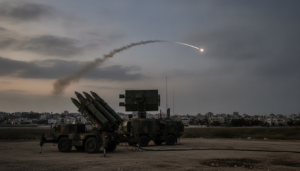
- The Strikes Inside Saudi Arabia: Riyadh, Dammam and a Shutdown of Air Traffic
- Who Else Is Involved: Troop Deployments, Iranian Mediation and Israeli Pressure
- The Humanitarian Toll: 217,000 Displaced and a Rising Migration Flow
- Key humanitarian figures (IOM, October 2026)
- What Analysts Say: Air Defence Gaps and the Houthi Bid to Rewrite the Rules
- Frequently Asked Questions
- What Remains Unverified, and How to Read These Figures
- Specific limitations in this reporting
- Conclusion
- References
Yemen-Saudi War October 2026: What Has Happened So Far
Yemen-Saudi War October 2026: What Has Happened So Far — the 2022 truce has collapsed, the Houthis have struck Riyadh’s main airport, and a Saudi-backed ground counteroffensive is under way.
>
- September 3–14, 2026: Houthi forces captured Mokha, Dhubab and Perim (Mayyun) Island, placing them on both approaches to the Bab al-Mandab Strait.
- October 4–9, 2026: President Rashad al-Alimi announced Operation “Dawn of Yemen”; coalition-backed forces said they retook Perim Island by October 9.
- October 10, 2026: A Houthi missile strike on King Khalid International Airport in Riyadh killed 13 people and wounded more than 300; flights were suspended until October 17.
- October 12, 2026: IOM reported more than 217,000 people displaced since the West Coast fighting escalated, with over 55% trapped in Taiz Governorate.
Introduction
As of October 13, 2026, the question of Yemen-Saudi War October 2026: What Has Happened So Far has a short answer: the de facto truce that held since 2022 has broken down, and the fighting has moved from Yemen’s Red Sea coast into Saudi Arabia’s cities. The single most consequential event came on October 10, when a Houthi missile strike on King Khalid International Airport in Riyadh killed 13 people and wounded more than 300, forcing the Kingdom to suspend all flights at its primary international gateway until October 17.
The escalation followed a clear causal chain. Houthi coastal gains in September placed the group on both approaches to the Bab al-Mandab Strait, which allowed a blockade on Saudi-linked shipping and rerouted Saudi tankers via Suez. That commercial pressure triggered the October 4 ground counteroffensive, and because the Houthis began losing coastal terrain, they shifted from ground defence to long-range strikes on Saudi infrastructure. This article covers events through October 13, 2026; for updates after that date, follow INQ Daily world affairs coverage.
About this report: Compiled by the INQ Daily world affairs desk. All events are dateline-led and attributed to the originating source — the International Organization for Migration, the Saudi-led coalition spokesman, named government officials, or the news organisations listed in the References section.
Transparency note: This is live conflict reporting. Battlefield control claims, casualty totals and displacement figures are attributed to their sources rather than stated as settled fact. See “What Remains Unverified” below for the specific evidentiary limits.
Yemen-Saudi War October 2026: What Has Happened So Far — The Essential Developments
Yemen-Saudi War October 2026: What Has Happened So Far centres on two sides and one broken truce. The Houthis (Ansar Allah) hold Sana’a and much of the north; the Saudi-backed Presidential Leadership Council under Rashad al-Alimi holds Aden and the south. The de facto truce that had largely held since 2022 collapsed with the Houthi West Coast offensive launched on September 3, 2026.
October compressed a year of escalation into ten days. On October 4, al-Alimi announced Operation “Dawn of Yemen”, and the Saudi-led coalition opened a heavy air campaign over Taiz, Marib, Al-Jawf and Al-Bayda. The Houthis answered inside Saudi Arabia: strikes on October 8 killed three Saudi citizens, the October 10 strike on King Khalid International Airport killed 13 and wounded more than 300, and a follow-up on October 11 killed one more while King Fahd International Airport in Dammam was also targeted. Flights from Riyadh were suspended until October 17. The Houthis escalated to strategic-range strikes precisely because they were losing ground on the coast.
How the Conflict Reached This Point: The 2025–2026 Southern Campaign
The 2026 escalation was structurally prepared by a war inside the anti-Houthi camp. On December 2, 2025, the UAE-backed Southern Transitional Council launched a military offensive across southern Yemen, driven by its secessionist objective of consolidating control over Aden and the Hadhramaut interior before any political settlement locked in the PLC’s authority.
The offensive failed. According to FDD’s Long War Journal reporting on the southern campaign, PLC forces supported by the Hadhramaut Tribal Alliance mounted a counteroffensive that, by January 9, 2026, had reversed every STC territorial gain, including Aden itself. The STC was dissolved and Emirati troops withdrew from Yemen. The effect was decisive for the balance of external influence: Saudi Arabia became the predominant outside power in southern Yemen, with no Emirati counterweight.
That consolidation came at a cost. Because six weeks of military capacity were consumed fighting a notional ally, and because the UAE withdrawal removed an experienced force and its proxy brigades from the theatre, the anti-Houthi front entered mid-2026 structurally weaker on the Red Sea coast. International Crisis Group analysis of coalition fragmentation after the Emirati exit identified exactly this exposure. It was the opening the Houthis exploited in September.
The September 2026 Houthi Offensive on the Red Sea Coast
Between September 3 and September 14, 2026, Houthi forces overran government defences along Yemen’s western coast and captured the port city of Mokha, the town of Dhubab, Perim (Mayyun) Island, and the Hanish and Zuqar islands. The advance placed the group on both approaches to the Bab al-Mandab Strait within eleven days, according to Al Jazeera coverage of the offensive and territorial assessments published by the Institute for the Study of War and Critical Threats Project.
September 2026: the Houthi West Coast offensive, day by day
- September 3, 2026 — Houthi forces launch a ground offensive along Yemen’s western coast.
- September 9–11, 2026 — Government defences collapse at Dhubab; the coastal city of Mokha falls.
- September 12–14, 2026 — Perim (Mayyun) Island and the Hanish and Zuqar islands are seized.
- Mid-September 2026 — A blockade on Saudi-linked shipping is imposed at the Bab al-Mandab approaches.
- Late September 2026 — Saudi oil tankers are rerouted via the Suez Canal, raising voyage costs.
Holding both approaches to Bab al-Mandab converted a territorial gain into economic leverage. The blockade on Saudi-linked shipping forced Saudi oil tankers onto a far longer route via the Suez Canal, which raised voyage times, freight rates and war-risk insurance premiums simultaneously. That commercial pressure is what made a Saudi-backed ground response unavoidable: a maritime chokepoint under hostile control threatens export economics directly, which means it cannot be absorbed the way a contested inland front can.
Operation 'Dawn of Yemen': The Saudi-Backed Counteroffensive
Operation Dawn of Yemen is the counteroffensive announced on October 4, 2026 by Yemeni President Rashad al-Alimi to retake Sana’a and restore state institutions. It is the most ambitious declared objective the internationally recognised government has set since the truce took hold in 2022, and it was launched as a direct response to the loss of the western coast.
Operation ‘Dawn of Yemen’: key milestones
- October 4, 2026 — President Rashad al-Alimi announces the operation, naming Sana’a as the objective.
- October 4–5, 2026 — Coalition spokesman Turki al-Maliki confirms full operational support; air campaign opens over Taiz, Marib, Al-Jawf and Al-Bayda.
- October 9, 2026 — Coalition-aligned forces, including the Southern Giants Brigade, report the recapture of Perim Island.
- October 9–13, 2026 — Fighting concentrates in Taiz Governorate; Bab al-Mandab shipping access is partially restored.
Major General Turki al-Maliki, spokesman for the Saudi-led coalition, confirmed full operational support for PLC forces, according to Al-Monitor reporting on the campaign. Because the coalition air effort targets missile launch sites in and around Sana’a, and because those sites sit within and alongside built-up districts, residential areas have been placed at risk — this is the principal driver of civilian casualty reporting from the capital.
The early results carry a caveat. Coalition-aligned forces including the Southern Giants Brigade said they retook Perim Island by October 9, which reduced Houthi reach over the shipping lanes. That claim comes from one side of the front line and has not been independently verified on the ground; claims of territorial control from either party cannot be checked in real time during active fighting.
The Strikes Inside Saudi Arabia: Riyadh, Dammam and a Shutdown of Air Traffic
On October 10, 2026, a Houthi missile strike hit King Khalid International Airport in Riyadh, killing 13 people and wounding more than 300. Security camera footage reported by The Guardian showed passengers deluged in smoke and falling masonry inside the terminal. Saudi authorities suspended all flights to and from the airport until October 17, 2026. It is the deadliest single incident inside the Kingdom in more than a decade.
| Date | Target | Killed | Wounded | Operational effect |
|---|---|---|---|---|
| October 8, 2026 | Saudi territory; Saudia aircraft hit on ground | 3 | Not stated | Aircraft damage; airspace risk raised |
| October 10, 2026 | King Khalid Int’l Airport, Riyadh | 13 | 300+ | All flights suspended to October 17 |
| October 11, 2026 | Riyadh, follow-up strike | 1 | 11 | Suspension sustained |
| October 11, 2026 | King Fahd Int’l Airport, Dammam | Not stated | Not stated | Second hub targeted |
The aviation consequence was immediate. Emirates, Etihad and Flydubai cancelled services, and because Riyadh is the Kingdom’s primary international gateway, a week-long closure removes hub capacity rather than merely delaying departures — transfer traffic reroutes through Dubai and Doha and does not automatically return once the airport reopens.
The economic consequence runs deeper than one week of cancelled flights. The closures struck directly at Vision 2030’s aviation ambitions, because carrier and insurer confidence in Saudi airspace is the precondition for hub status; an airport that can be closed by a single missile prices differently for every airline planning a route. The Saudi government has stated it will mount a “serious” response to the attacks. As of October 13, 2026, no specific retaliatory operation had been announced.
Who Else Is Involved: Troop Deployments, Iranian Mediation and Israeli Pressure
Six external actors have taken public positions. Pakistan and Turkey committed support troops under the Mecca Joint Defense Agreement signed in August 2026; the United States and France have sent personnel; Iran has offered to mediate; and Israel has sought Saudi permission to strike Houthi targets in Yemen, according to reporting by The Times of Israel and The National.
| Actor | Commitment | Date announced | Stated limit |
|---|---|---|---|
| Pakistan | Troops under Mecca Joint Defense Agreement | October 5, 2026 | Supportive, non-combat role |
| Turkey | Troops under Mecca Joint Defense Agreement | October 5, 2026 | Supportive, non-combat role |
| United States | Personnel; direct action under review | October 2026 | No decision announced |
| France | Personnel assisting the Kingdom | October 2026 | Not stated |
| Iran | Offer to mediate Saudi-Yemeni dialogue | October 2026 | Diplomatic only |
| Israel | Seeking permission for strikes on Houthis | October 2026 | Awaiting Saudi consent |
Iranian Foreign Minister Abbas Araghchi and foreign ministry spokesman Esmaeil Baghaei offered to facilitate Saudi-Yemeni dialogue after the airport attacks, arguing that military escalation benefits Israel. The calculation is straightforward: Tehran acquires standing as a de-escalator at no military cost, and because the offer costs nothing to make, it carries no penalty if Riyadh declines it.
Israeli Prime Minister Benjamin Netanyahu has pressed through US mediators for Saudi consent to Israeli strikes on Houthi targets, and Crown Prince Mohammed bin Salman has resisted, as reported by Al-Monitor and Responsible Statecraft. The reasoning attributed to Riyadh is political rather than military: public association with Israeli operations carries a domestic cost inside the Kingdom that outweighs the marginal battlefield gain. These accounts rest on officials speaking without attribution and should be read as reported positions, not confirmed policy.
The Humanitarian Toll: 217,000 Displaced and a Rising Migration Flow
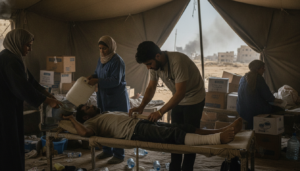
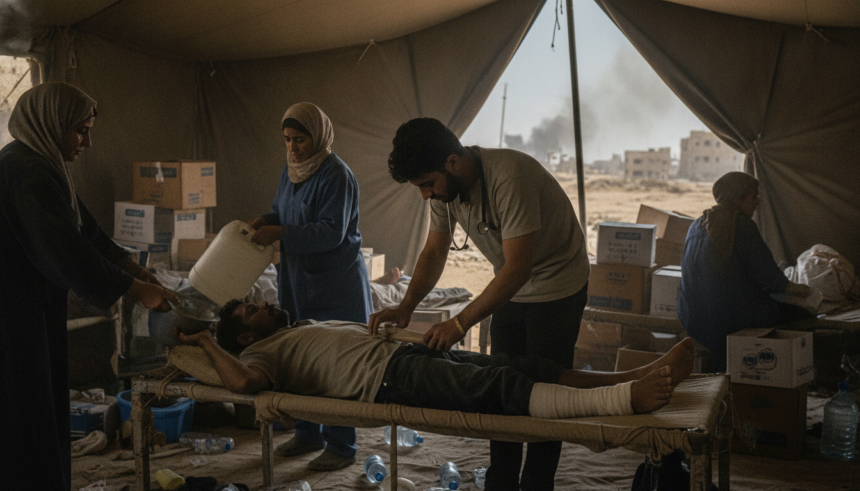
As of October 12, 2026, the International Organization for Migration recorded more than 217,000 people — 36,216 households — displaced since the West Coast fighting escalated. The displacement is concentrated rather than dispersed, which is what makes it unusually difficult to address.
Key humanitarian figures (IOM, October 2026)
- 217,000+ people displaced since the West Coast escalation — 36,216 households (IOM, October 12, 2026).
- 55%+ of the displaced are in Taiz Governorate, where hostilities block aid delivery.
- 134,100 migrants arrived in Yemen by the end of September 2026 — a 22% increase on all of 2025 (IOM Director General Amy Pope).
- 13 killed and 300+ wounded in the single deadliest incident inside Saudi Arabia, the October 10 Riyadh airport strike.
More than 55% of the displaced are in Taiz Governorate, which is also the main axis of the Dawn of Yemen ground campaign. Consequently, the population with the greatest need sits inside the area where aid convoys cannot move safely — relief capacity and active hostilities occupy the same map. In Sana’a, coalition strikes aimed at launch sites in and around the capital have put residential districts at risk, driving secondary displacement within the city. The migration figures compound the problem: arrivals rose 22% against the whole of 2025 even as the war intensified, which means Yemen is absorbing new arrivals at the same time its own displacement caseload grows.
What Analysts Say: Air Defence Gaps and the Houthi Bid to Rewrite the Rules
Saudi air defences did not stop the October strikes because coverage, not interception, is the binding constraint. Andreas Krieg of MENA Analytica assessed that layered systems such as Patriot and THAAD cannot form an impermeable dome over a country of Saudi Arabia’s size; therefore the relevant metric is not the interception rate on any single salvo but the attacker’s capacity to repeat the attempt.
“The Houthis do not need to penetrate the system every time… they retain the ability to generate follow-on attacks at strategic range.”
— Andreas Krieg, MENA Analytica
Thomas Juneau, a security analyst at the University of Ottawa, argued that the Houthis are attempting to rewrite the rules of the conflict through symmetrical retaliation — striking Riyadh’s airport in answer to coalition strikes on Sana’a airport. The logic is deliberate: by matching target category rather than scale, the Houthis establish that civilian aviation infrastructure is in play for both sides.
Middle East analyst Farea Al-Muslimi argued that the Houthis present Riyadh with an unprecedented problem, because they expose the limits of the Kingdom’s military-industrial capacity despite heavy spending on imported weaponry, and because they threaten Vision 2030 projects directly. As a result, the political cost of a prolonged campaign falls on Mohammed bin Salman personally, since the economic programme carries his name.
Frequently Asked Questions
What is happening in the Yemen-Saudi war in October 2026?
Yemen-Saudi War October 2026: What Has Happened So Far comes down to three events. The Houthis seized Mokha, Dhubab and Perim Island between September 3 and 14. President Rashad al-Alimi launched Operation Dawn of Yemen on October 4. On October 10, a Houthi missile strike on Riyadh’s King Khalid International Airport killed 13 and wounded more than 300. Figures are as of October 13, 2026.
Who attacked King Khalid International Airport in Riyadh?
Houthi (Ansar Allah) forces struck the airport with missiles on October 10, 2026, killing 13 people and wounding more than 300. A follow-up strike on October 11 killed one and injured 11, and King Fahd International Airport in Dammam was also targeted. Analysts describe the stated motive as symmetrical retaliation for coalition strikes on Sana’a airport.
What is Operation Dawn of Yemen?
It is the counteroffensive announced on October 4, 2026 by Yemeni President Rashad al-Alimi to retake Sana’a and restore state institutions. Coalition spokesman Turki al-Maliki confirmed full Saudi operational support, and an air campaign opened over Taiz, Marib, Al-Jawf and Al-Bayda. Coalition-aligned forces reported recapturing Perim Island on October 9.
Are flights to Riyadh suspended, and when do they resume?
Saudi Arabia suspended all flights to and from King Khalid International Airport after the October 10 strike, with the suspension running to October 17, 2026. Emirates, Etihad and Flydubai cancelled services. Travellers must confirm status directly with carriers, because the schedule can change at short notice in an active strike environment.
Do the Houthis control the Bab al-Mandab Strait?
Not fully, as of October 13, 2026. Houthi forces held both approaches after capturing Mokha, Dhubab and Perim Island in September, which allowed a blockade on Saudi-linked shipping and rerouted Saudi tankers via the Suez Canal. Coalition-aligned forces reported retaking Perim Island on October 9, which partially restored shipping access.
Have Pakistan and Turkey sent troops to Saudi Arabia?
Yes — both committed troops on October 5, 2026 under the Mecca Joint Defense Agreement signed in August 2026. Both governments stated the deployments are supportive and non-combat. The United States and France have also sent personnel, and Washington is reported to be weighing direct action against the Houthis, though no decision has been announced.
How many people have been displaced by the fighting?
More than 217,000 people — 36,216 households — since the West Coast escalation, according to IOM figures dated October 12, 2026. Over 55% are in Taiz Governorate, where hostilities prevent aid delivery. Separately, IOM reported 134,100 migrants entered Yemen by end-September 2026, a 22% rise on the whole of 2025.
Did the 2022 Yemen truce end?
In practice, yes. The de facto truce that largely held since 2022 collapsed with the September 3, 2026 Houthi offensive, though neither party announced a formal termination. The cause was structural: the anti-Houthi coalition was weakened by the December 2025–January 2026 STC fighting and the subsequent withdrawal of Emirati forces.
What Remains Unverified, and How to Read These Figures
Live conflict reporting carries evidentiary limits that do not disappear because a figure is repeated widely. The confirmed facts in this report — the dates of the offensives, the official Saudi casualty totals, the flight suspension, the IOM displacement count — are attributed to their originating sources. Several other elements are weaker, and readers should weight them accordingly.
Specific limitations in this reporting
- Battlefield control claims, including the October 9 recapture of Perim Island, come from coalition-aligned sources and have not been independently verified on the ground.
- Casualty figures from inside Saudi Arabia are official totals and could be revised as the wounded are treated.
- Yemeni civilian casualty data from coalition airstrikes on Sana’a is incomplete, because access for independent monitors is restricted.
- Reports of US deliberations on direct involvement and of Israeli requests for strike permission are sourced to officials speaking without attribution.
- IOM displacement figures are cumulative since the September escalation and lag events by several days.
All figures in this report are as of October 13, 2026, and the situation is changing daily.
Conclusion
The decisive fact of the past ten days is not territorial. It is that the Houthis demonstrated they can close Saudi Arabia’s primary international airport, which converts the war from a border security problem into an economic one for Riyadh — because Vision 2030’s aviation and investment pipeline depends on airspace that insurers and carriers treat as safe, and a single missile has now priced that assumption differently. Two pressures govern the next phase: Saudi Arabia’s exposure through Vision 2030, and the Houthis’ loss of the Bab al-Mandab approaches after October 9. Yemen-Saudi War October 2026: What Has Happened So Far has two dated anchors ahead — the King Khalid flight suspension runs to October 17, 2026, and Iran’s mediation offer remains open. For what follows, see the daily world affairs briefings from INQ Daily.
References
- The Guardian — Yemen coverage — reporting on the October 10, 2026 missile strike on King Khalid International Airport, including the death toll, injuries and terminal footage.
- Al Jazeera — Yemen — coverage of the September 2026 Houthi West Coast offensive and the strikes on Saudi airports.
- International Organization for Migration — Yemen — displacement tracking as of October 12, 2026 and Director General Amy Pope’s migrant arrival figures.
- Al-Monitor — reporting on Operation “Dawn of Yemen”, coalition spokesman Turki al-Maliki, and analyst assessments from Andreas Krieg and Farea Al-Muslimi.
- FDD’s Long War Journal — documentation of the December 2025 STC offensive, the January 9, 2026 PLC counteroffensive and the dissolution of the STC.
- Institute for the Study of War / Critical Threats Project — territorial assessments for the September–October 2026 West Coast fighting, including Perim Island and the Bab al-Mandab approaches.
- International Crisis Group — Yemen — analysis of coalition fragmentation after the UAE withdrawal.
- The Times of Israel — reporting on Netanyahu’s request via US mediators for Saudi consent to strikes on Houthi targets and MBS’s reluctance.
- Responsible Statecraft — analysis of US and Israeli posturing toward the Yemen escalation.