
Table of Contents
- The announcement: fried chicken at 2,123 metres
- Why KFC targeted Italian ski resorts
- The revolt: shareholders, ministers and farmers
- The climbdown: six products instead of a restaurant
- The post-Olympic boom behind the collision
- Cortina's crackdown on 'turismo cafone'
- What a Dolomite rifugio is supposed to serve
- Does UNESCO status actually block this?
- The precedent for Alpine resorts
- Frequently asked questions
- What remains unconfirmed
- Conclusion
- References
Key Takeaway
>
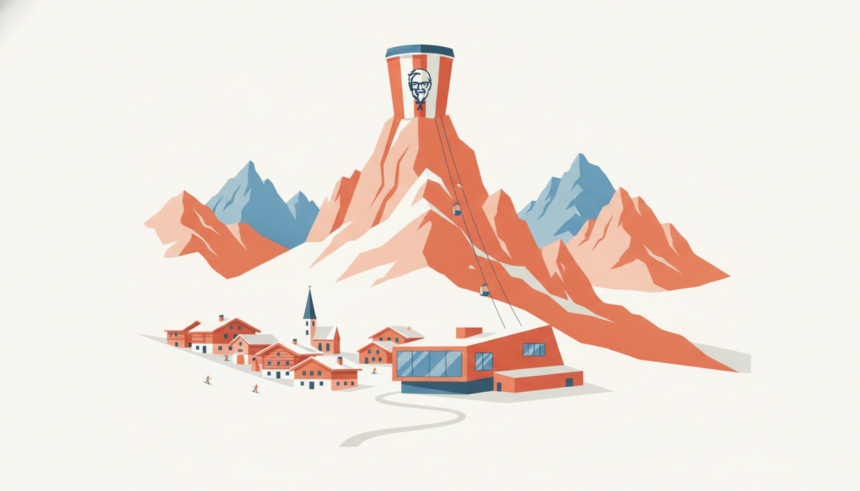
The KFC Dolomites plan announced on November 5, 2026 has been cut back. KFC Italy and partner Super G intended high-altitude outlets at Mount Faloria (2,123 m) above Cortina d’Ampezzo and Piana di Nambino (1,700 m) in Madonna di Campiglio from December 5, 2026. After shareholder, ministerial and farming-lobby opposition, Super G and Faloria Spa confirmed on November 11 that only six KFC products would be added to the existing refuge cafeteria menu.
CORTINA D’AMPEZZO, Italy — November 15, 2026 — The KFC Dolomites project is already smaller than the one announced ten days ago. There will be no branded fried-chicken restaurant at 2,123 metres on Mount Faloria; instead, six KFC products will be added to the menu of a cafeteria that already exists. That retreat happened because the majority shareholder of the company controlling the site threatened legal action while two government ministers attacked the plan in public, a combination that made the branded format commercially indefensible within six days. The wider driver is Cortina’s post-Olympic tourism surge following the February 2026 Winter Games, which has turned every new commercial arrival in the town into an argument about what Cortina becomes next.
About this report
>
Written by the INQ Daily world affairs desk, which covers European politics, tourism economics and food policy. This report is compiled from named primary statements by the parties involved and from published reporting by The Guardian, The Independent and The Local Italy. Corrections and additional information: [email protected].
Sourcing and transparency
>
This is a developing story and details are current as of November 15, 2026. INQ Daily has no commercial relationship with KFC Italy, Super G, Faloria Spa or Cortina d’Ampezzo tourism bodies. Quotations are reproduced from published reporting and attributed to the speaker. Figures in euros and metres are as published by the parties named.
The announcement: fried chicken at 2,123 metres
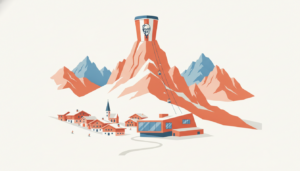
The KFC Dolomites announcement landed on November 5, 2026, when KFC Italy confirmed its first outlets on Italian ski slopes, scheduled to open on December 5, 2026, at Mount Faloria above Cortina d’Ampezzo and at Piana di Nambino in Madonna di Campiglio. The launch was structured as a partnership with Super G, an Italian operator founded by Andrea Baccuini and Giacomo Sonzini that runs luxury mountain restaurants and après-ski venues. Super G mattered because it already held the catering concessions at both locations, which means KFC needed no new building, no new lift access and, on paper, no new planning consent — as ski-industry reporting on the December 5 launch date noted, the sites were existing slope-side venues rather than new construction.
KFC Italy framed the move as deliberate provocation. Chief marketing officer Marzia Farè said the initiative was aimed at “surprising people” and “reaching places where no one would expect to find KFC.” That framing is the reason the reaction escalated so quickly: a stunt built on incongruity collided with a protected mountain setting, therefore the dispute was about symbolism rather than food safety or planning law. Critically, Faloria Spa — the company that operates the cable car and refuge infrastructure on Mount Faloria — was not aligned with the announcement, according to reporting by The Guardian on the plan and the backlash it provoked. That single misalignment drove everything that followed.
The two announced sites compared
| Site | Resort | Altitude | Region | Status as of Nov 15, 2026 |
|---|---|---|---|---|
| Rifugio Faloria / Mount Faloria | Cortina d’Ampezzo | 2,123 m | Veneto | Scaled back — six products in existing cafeteria |
| Piana di Nambino | Madonna di Campiglio | 1,700 m | Trentino | No climbdown published; plans unresolved |
Why KFC targeted Italian ski resorts
KFC targeted Italian ski resorts because slope-side dining in Cortina d’Ampezzo and Madonna di Campiglio ranks among the most expensive in the Alps, and those prices created a demand gap among Gen Z visitors and young families effectively priced out of refuge restaurants. The move also fits a stated growth programme: KFC Italy is scaling from 150 restaurants in 2025 to 185 by the end of 2026, according to business coverage of the chain’s Italian expansion and its Gen Z targeting. A chain adding 35 sites in a single year needs locations that generate coverage far out of proportion to their seat count, and a mountain-top opening delivers exactly that.
The commercial read was sound; the cultural read was not. Because Italian food identity is institutionally defended by farming associations and agriculture ministries rather than left to consumer preference, a brand entering a heritage setting buys a political argument and not simply a lease. The effect was almost mechanical: the stunt generated the attention KFC wanted, and the attention then destroyed the format that was supposed to carry it. A high-visibility site only works as marketing while the visibility stays positive.
The revolt: shareholders, ministers and farmers
Opposition to the KFC Dolomites plan came from four distinct blocs holding very different kinds of leverage — the infrastructure shareholder, national ministers, the farming lobby and environmental campaigners. The decisive voice was Alberico Zardini, majority shareholder of Faloria Spa, who said he had been blindsided by the announcement. “It’s absurd and shameful to imagine a fast-food joint in the most beautiful spot in Cortina,” he said. “Do the people of Cortina not realize what we’re risking here?” He threatened legal action against Faloria’s management over what he called a “disgraceful” and “mad decision.” Because Zardini controls the entity that owns the site and its lift access, his objection was contractual rather than rhetorical.
The political and sectoral objections arrived within days. Tourism Minister Gianmarco Mazzi warned that such commercialisation risked making Italy’s unique destinations “look like everywhere else,” while Agriculture Minister Francesco Lollobrigida said visitors to the peaks are seeking the “polar opposite of fast food culture,” as The Independent reported in its coverage of the ministerial response. Coldiretti, the association representing Italian farmers, filed a formal protest. The ranking matters: ministerial criticism set the national tone but carried no planning power, therefore the ownership structure is what actually forced the retreat.
Who objected, and with what standing
| Speaker | Role | Stated position | Leverage |
|---|---|---|---|
| Alberico Zardini | Majority shareholder, Faloria Spa | “Absurd and shameful”; threatened legal action | Decisive — controls the site owner |
| Gianmarco Mazzi | Italian Tourism Minister | Destinations risk looking “like everywhere else” | Political pressure only |
| Francesco Lollobrigida | Italian Agriculture Minister | Visitors want the “polar opposite of fast food culture” | Political pressure only |
| Paola Demagri | Trentino provincial councillor | Region is selling off its mountain identity | Regional political pressure |
| Coldiretti | Italian farmers’ association | “Unacceptable blow” to mountain gastronomic tradition | Formal protest; sector lobbying |
| Luigi Casanova | Mountain Wilderness campaigner | Refuges should serve polenta, canederli, luganega | Advocacy and media framing |
The climbdown: six products instead of a restaurant
The KFC Dolomites retreat was confirmed on November 11, 2026, when Super G and Faloria Spa clarified that no standalone, heavily branded KFC restaurant would open on Mount Faloria. The compromise is narrow and specific: the existing ground-floor bar-cafeteria at the Faloria refuge adds six KFC products to its menu, the upstairs restaurant continues to operate under Super G’s luxury Meraviglioso brand serving traditional Italian food, and the building retains its traditional appearance. Six days of national and international coverage, combined with a shareholder legal threat, made the branded format untenable — a sequence documented in The Local Italy’s reporting on the clarification.
What survived is the part that required no structural change and no signage, which means KFC retains distribution at altitude and loses the stunt that justified it. One element remains unresolved: Piana di Nambino in Madonna di Campiglio, where Trentino provincial councillor Paola Demagri has continued to criticise the project and where no equivalent scaling-back has been published as of November 15, 2026. The 1,700-metre site therefore sits in a different position from Faloria, because Super G’s concession there has not faced the same shareholder challenge.
Timeline: announcement to climbdown
| Date | Event | Actor |
|---|---|---|
| November 5, 2026 | Slope-side outlets announced for Faloria and Piana di Nambino | KFC Italy with Super G |
| November 6–10, 2026 | Shareholder, ministerial and Coldiretti objections published | Zardini, Mazzi, Lollobrigida, Coldiretti |
| November 11, 2026 | Scaled-back compromise confirmed; no branded restaurant | Super G and Faloria Spa |
| December 5, 2026 | Scheduled start of KFC product sales | KFC Italy with Super G |
The post-Olympic boom behind the collision
Cortina co-hosted the Winter Olympics with Milan in February 2026, staging women’s alpine skiing, bobsled, luge and skeleton, and the resulting global exposure drove a visitor and investment surge that made commercial proposals like this one both more attractive to brands and more contested locally. The pressure is measurable: Dolomite nature trails have recorded up to 8,000 visitors in a single day, according to reporting on overtourism in the range and Cortina’s response. Olympic infrastructure spending upgraded access and capacity, and upgraded access attracts outside commercial operators, which is why a multinational chain was negotiating slope-side catering in Cortina in 2026 rather than a decade earlier.
The town wants Olympic-scale revenue without Olympic-scale homogenisation, and those two aims are in direct conflict. Consequently every new commercial arrival is now read as a referendum on what Cortina becomes after the Games. That is the reason six menu items in a cafeteria attracted comment from two national ministers.
Cortina’s crackdown on ‘turismo cafone’
Turismo cafone — boorish tourism — is the term Cortina’s administration uses for visitor behaviour it considers incompatible with the town’s image, and Mayor Gianluca Lorenzi signed an ordinance against it in August 2026, valid through October 2026, imposing fines ranging from €25 to €500. The ordinance was a direct response to the post-Olympic change in visitor mix, which means the fast-food objection landed in a town that was already policing its own presentation. The clothing provisions in particular drew international attention, sitting at the intersection of civic regulation and the kind of destination-image debate INQ Daily also tracks in its fashion and lifestyle reporting.
Cortina d’Ampezzo ordinance: prohibited conduct and penalties
| Prohibited conduct | Fine range | In force |
|---|---|---|
| Picnicking on historic monuments | €25–€500 | August–October 2026 |
| Bivouacking in the town centre | €25–€500 | August–October 2026 |
| Overly revealing clothing in the town centre | €25–€500 | August–October 2026 |
What a Dolomite rifugio is supposed to serve
A rifugio is a mountain refuge whose menu is short, local and calorie-dense, and that convention operates as a cultural and concession expectation rather than a strict legal requirement. The identity argument against the plan rested on it. Luigi Casanova of the environmental group Mountain Wilderness argued that mountain huts should serve traditional Alpine dishes such as polenta, canederli and luganega rather than buckets of fried chicken, while Coldiretti described the plan as an “unacceptable blow to the identity and gastronomic tradition of the mountains.” Those dishes are not decorative details in the dispute — they are the specific content of what objectors said was being displaced.
Standard Dolomite mountain hut dishes, defined
- Rifugio — a staffed mountain refuge offering meals and often beds, usually reached by lift or on foot
- Polenta — slow-cooked cornmeal, typically served with cheese, mushrooms or braised meat
- Canederli — bread dumplings of South Tyrolean origin, served in broth or with butter
- Luganega — a fresh local pork sausage, usually grilled or stewed with polenta
- Speck and barley soup — cured ham and barley, the standard winter refuge order
Does UNESCO status actually block this?
No. The Dolomites were inscribed as a UNESCO World Heritage site in 2009 for their geological and scenic value, and inscription obliges Italy to protect that value — but it does not hand UNESCO a veto over a menu change inside an existing building. Therefore UNESCO status did not stop the KFC Dolomites plan; shareholder leverage and political pressure did.
The practical limit is clear. Heritage listing becomes decisive where construction, signage at scale or landscape alteration is proposed, because those are the things that measurably affect the inscribed value. The final compromise explicitly avoids all three by keeping the refuge’s exterior unchanged and confining the arrangement to six items on an existing menu, which is precisely why it was the deal available.
The precedent for Alpine resorts
The KFC Dolomites case indicates that in Italian heritage resorts the binding constraint on a commercial entry is the concession and shareholder structure rather than planning law or heritage designation, therefore brands moving into these markets need the infrastructure owners signed up before anything is announced. KFC had the caterer and did not have the landlord, and that gap cost it the format. The second consequence falls on the resorts themselves: lift companies and refuge operators will now vet catering partners for reputational exposure with the same seriousness they apply to turnover, because a six-day news cycle can cost a mountain more than a season’s covers is worth. The third point is the one most of the commentary skipped. The demand gap KFC identified has not closed — slope-side prices in Cortina and Madonna di Campiglio still exclude a large share of younger visitors — which means cheaper high-altitude formats will return, in less branded and less photogenic form.
Frequently asked questions
Is KFC really opening on the Dolomites ski slopes?
Partly. No standalone KFC restaurant will open on Mount Faloria after the November 11, 2026 climbdown. Six KFC products are scheduled to go on sale in the existing ground-floor cafeteria at the Faloria refuge from December 5, 2026. The separate Piana di Nambino site in Madonna di Campiglio has not been subject to a published climbdown.
Why are Cortina locals against KFC on Mount Faloria?
Because they read branded fast food at 2,123 metres as the homogenisation of a site central to Cortina’s identity. Faloria Spa majority shareholder Alberico Zardini called the plan “absurd and shameful” and threatened legal action, and Coldiretti filed a formal protest. The consequence they cite is reputational damage to the resort’s premium positioning.
What did the Italian government say about KFC in the Dolomites?
Two ministers publicly objected. Tourism Minister Gianmarco Mazzi warned that Italy’s unique destinations risked looking “like everywhere else,” and Agriculture Minister Francesco Lollobrigida said visitors to the peaks seek the “polar opposite of fast food culture.” Neither statement carried planning authority, so the pressure was political rather than regulatory.
Did KFC cancel the Cortina d’Ampezzo restaurant?
The restaurant was cancelled; the products were not. On November 11, 2026, Super G and Faloria Spa confirmed there would be no branded outlet on Mount Faloria. The refuge keeps its traditional appearance and its upstairs Meraviglioso restaurant serving traditional Italian food, while six KFC items join the ground-floor cafeteria menu.
How high up would the KFC on the Dolomites be?
2,123 metres at Rifugio Faloria above Cortina d’Ampezzo, reached by cable car, and 1,700 metres at Piana di Nambino in Madonna di Campiglio. The altitude is what made the plan newsworthy, because these would have been KFC Italy’s first slope-side sites anywhere in the country.
Why did KFC target Italian ski resorts in the first place?
Price. High slope-side dining costs created a gap among Gen Z visitors and young families, and KFC Italy is expanding from 150 restaurants in 2025 to 185 by the end of 2026, therefore it needed high-visibility sites. Chief marketing officer Marzia Farè said the aim was “surprising people.”
How has the 2026 Winter Olympics changed Cortina d’Ampezzo?
It raised global visibility and commercial interest sharply. Cortina co-hosted the February 2026 Games with Milan, staging women’s alpine skiing, bobsled, luge and skeleton. The resulting visitor surge intensified overtourism pressure across the range, with Dolomite trails recording up to 8,000 visitors in a single day.
What do traditional Dolomite mountain huts serve instead?
Short, local, calorie-dense menus. Typical orders include polenta, canederli (bread dumplings), luganega sausage, and speck and barley soup. These dishes form the basis of the identity argument advanced by Coldiretti and by Luigi Casanova of Mountain Wilderness against selling fried chicken at a refuge.
Does UNESCO status stop fast food in the Dolomites?
No. The Dolomites’ 2009 World Heritage inscription protects geological and scenic value and constrains construction and landscape alteration, but it does not govern menus inside existing buildings. Shareholder pressure from Faloria Spa, not heritage law, is what stopped the branded restaurant at 2,123 metres.
Is the Madonna di Campiglio KFC still going ahead?
As of November 15, 2026 no equivalent climbdown has been announced for Piana di Nambino at 1,700 metres. Trentino provincial councillor Paola Demagri has continued to criticise the project. This element is developing, and the December 5, 2026 date remains unchanged in published plans.
What remains unconfirmed
This is a developing story and all details are current as of November 15, 2026. No commercial terms of the Super G–KFC Italy agreement have been published, therefore the value of the retained six-product listing cannot be assessed. Faloria Spa has not published a board resolution, so the internal mechanics of the climbdown rest on company statements rather than documents. The status of Piana di Nambino in Madonna di Campiglio is unresolved. The counter-argument also deserves stating plainly: slope-side prices in Cortina and Madonna di Campiglio exclude lower-income visitors, and critics of the backlash argue that the objection defends exclusivity at least as much as tradition. Quotations here are reproduced from published reporting by The Guardian, The Independent and The Local Italy and have not been independently re-interviewed by INQ Daily.
Conclusion
The KFC Dolomites episode resolved in six days: the branded restaurant at 2,123 metres was dropped, six products remain on the Faloria cafeteria menu, and the December 5, 2026 start date still stands. The decisive factor was neither UNESCO inscription nor ministerial disapproval — it was the ownership structure of the company that controls the cable car and the refuge. Consequently the vetting calculus across Alpine resorts changes: lift companies and refuge operators now have a documented case showing that a catering partner’s brand can impose costs on the whole mountain, and they will price that risk into concession agreements. For continuing reporting on how tourism economics reshape heritage destinations, follow INQ Daily world affairs coverage.
References
- The Guardian — reporting on the KFC Italy announcement, the backlash, and Alberico Zardini’s “absurd and shameful” statement and legal threat against Faloria Spa management. Link
- The Independent — coverage of the ministerial response from Gianmarco Mazzi and Francesco Lollobrigida and of the scaled-back compromise. Link
- The Local Italy — reporting on the Coldiretti protest and the November 11, 2026 clarification that six KFC products would be added to the existing Faloria cafeteria menu. Link
- Travel Tomorrow — reporting on Dolomites overtourism and Cortina d’Ampezzo’s August 2026 “turismo cafone” ordinance, including the €25–€500 fine range. Link
- UNESCO World Heritage Centre — The Dolomites, inscribed 2009. Link
- Coldiretti, Italian farmers’ association — formal protest describing the plan as an “unacceptable blow to the identity and gastronomic tradition of the mountains.” Link
- Unofficial Networks — ski-industry reporting on the slope-side plans and the December 5, 2026 opening date at Faloria and Piana di Nambino. Link
- Morning Brew — business coverage of KFC Italy’s expansion from 150 restaurants in 2025 to 185 by the end of 2026 and its Gen Z targeting rationale. Link