
Table of Contents
- What the fee era means: tourist tax 2026 and the shift from taxing to charging
- Congestion pricing: the proof that a charge can change behaviour
- What NYC drivers pay in 2026
- The measured result: 27 million fewer vehicles, 11% faster speeds
- Where the toll money went: the MTA's $1.9bn signal rebuild
- The 2026 tourist tax map: Paris, Venice, Barcelona, Tromsø, Hawaii
- France: a 200% regional surcharge funding Île-de-France Mobilités
- Italy: Venice's €5 and €10 day-tripper tiers
- Spain and Norway: cruise surcharges and a 3% overnight levy
- Hawaii's green fee and the cruise industry's court challenge
- Fees as trade policy: the EU carbon border levy
- What CBAM charges and on which goods
- Why the levy targets carbon leakage
- The UK exemption talks: a fee used as diplomatic leverage
- Fines as enforcement: transport penalties and corporate compliance
- The UK's £100 bus fines and £1,000 train penalties
- Belgium's €5,000 e-invoicing fines and tenfold social-code increases
- The backlash: when a policy weapon becomes a revenue habit
- Frequently asked questions about tourist tax 2026 and government fees
- Limitations of this analysis and what could change the picture
- What the fee era tells us about how policy now gets made
- References
- Related Reading
Key takeaways
>
- Tourist tax 2026 rates rose sharply across Europe: Paris reaches up to €15.93 per adult per night after a 200% regional surcharge took effect on 1 January 2026, while Venice charges €5 in advance or €10 for late bookings on peak days.
- Barcelona approved a €24 municipal surcharge on short-stay cruise passengers in October 2026; Norway authorised municipalities such as Tromsø to levy 3% on overnight stays and cruise arrivals.
- Hawaii’s green fee began on 1 January 2026 and is projected to raise about $100 million a year, though a cruise-industry court challenge produced temporary appellate relief.
- New York’s congestion charge ($9 peak, E-ZPass) cut entries by roughly 27 million vehicles year-on-year and lifted in-cordon speeds 11% (NBER, August 2026); revenue funds the MTA’s $1.9bn Brooklyn–Queens signal rebuild launched October 2026.
- The EU’s Carbon Border Adjustment Mechanism entered its definitive phase on 1 January 2026 and is now being used as negotiating leverage over UK ETS linkage.
Governments did not raise headline taxes in 2026; they raised charges — and tourist tax 2026 increases, from €5 in Venice to €15.93 a night in Paris, are the most visible edge of that shift. The pivot happened because a narrow, earmarked charge can be imposed by decree or regulation, carries a fraction of the political cost of a broad tax rise, and acts directly on the behaviour the authority wants to change. The same logic drove the European Union’s Carbon Border Adjustment Mechanism into its definitive operational phase on 1 January 2026. This article covers four fee families now doing the work legislation used to do: travel levies, road pricing, border carbon charges and behavioural fines. For dateline-led context, see INQ Daily world affairs coverage.
About this analysis
Written by the INQ Daily policy desk. Every figure below is attributed to a named source and dated. Rates and penalties in this piece reflect the position as of 5 November 2026.
Transparency note
This is news analysis, not legal, tax or travel advice. Municipal levy rates and administrative penalty schedules are revised in-year and sometimes retroactively. Verify any amount against the official government source before booking travel, filing a return or assessing liability.
What the fee era means: tourist tax 2026 and the shift from taxing to charging
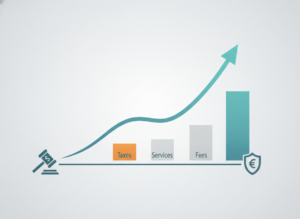
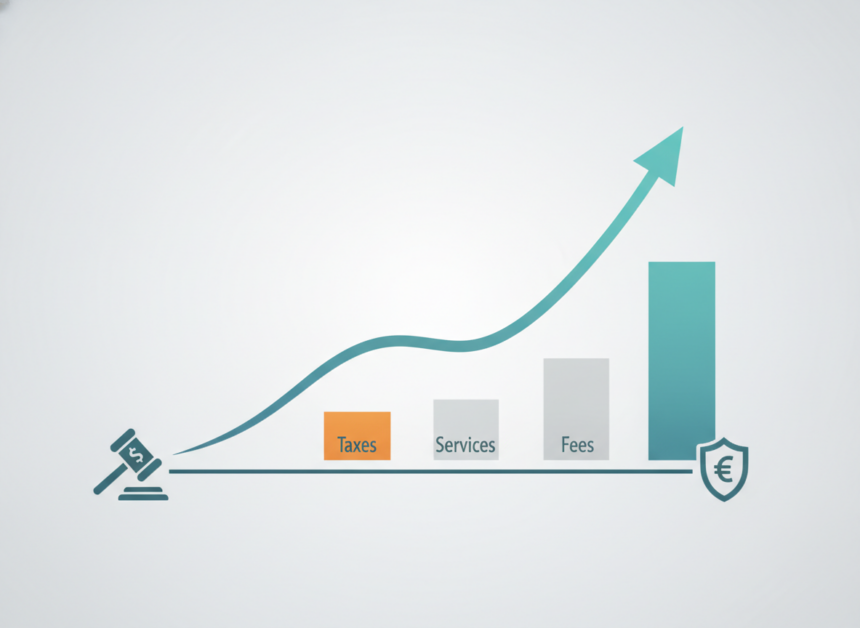
The fee era is the policy pattern, visible across 2025 and 2026, in which governments impose narrow, earmarked charges — travel levies, road tolls, border carbon fees, administrative fines — instead of raising broad taxes, because charges require less legislative capital and act directly on behaviour rather than merely on revenue totals.
The mechanism is structural. A fee is tied to an identified cost or externality, therefore it can usually be set by municipal decree, ministerial order or regulation rather than primary legislation. That procedural shortcut matters more than the money. The political cost of a €5 day-tripper charge falls on non-residents who do not vote in the jurisdiction imposing it, which is a fraction of the cost of a VAT rise levied on the electorate — and that asymmetry is why the instrument spread across European capitals within two budget cycles.
| Instrument | What justifies it | Who sets it | 2026 example |
|---|---|---|---|
| Tax | General revenue, no service link | Legislature, via primary law | VAT and income tax rates |
| Fee | An identified service or cost | Agency or municipality, by decree | NYC $9 peak congestion charge |
| Levy | Earmarked charge on a defined group | Region or municipality | Paris 200% Île-de-France surcharge |
| Administrative fine | Penalty for non-compliance | Regulator or local authority | Belgian €5,000 e-invoicing fine |
Three stated purposes run through the 2026 examples. Deterrence drives Venice’s tiered access fee and New York’s cordon toll. Hypothecated funding drives the Île-de-France Mobilités surcharge, Hawaii’s climate resilience programme and the MTA’s capital plan. Compliance enforcement drives the UK’s transport penalties and Belgium’s e-invoicing fines. The complication is that a single charge frequently serves two purposes at once — and because a successful deterrent reduces its own receipts, the funding objective quietly undermines the behavioural one. That tension is where the backlash documented later in this article originates.
Congestion pricing: the proof that a charge can change behaviour
What NYC drivers pay in 2026
Passenger vehicles with E-ZPass pay $9 to enter Manhattan’s Congestion Relief Zone during peak hours. The programme went live on 5 January 2025 after years of litigation, making New York the first US city to operate a cordon-based congestion charge. The legal delay is not incidental: because the scheme spent years in court before collecting a dollar, comparable American cities have treated road pricing policy as a procedural risk rather than a ready instrument.
The measured result: 27 million fewer vehicles, 11% faster speeds
A 2026 evaluation report found the toll reduced the number of vehicles entering the zone by roughly 27 million compared with the previous year. A National Bureau of Economic Research analysis published in August 2026 found travel speeds within the cordon increased by 11%. The mechanism identified by Cody Cook of Yale and Shoshana Vasserman of Stanford explains the disproportion: congestion is non-linear, therefore removing a modest share of vehicles delivers outsized speed gains and large aggregate time savings for everyone still driving.
“small volume reductions yield large speed gains”
— Cody Cook (Yale) and Shoshana Vasserman (Stanford), policy brief, August 2026
Where the toll money went: the MTA’s $1.9bn signal rebuild
In October 2026 the Metropolitan Transportation Authority launched a $1.9 billion project to replace century-old signals and track in Brooklyn and Queens, funded directly by congestion pricing receipts. Hypothecation is what converted a resented toll into durable political support, because riders can point to a specific asset rather than a line in a budget. The effect of that visibility is defensive: MTA capital funding tied to an identifiable rebuild is harder to repeal than a general-revenue surcharge.
- $9 peak charge for passenger vehicles with E-ZPass entering the Manhattan Congestion Relief Zone (programme live since 5 January 2025)
- Roughly 27 million fewer vehicles entered the zone year-on-year (2026 evaluation report)
- In-cordon travel speeds up 11% (National Bureau of Economic Research analysis, August 2026)
- $1.9 billion Brooklyn–Queens signal and track replacement launched October 2026, funded by toll revenue
- Mechanism identified by Cody Cook (Yale) and Shoshana Vasserman (Stanford), August 2026 policy brief: small volume reductions yield large speed gains
The 2026 tourist tax map: Paris, Venice, Barcelona, Tromsø, Hawaii
Tourist tax 2026 rates range from €5 a day in Venice to €24 per short-stay cruise passenger in Barcelona and up to €15.93 per adult per night in Paris, because each jurisdiction set its charge against a different stated cost — regional transport funding, crowd deterrence, port impact or climate resilience. The divergence in design tells you what each authority is actually trying to achieve.
| Jurisdiction | Charge | Amount (2026) | In force from | Stated purpose |
|---|---|---|---|---|
| Paris / Île-de-France | Taxe de séjour plus 200% regional surcharge | Up to €15.93 per adult per night | 1 January 2026 | Fund Île-de-France Mobilités |
| Venice | Day-tripper access fee, advance booking | €5 per visitor, peak days | 2026 season | Smooth peak-day volumes |
| Venice | Day-tripper access fee, booked under four days ahead | €10 per visitor, peak days | 2026 season | Penalise unplanned arrivals |
| Barcelona | Municipal surcharge, short-stay cruise passengers | €24 per passenger | Approved October 2026 | Offset crowding from port calls |
| Tromsø / Norway | Municipal overnight and cruise levy | 3% of the charge | 2026 framework | Offset environmental impact |
| Hawaii | Green fee via Transient Accommodations Tax | Projected ~$100m a year | 1 January 2026 | Climate resilience, reef restoration |
France: a 200% regional surcharge funding Île-de-France Mobilités
From 1 January 2026, Paris and the wider Île-de-France region apply a 200% regional surcharge on top of the standard taxe de séjour, pushing the nightly charge to as much as €15.93 per adult in top-category accommodation, according to service-public.gouv.fr. The causal driver is explicit in the enabling framework: the surcharge is hypothecated to Île-de-France Mobilités, the regional transport authority. Consequently the Paris tourist tax increase functions as a transport levy collected from visitors rather than from residents who would otherwise fund the same network.
Italy: Venice’s €5 and €10 day-tripper tiers
Venice reinstated its access fee for 2026, charging €5 to visitors who book in advance and €10 to those booking fewer than four days ahead. The two-tier structure is the policy weapon rather than the headline amount. The premium penalises unplanned arrivals because the city’s stated objective is smoothing volumes on peak days, not maximising receipts — which means the Venice day tripper fee is designed to redistribute demand across the calendar.
Spain and Norway: cruise surcharges and a 3% overnight levy
In October 2026 Barcelona approved an increase to €24 for its municipal surcharge on short-stay cruise passengers, targeting the segment that spends least per head while generating the most street-level crowding. The cruise passenger tax in Barcelona therefore operates as a sorting mechanism, not a general visitor levy. Norway’s 2026 framework takes a different route: it authorises municipalities including Tromsø to charge 3% on overnight stays and cruise arrivals, a design driven by a rapid tourism boom that outpaced local infrastructure spending.
Hawaii’s green fee and the cruise industry’s court challenge
Hawaii’s green fee took effect on 1 January 2026 as an increase to the existing Transient Accommodations Tax, projected to generate about $100 million annually for projects including beach replenishment and coral reef restoration. A federal appeals court then granted temporary relief in a challenge brought by the cruise industry, which refused to accept liability. The outcome matters beyond Honolulu, because it tests whether a state can impose an environmental charge on maritime passengers — and that question governs every port levy drafted after it.
Fees as trade policy: the EU carbon border levy
Governments moved the same instrument into trade policy. Because a border charge applies to foreign producers who have no vote in Brussels and no standing in EU legislative process, it transfers the cost of domestic climate ambition outward — and that is precisely what the Carbon Border Adjustment Mechanism was built to do.
What CBAM charges and on which goods
The Carbon Border Adjustment Mechanism entered its definitive operational phase on 1 January 2026 and charges importers for the embedded carbon in goods including steel, cement, aluminium and fertilisers, per the European Commission. The pricing logic mirrors the EU Emissions Trading System: the importer pays the gap between the carbon cost already borne in the country of production and the EU price. As a result, CBAM 2026 equalises climate cost rather than imposing a flat tariff.
Why the levy targets carbon leakage
Carbon leakage is production relocating to jurisdictions with weaker climate rules, which cuts EU emissions on paper while raising them globally. CBAM removes that arbitrage because the charge attaches at the border regardless of where the goods were manufactured. The Bruegel think tank argued in early 2026 that the mechanism succeeds only if policy shifts from protecting incumbents to supporting new clean industrial processes — a conditional claim, not an established outcome. The honest counterpoint is distributional: exporters in lower-income trading partners carry disproportionate reporting and verification cost relative to their margins.
The UK exemption talks: a fee used as diplomatic leverage
In November 2026 a leaked draft EU-UK summit declaration indicated the EU would exempt British goods from CBAM retroactively to 1 January 2026, conditional on the UK linking its Emissions Trading System to the EU’s. The draft is unconfirmed and no agreement has been concluded. The causal reading is nonetheless clear: the levy’s value to Brussels is no longer only fiscal, because the credible threat of the charge purchases regulatory alignment that years of treaty negotiation did not deliver. EU-UK ETS linkage became negotiable the moment the fee became enforceable.
- Transitional phase: importers report embedded emissions of covered goods without paying the charge
- 1 January 2026 — definitive phase begins; financial liability on embedded carbon in steel, cement, aluminium and fertilisers takes effect
- Early 2026 — Bruegel analysis argues CBAM works only if paired with support for clean industrial processes rather than protection of incumbents
- October 2026 — EU-UK technical discussions on ETS linkage advance
- November 2026 — leaked draft EU-UK summit declaration points to a retroactive UK exemption from 1 January 2026, conditional on ETS linkage
Fines as enforcement: transport penalties and corporate compliance
Governments moved enforcement out of the courts and into administrative penalty regimes because an officer-issued fixed penalty is cheaper, faster and more certain than prosecution — which means the deterrent now lands within days rather than after months of listing delay. The trade-off is procedural: the burden of contesting the charge shifts to the person or company receiving it.
| Behaviour or obligation | Penalty | Jurisdiction | In force from |
|---|---|---|---|
| Vaping, littering or “loudcasting” on buses | £100 fixed penalty notice | United Kingdom | October 2026 |
| Refusing to comply with staff instructions on trains | Removal or fines up to £1,000 | United Kingdom | October 2026 |
| Non-compliance with mandatory B2B e-invoicing (Peppol BIS) | Up to €5,000 | Belgium | 1 January 2026 |
| Social Criminal Code breaches | Base fines multiplied by 10 | Belgium | February 2026 |
The UK’s £100 bus fines and £1,000 train penalties
In October 2026 the UK government launched measures granting local authorities power to issue £100 fixed penalty notices to bus passengers for vaping, littering and “loudcasting” — playing loud music through a speaker. Passengers who refuse to comply with staff instructions on trains face removal or fines up to £1,000, according to GOV.UK. The driver is commercial as much as civic: ridership depends on perceived safety, therefore ministers chose a visible fixed penalty notice for bus and rail nuisance over slower service-level intervention.
Belgium’s €5,000 e-invoicing fines and tenfold social-code increases
From 1 January 2026, Belgian companies failing to comply with mandatory B2B electronic invoicing in the Peppol BIS format face fines of up to €5,000. A further law effective February 2026 multiplies base penalties under the Social Criminal Code by ten to combat social fraud and dumping. The pattern mirrors the transport case: e-invoicing fines in Belgium are the adoption mechanism, because voluntary digital invoicing uptake had stalled and a deadline without a penalty had produced no behavioural change.
The backlash: when a policy weapon becomes a revenue habit
The strongest counter-evidence comes from the Netherlands. In late 2026 MPs Fatihya Abdi and Jeltje Straatman launched a parliamentary initiative against the government’s reliance on traffic fines to close budget shortfalls, noting that a minor traffic violation costing €68 in 1990 now costs €490 in 2026 — an escalation they argue outpaced any safety rationale, according to NL Times reporting. The figure is the MPs’ framing of traffic fines revenue, not an official safety assessment.
The mechanism generalises badly for governments. Once a charge is written into a revenue forecast, the fiscal incentive inverts the policy. A deterrent that works reduces its own receipts, therefore a treasury that has already budgeted the money has reason to preserve the behaviour rather than stop it. That is the structural weakness of hypothecated fees, and it explains why the Dutch dispute and the Hawaiian litigation are not isolated irritations but predictable consequences of the design.
Distribution deserves the same honesty. Flat-rate charges are regressive in effect, because €490 or a $9 daily toll represents a far larger share of a low income than a high one, which means an identical charge delivers unequal deterrence and unequal hardship. The legal channel is the main remaining check: both the Hawaii green fee and New York congestion pricing were litigated, so judicial review now substitutes for the legislative scrutiny that delegated rate-setting removed.
One test separates a policy instrument from a revenue habit: does the authority publish a behavioural target and treat falling receipts as success? New York passes, because it published volume and speed metrics and reported reductions as the outcome. Venice passes on design, since its tiered pricing targets peak-day smoothing rather than yield. The Dutch traffic fine regime, on the MPs’ account, fails that test — the receipts are the point.
Frequently asked questions about tourist tax 2026 and government fees
What is the “fee era” in government policy?
It is the 2025–2026 pattern of governments imposing narrow, earmarked charges instead of raising broad taxes. The three dominant instrument types are travel levies, road and border charges, and administrative fines. The clearest dated marker is the EU Carbon Border Adjustment Mechanism, which entered its definitive operational phase on 1 January 2026.
Why are governments using fees instead of taxes in 2026?
Because fees can be set by decree or regulation, are hypothecated to a visible purpose and act on behaviour immediately. Paris’s 200% surcharge from 1 January 2026 funds Île-de-France Mobilités; New York’s toll revenue financed the MTA’s $1.9 billion Brooklyn–Queens signal project launched in October 2026. Visible outputs make the charges politically durable.
How much is the tourist tax in 2026?
Rates range from €5 a day in Venice to up to €15.93 per adult per night in Paris and €24 per short-stay cruise passenger in Barcelona. Norway allows municipalities such as Tromsø to charge 3% on overnight stays. Amounts vary by accommodation class and municipality; figures verified 5 November 2026.
Did New York’s congestion pricing work?
On its stated metrics, yes. A 2026 evaluation found roughly 27 million fewer vehicles entered the zone year-on-year, and a National Bureau of Economic Research analysis published in August 2026 measured an 11% rise in in-cordon travel speeds. Passenger vehicles with E-ZPass pay $9 at peak; the programme launched 5 January 2025.
What is the EU Carbon Border Adjustment Mechanism and when did it start?
CBAM charges importers for the embedded carbon in goods including steel, cement, aluminium and fertilisers, and its definitive phase began on 1 January 2026 after a transitional period in which importers only reported emissions. It targets carbon leakage, because production shifting to weaker-regulation jurisdictions would cut EU emissions on paper while raising global ones.
Can you be fined for vaping or playing loud music on public transport?
In the UK, yes. From October 2026, local authorities can issue £100 fixed penalty notices to bus passengers for vaping, littering and “loudcasting.” On trains, refusing to comply with staff instructions can mean removal or fines up to £1,000, according to GOV.UK. The measures were announced in October 2026.
What is Hawaii’s green fee and who pays it?
It is an increase to the Transient Accommodations Tax, effective 1 January 2026 and paid by visitors, projected to raise about $100 million a year for beach replenishment and coral reef restoration. The cruise industry challenged it in federal court, and an appeals court granted temporary relief, leaving some passenger liability unresolved.
What is the difference between a tax, a fee and a levy?
A tax funds general spending with no service link; a fee is charged against an identified service or cost; a levy is an earmarked charge on a defined group or activity. The 200% Île-de-France surcharge on the Paris taxe de séjour, in force since 1 January 2026, is a levy: visitors pay, regional transport receives.
Are government fees becoming a backdoor revenue grab?
In some cases, yes. A late-2026 Dutch parliamentary initiative by MPs Fatihya Abdi and Jeltje Straatman argued that traffic fines now fill budget shortfalls, citing a minor violation that cost €68 in 1990 and €490 in 2026. The useful test: a genuine deterrent treats falling revenue as success.
Which fees take effect in 2026 and what do they cost?
Seven dated changes dominate. On 1 January 2026: CBAM’s definitive phase, the Paris 200% surcharge, Hawaii’s green fee and Belgian e-invoicing fines up to €5,000. February 2026 brought a tenfold increase in Belgian Social Criminal Code base fines. October 2026 added UK £100 transport fines and Barcelona’s €24 cruise surcharge.
Limitations of this analysis and what could change the picture
Some items here are settled law and some are provisional. CBAM’s definitive phase, the Paris surcharge, Hawaii’s green fee and the Belgian e-invoicing regime all commenced on 1 January 2026 and are in force. The EU-UK exemption is neither. The measured New York outcomes are evaluation findings rather than permanent effects. Alternative instruments were available throughout — fuel duty, occupancy caps, transit investment funded from general revenue, straightforward VAT rises — and each was rejected on political or procedural grounds rather than on evidence of failure.
- The draft EU-UK declaration pointing to a retroactive CBAM exemption is a leaked document, not an agreed text; the exemption is conditional on ETS linkage that has not been concluded.
- Hawaii’s green fee faces an unresolved cruise-industry challenge; a final appellate ruling could narrow which passengers are liable.
- Tourist levy rates are set municipally and revised in-year, so the Paris, Venice, Barcelona and Tromsø figures require confirmation against official rate tables before travel or filing.
- The 27 million vehicle reduction and 11% speed gain are single-period measurements; they do not establish how much of the behaviour change persists once drivers re-optimise routes.
- Alternative instruments exist — fuel duty, congestion-neutral transit investment, occupancy caps, VAT rises — and each is slower or more politically expensive, which is why they were not chosen rather than because they fail.
What the fee era tells us about how policy now gets made
Tourist tax 2026 increases are not a tourism story; they are the most visible instance of a governing method that now runs from Manhattan’s cordon to the EU’s customs border. Charges spread because they bypass legislative gridlock and act directly on behaviour, not because they are fiscally large — €5 in Venice and £100 on a bus change conduct in ways a general tax rise cannot. Readers assessing any new charge should apply one test: does the authority publish a behavioural target and accept falling revenue as success? Where it does, the charge is policy. Where it does not, it is a revenue line wearing policy language. Because rates and penalties move by decree and sometimes retroactively, check the official source each time — and follow the latest INQ Daily economics and markets reporting for the next round.
References
- European Commission — Carbon Border Adjustment Mechanism: definitive phase from 1 January 2026; covered goods.
- National Bureau of Economic Research — congestion pricing analysis, August 2026: 11% increase in in-cordon travel speeds.
- Cody Cook (Yale) and Shoshana Vasserman (Stanford) — policy brief, August 2026: mechanism linking small volume reductions to large speed gains.
- Metropolitan Transportation Authority — $1.9bn Brooklyn and Queens signal replacement, October 2026.
- service-public.gouv.fr — taxe de séjour rates: 200% Île-de-France surcharge and €15.93 nightly ceiling.
- GOV.UK — transport anti-social behaviour measures, October 2026: £100 bus fixed penalty notices; fines up to £1,000 on trains.
- Bruegel — CBAM analysis, early 2026: conditional argument on clean industrial processes.
- NL Times — Dutch parliamentary initiative on traffic fines, late 2026: Abdi–Straatman initiative; €68 (1990) to €490 (2026) escalation.