
Table of Contents
- Yemen cholera cases in 2026 — the numbers as of November
- The Yemen cholera outbreak breaks out of the southern belt
- How conflict and displacement drive cholera transmission
- Why WHO prioritised 29 districts for oral cholera vaccine
- The $31 million plan that is 86% unfunded
- The parallel measles epidemic compounding the risk
- How 2026 compares with Yemen's record 2017-2019 epidemic
- What stops cholera: symptoms, treatment and prevention
- Frequently asked questions
- Limitations of the data and what remains uncertain
- What to watch next
- References
Key takeaway: The Yemen cholera outbreak has reached 8,034 suspected cases and 27 deaths year-to-date, according to WHO surveillance published in mid-October 2026. Weekly suspected cases tripled from 217 in epidemiological week 36 to 647 in week 39. WHO has prioritised 29 districts for oral cholera vaccine while its $31m, 90-day plan sits 86% unfunded at $4.3m. Confirmed cases now reach Hadramout and Marib.
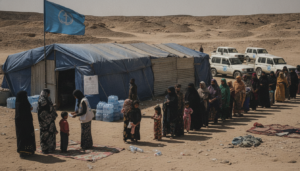
SANAA/ADEN, 3 November 2026 — The Yemen cholera outbreak has produced 8,034 suspected cases and 27 deaths since January, according to WHO Yemen situation reports published in October 2026, and the World Health Organization has now prioritised 29 districts for an emergency oral cholera vaccination campaign. The driver is displacement rather than any change in the pathogen: fighting that resumed on 6 August 2026 forced more than 200,000 people from their homes across 10 governorates, according to ReliefWeb humanitarian updates, filling camps served by damaged water networks and pushing weekly suspected cases up 209% between epidemiological weeks 36 and 40.
What is new is geography. Al-Abr district in eastern Hadramout has recorded 21 suspected cases with four culture-positive specimens, and a late-October WHO situation report logged three confirmed cases and one death in Marib — which means the disease has left the southern belt that previously accounted for more than 92% of the 2026 caseload. The constraint is money. WHO’s 90-day emergency plan holds $4.3 million of the $31 million it requires, therefore response capacity is being rationed rather than scaled.
About this report: Compiled by the INQ Daily world affairs desk, which covers public health in conflict settings. Sourcing is drawn from WHO Yemen and WHO Eastern Mediterranean Regional Office situation reports, ReliefWeb humanitarian updates and named NGO statements published between 1 and 31 October 2026. Every figure carries its source and date. Reviewed by the INQ Daily editorial desk on 3 November 2026.
Transparency and limitations: Figures are WHO-reported suspected cases unless explicitly labelled culture- or RDT-confirmed. Totals differ between reports (8,034–8,665 cases; 27–31 deaths) because surveillance in conflict zones is revised retrospectively. INQ Daily did not independently verify field data and has no funding relationship with any agency named here. This is journalism, not medical advice.
Yemen cholera cases in 2026 — the numbers as of November
WHO surveillance recorded 8,034 suspected cholera cases and 27 deaths in Yemen between January and mid-October 2026, a case fatality ratio of roughly 0.34%.
That annual figure understates current transmission, because a quarter of the year’s cases fell inside a single four-week window during the autumn escalation. The curve, in other words, is back-loaded: the caseload Yemen accumulated across eight months was matched in intensity by one month of October reporting. Any projection built on the January-to-October average therefore underestimates where the outbreak is heading.
The testing data strengthens that reading. In week 40, 74.5% of suspected cases received a rapid diagnostic test and 91.5% of those tests returned positive — which means the suspected-case curve is tracking genuine Vibrio cholerae transmission rather than a broader acute watery diarrhoea wave driven by other pathogens. Reporting ranges published across October differ (8,034 to 8,665 cases; 27 to 31 deaths), and that spread reflects retrospective revision as late-reporting districts submit data, not contradiction between sources.
| Epidemiological week | Suspected cases | Deaths reported | RDT positivity |
|---|---|---|---|
| Week 36 | 217 (baseline) | Not stated | Not stated |
| Week 37 | Rising (not stated) | Not stated | Not stated |
| Week 38 | Rising (not stated) | Not stated | Not stated |
| Week 39 | 647 (reported peak) | Not stated | Not stated |
| Week 40 | 209% above week 36 | Not stated | 91.5% of those tested |
| Year to date (Jan–mid Oct 2026) | 8,034 | 27 | Not stated |
Three figures that define the 2026 surge
- 8,034 suspected cases and 27 deaths year-to-date (WHO, mid-October 2026)
- 209% increase in weekly suspected cases between epidemiological weeks 36 and 40
- 91.5% of tested suspected cases positive on rapid diagnostic test in week 40
The Yemen cholera outbreak breaks out of the southern belt
The Yemen cholera outbreak is no longer a southern problem, because confirmed cases have now been recorded in Hadramout in the east and Marib in the centre.
Until October, the pattern was tightly contained. More than 92% of 2026 cases sat in five south-western governorates — Abyan, Lahj, Al-Dhale’e, Taiz and Aden — all of which host the country’s largest displaced populations. That concentration was driven by camp density and damaged water supply rather than by proximity to any single source: where thousands of people share latrines and untreated water, a handful of infections becomes a cluster within days.
Hadramout breached that containment. Between weeks 32 and 41, Al-Abr district reported 21 suspected cases, four of them culture-positive, in remote displacement camps that health teams reach slowly and infrequently. The detection problem matters more than the number: because surveillance in Al-Abr is thin, each confirmed case there represents a larger undetected caseload than an equivalent case in Aden, where a diarrhoea treatment centre and laboratory capacity sit within reach.
Marib carries a different risk. Three confirmed cases and one death were logged there in late October against a primary care network reduced from 31 mobile medical teams operating in 2025 to just six in 2026, according to ReliefWeb reporting. Marib health system collapse is therefore the operative variable rather than the case count — a cluster of three in a governorate with six mobile teams converts into an outbreak faster than a cluster of thirty in a governorate with functioning treatment capacity. Throughout, it is worth distinguishing laboratory-confirmed cholera from the wider acute watery diarrhoea Yemen caseload that surveillance records as suspected.
| Governorate | Region | Reported status (2026) | Main access constraint |
|---|---|---|---|
| Abyan | South | Core outbreak zone | Camp density, water damage |
| Lahj | South | Core outbreak zone | Camp density, water damage |
| Al-Dhale’e | South | Core outbreak zone | Displacement load |
| Taiz | South-west | Core outbreak zone | Conflict lines |
| Aden | South | Core zone and DTC hub | Service overload |
| Hadramout (Al-Abr) | East | 21 suspected, 4 culture-positive | Remote camps, slow access |
| Marib | Centre | 3 confirmed, 1 death | Only 6 mobile teams (31 in 2025) |
How conflict and displacement drive cholera transmission
Cholera is spreading in Yemen because displacement outpaced water and sanitation capacity — not because the bacterium changed.
The chain is datable. Fighting escalated on 6 August 2026, which displaced more than 200,000 people across 10 governorates. Arrivals concentrated in camps with shared or absent latrines, where damaged and unpowered water networks forced reliance on untreated or trucked supply. Faecal contamination of drinking water followed, producing the acute watery diarrhoea clusters that surveillance began registering from week 36 onward. Each link in that sequence is an infrastructure failure, which is why the response levers are engineering and logistics as much as medicine.
- 6 August 2026: fighting escalates, triggering a new displacement wave
- More than 200,000 people displaced across 10 governorates
- Arrivals concentrate in overcrowded camps with shared or absent latrines
- Damaged and unpowered water networks force reliance on untreated sources
- Drinking water is contaminated, producing acute watery diarrhoea clusters
- Weak surveillance and slow access delay detection, so clusters become outbreaks
Underneath the 2026 wave sits a structural condition: clean water access in Yemen has been degraded by a decade of conflict, therefore each new displacement wave lands on infrastructure that was already failing. The effect is faster outbreak ignition than Yemen experienced in 2017, when more of the network was still operational. One genuine uncertainty applies here — displacement figures above 200,000 are provisional and rise as registration catches up with movement.
Why WHO prioritised 29 districts for oral cholera vaccine
WHO prioritised 29 districts because the global oral cholera vaccine stockpile cannot cover an entire country, therefore doses are allocated where transmission intensity and population vulnerability overlap most sharply.
Vaccination is the central containment tool in the current Yemen cholera outbreak response, and it is also the most supply-constrained. WHO and Yemen’s Ministry of Public Health and Population ranked districts on case incidence, rapid diagnostic test positivity, displacement load and water-system damage, then submitted the 29-district request to the International Coordinating Group on Vaccine Provision, the body that rations the global stockpile across competing country requests.
- Districts are ranked on case incidence, RDT positivity, displacement load and water-system damage
- WHO and the Ministry of Public Health and Population submit a request to the International Coordinating Group (ICG)
- The ICG allocates doses from the global oral cholera vaccine stockpile against competing country requests
- Doses move through a cold chain into governorate and district stores
- Microplanning assigns fixed sites, mobile teams and camp coverage
- Single-dose delivery begins, followed by coverage surveys and continued surveillance
The trade-off deserves stating plainly. Single-dose campaigns stretch limited doses across more people, but they deliver shorter protection than the two-dose schedule, which means a campaign of this design buys months rather than years. Its value depends on what follows: if water treatment and sanitation repairs do not arrive inside that window, transmission resumes when immunity wanes. The itemised district list is published in WHO Yemen situation reports, and allocation can shift with stockpile availability.
The $31 million plan that is 86% unfunded
The response is being rationed because WHO’s 90-day Yemen emergency response plan held $4.3 million against a $31 million requirement as of mid-October 2026 — a shortfall of roughly 86%.
Translate that into capacity and the picture sharpens. The current budget supports 11 prioritised diarrhoea treatment centres in Aden, Abyan and Al-Dhale’e and 18 funded rapid response teams deployed to high-transmission areas. Around 500 health facilities across nine affected governorates operate without any partner support at all. Which means expansion into Hadramout and Marib competes with maintaining the sites already running, rather than adding to them — a reallocation, not growth.
| Response element | Required / planned | Status, mid-October 2026 |
|---|---|---|
| 90-day plan budget | $31m | Requirement unmet |
| Funding received | — | $4.3m |
| Shortfall | — | About 86% |
| Priority diarrhoea treatment centres | 11 (Aden, Abyan, Al-Dhale’e) | Supported |
| Rapid response teams | 18 | Funded and deployed |
| Facilities without partner support | — | About 500 across 9 governorates |
| Districts requested for oral cholera vaccine | 29 | ICG request submitted |
WHO’s regional leadership has framed the gap in terms of consequence rather than accounting.
“Families fleeing conflict are now facing another threat from diseases that can be prevented and treated. Without urgent funding and unimpeded access to safe water, vaccination and essential health services, outbreaks could spread rapidly among already vulnerable communities.”
— Dr Annette Heinzelmann, WHO Regional Emergency Director, WHO Eastern Mediterranean Regional Office, October 2026
Islamic Relief put the same point to donors directly in a statement issued on 15 October 2026.
“Donors have a crucial opportunity to act now to prevent further loss of life… Yemen cannot afford another cycle of delayed action.”
— Islamic Relief Worldwide, 15 October 2026
The consequence of the Yemen humanitarian crisis funding gap is measurable in deaths rather than budgets. Cholera mortality tracks time-to-rehydration far more closely than it tracks case numbers, therefore delays in opening treatment capacity and delivering vaccine raise the case fatality ratio even when the case curve stays flat.
The parallel measles epidemic compounding the risk
The Yemen measles outbreak of 2026 is running alongside cholera, with more than 22,800 suspected measles cases and 128 deaths recorded this year.
The compounding mechanism is immunological and nutritional. Two-dose measles coverage of roughly 45% leaves large susceptible cohorts, and measles infection combined with acute malnutrition suppresses immune response and raises dehydration risk. As a result, a child who contracts cholera in the weeks after measles faces a materially higher chance of dying than a well-nourished, vaccinated child with the same infection.
- 22,800+ suspected measles cases recorded in 2026
- 128 measles deaths reported this year
- About 45% coverage for the two recommended measles doses
Operationally, the two emergencies draw on the same cold chain, the same vaccinators and the same unfunded plan — which means every vaccination decision taken in Yemen this quarter is a reallocation rather than an addition.
How 2026 compares with Yemen’s record 2017-2019 epidemic
2026 is not a repeat of 2017 in scale, but it shares the conditions that produced 2017: mass displacement, destroyed water systems and an underfunded response.
Yemen’s 2017-2019 epidemic exceeded 2.2 million suspected cases and 3,700 deaths according to WHO records, and it is widely described as the largest cholera epidemic documented by case count. The 2026 wave stands at 8,034 suspected cases and 27 deaths to mid-October — smaller by orders of magnitude, but growing faster week-on-week and starting from a weaker funding base.
| Indicator | 2017-2019 epidemic | 2026 wave (to mid-October) |
|---|---|---|
| Suspected cases | More than 2.2 million | 8,034 |
| Reported deaths | More than 3,700 | 27 |
| Geographic reach | Nationwide | South, now Hadramout and Marib |
| Oral cholera vaccine deployment | Limited, delayed | 29 districts requested from ICG |
| Response funding status | Underfunded | $4.3m of $31m (about 86% short) |
| Principal driver | Conflict, water-system collapse | Conflict, displacement from 6 Aug 2026 |
The analytical conclusion is straightforward: the determining variable is response speed, therefore the 86% funding gap tells you more about where the 2026 total lands than the current case count does. Yemen also sits inside a wider cholera outbreak picture in 2026, in which multi-country demand presses on a single constrained vaccine stockpile — which is precisely why the ICG allocates rather than simply supplies.
What stops cholera: symptoms, treatment and prevention
Cholera is treatable, and WHO guidance indicates that up to 80% of cases can be managed with oral rehydration solution alone — which is why deaths concentrate where treatment is hours away rather than minutes.
WHO describes the clinical picture as profuse watery stool, vomiting and rapid dehydration. Most infections are mild or asymptomatic, but severe cases lose litres of fluid per hour and can become fatal within hours if rehydration does not begin.
- Assess dehydration severity on arrival at a diarrhoea treatment centre
- Start oral rehydration solution immediately for mild to moderate cases
- Give intravenous fluids for severe dehydration or persistent vomiting
- Add antibiotics for severe cases to shorten illness and bacterial shedding
- Provide zinc supplementation for children and continue feeding
- Report the case to surveillance and test with RDT or culture
A diarrhoea treatment centre exists for one purpose: to shorten time-to-rehydration. Therefore DTC coverage in Hadramout and Marib — where none of the 11 prioritised centres currently sit — is the clearest single determinant of whether Yemen’s death toll rises this quarter.
Prevention measures that work without a vaccine
- Chlorinate or boil drinking water, including trucked supply
- Wash hands with soap after latrine use and before food handling
- Separate latrines and waste from water sources in camps
- Cook food thoroughly and eat it hot; peel raw produce
- Disinfect household surfaces and bedding in affected homes
- Seek rehydration within hours of symptom onset
All clinical guidance above is attributed to WHO. Readers with symptoms should contact local health services rather than relying on this report.
Frequently asked questions
What is happening with Yemen’s cholera outbreak in November 2026?
The Yemen cholera outbreak has expanded beyond the southern belt. WHO recorded 8,034 suspected cases and 27 deaths from January to mid-October 2026, with weekly suspected cases tripling from 217 in epidemiological week 36 to 647 in week 39. Confirmed cases are now reported in Hadramout and Marib, and WHO has submitted a 29-district request for oral cholera vaccine.
Why is Yemen’s cholera outbreak spreading beyond the south?
Because displacement carried transmission along movement routes. Fighting from 6 August 2026 displaced more than 200,000 people across 10 governorates. Arrivals in remote Hadramout camps and in a weakened Marib have little treatment capacity nearby, resulting in confirmed cases outside the five southern governorates — Abyan, Lahj, Al-Dhale’e, Taiz and Aden — that previously held over 92% of the caseload.
Which 29 districts is WHO targeting for cholera vaccination in Yemen?
WHO and Yemen’s health ministry submitted a 29-district request to the International Coordinating Group. Districts were selected on case incidence, RDT positivity, displacement load and water-system damage, concentrated in the southern outbreak zone with additions further east. The itemised list is published in WHO Yemen situation reports, and final allocation depends on global stockpile availability.
How many people have died of cholera in Yemen this year?
27 deaths among 8,034 suspected cases, reported by WHO from January to mid-October 2026 — a case fatality ratio near 0.34%. Some October reports cite up to 31 deaths and 8,665 cases, because conflict-zone surveillance is revised retrospectively as districts report late. Under-reporting in inaccessible districts such as Al-Abr is likely.
What are the symptoms of cholera and how fast does it kill?
Profuse watery diarrhoea, vomiting and rapid dehydration, which can become fatal within hours in severe untreated cases, according to WHO. Most infections are mild or asymptomatic. Severe cases lose litres of fluid per hour, and oral rehydration solution or intravenous fluids reverse the condition when treatment starts early — which is why proximity to a treatment centre matters so much.
Why is the cholera vaccine in short supply?
Because global demand from simultaneous outbreaks exceeds the oral cholera vaccine stockpile. The International Coordinating Group allocates limited doses across competing country requests, which is why campaigns shifted to single-dose delivery — widening coverage at the cost of shorter protection — and why only 29 Yemeni districts were requested rather than nationwide coverage.
How much funding does WHO need for Yemen’s cholera response?
$31 million for its 90-day emergency response plan, of which $4.3 million had been received by mid-October 2026 — a shortfall of about 86%. The consequence is operational: roughly 500 health facilities across nine governorates lack partner support, therefore vaccination and treatment expansion is being rationed rather than scaled.
Is the 2026 outbreak worse than Yemen’s 2017 cholera epidemic?
No, not in scale. The 2017-2019 epidemic exceeded 2.2 million suspected cases and 3,700 deaths, making it the largest cholera epidemic on record by case count, while 2026 stands at 8,034 cases and 27 deaths to mid-October. The growth rate and the funding gap, rather than current totals, determine where 2026 ends.
Can cholera be prevented without a vaccine?
Yes — safe water, sanitation and hygiene prevent most transmission. WHO guidance points to chlorinating or boiling drinking water, handwashing with soap, separating latrines from water sources and safe food handling. These measures require functioning infrastructure, which is precisely what conflict damage and displacement have removed across much of Yemen.
What is a Diarrhoea Treatment Centre and how many is WHO supporting in Yemen?
A dedicated facility that isolates and rehydrates severe diarrhoeal cases using oral rehydration solution, intravenous fluids and infection control. WHO is prioritising support for 11 DTCs in Aden, Abyan and Al-Dhale’e, alongside 18 funded rapid response teams, because reducing time-to-rehydration is what lowers cholera deaths.
Limitations of the data and what remains uncertain
Nearly all figures cited here are suspected cases drawn from syndromic surveillance rather than laboratory-confirmed infections; only a minority are RDT- or culture-confirmed, therefore the totals describe a clinical syndrome plus confirmed cholera rather than confirmed cholera alone. Totals also vary between reports — 8,034 to 8,665 cases and 27 to 31 deaths for 2026 — because situation reports are revised as districts submit data late. Access restrictions in Hadramout and parts of Marib mean the true caseload outside the southern belt is likely higher than reported, which biases the geographic picture toward governorates health teams can actually reach, and displacement estimates above 200,000 remain provisional registration figures. Vaccination is also one lever among several: water treatment, DTC expansion and unimpeded humanitarian access change outcomes independently of vaccine supply, and a stockpile decision taken outside Yemen can alter the 29-district plan at short notice.
What to watch next
Three things will determine where the Yemen cholera outbreak goes from here. First, the ICG decision on the 29-district request, because allocation volume sets the ceiling on what any campaign can cover. Second, the weekly case and RDT positivity figures in WHO situation reports after week 40 — a sustained fall from the week 39 peak of 647 would indicate the southern response is holding, while continued reporting from Al-Abr and Marib would signal the opposite. Third, movement on the roughly $26.7 million still unfunded in the $31 million plan.
The analytical position is clear: the trajectory is set by response speed and funding rather than by the current case count, because cholera deaths track time-to-rehydration. Follow INQ Daily world affairs coverage for continuing updates.
References
- WHO Yemen — cholera and acute watery diarrhoea situation reports, October 2026
- WHO Eastern Mediterranean Regional Office — news and statements, October 2026
- WHO — Yemen crisis and 90-day emergency response plan funding status
- Islamic Relief Worldwide — statement on Yemen’s health emergency, 15 October 2026
- ReliefWeb — Yemen humanitarian updates, August–October 2026
- WHO — Disease Outbreak News and global cholera reporting, 2026
- WHO — cholera fact sheet
- WHO — International Coordinating Group on Vaccine Provision