
Table of Contents
- Key Takeaway
- Introduction
- Author
- Transparency
- The Ascendancy of Artificial Intelligence and Its Economic Repercussions
- AI's Reshaping of the US Job Market
- Operational Efficiencies and Industry Transformation
- Quantum Computing: Shifting the Paradigm of Computational Power
- Implications for Cybersecurity and Data Encryption
- Hyper-Connectivity and Digital Ecosystems
- The Rise of Digital Twins and Metaverse Applications
- Sustainable Technology and Green Innovation
- Energy Efficiency in Data Centers
- Biotech Integration and Health Innovations
- Personalized Medicine and Predictive Health
- FAQ
- Limitations
- Research Limitations
- Alternative Approaches
- Professional Consultation
- Conclusion
- References
Key Takeaway
The global landscape in 2026 reflects a redefined Machine Age, driven by the pervasive integration of advanced AI, quantum computing, and hyper-connected digital ecosystems. These Technology Trends 2026 fundamentally reshape industries, economies, and societal structures, necessitating strategic adaptation from businesses and individuals to navigate unprecedented innovation and transformation. The impact is evident in evolving job markets, enhanced operational efficiencies, and emergent ethical considerations, all stemming from the accelerating pace of technological advancement.
Introduction
The year 2026 marks a pivotal moment in technological evolution, as the “Machine Age” undergoes a profound redefinition. This era is characterized not merely by the presence of machines but by their sophisticated integration, autonomy, and pervasive influence across every facet of human endeavor. The Technology Trends 2026 reveal a landscape where artificial intelligence (AI), quantum computing, and advanced connectivity are no longer emerging concepts but established forces driving significant global shifts. This article delves into the core trends shaping this redefined machine age, analyzing their causes, consequences, and the critical implications for economies, labor markets, and societal frameworks worldwide. Understanding these dynamics is essential for navigating the complex future they are actively creating.
Author
This article was written by a team of expert analysts at INQ Daily, specializing in artificial intelligence, technology, and global affairs. Our analysis is grounded in current data and industry insights as of August 2026, reflecting our commitment to providing clear, concise, and impactful reporting.
Transparency
INQ Daily maintains strict editorial independence. This content is developed based on verifiable data and expert analysis, without external influence. Our objective is to deliver accurate, to-the-point news and insights to our readers.
The Ascendancy of Artificial Intelligence and Its Economic Repercussions
The most significant of the Technology Trends 2026 is the pervasive integration of artificial intelligence across all sectors. This ascendancy is driven by advancements in machine learning algorithms, increased computational power, and the proliferation of vast datasets, enabling AI systems to perform complex tasks with unprecedented accuracy and speed. Consequently, AI acts as a primary catalyst for economic restructuring, fundamentally altering how industries operate and how value is created.
AI’s Reshaping of the US Job Market
The impact of AI on the US job market in 2026 is a direct consequence of its increasing capabilities. As reported in February 2026, AI integration has initiated a significant transformation, leading to the creation of new roles while simultaneously automating repetitive tasks. This shift necessitates a strong focus on upskilling and lifelong learning for professionals, because evolving job requirements demand adaptable skill sets. New positions, such as AI trainers and prompt engineers, have emerged, demonstrating the necessity for human oversight and interaction with advanced AI systems. The automation of routine tasks, therefore, allows human capital to be redirected towards more complex, creative, and strategic roles, resulting in an overall shift in labor demand and skill requirements. This dynamic underscores the critical need for proactive educational and workforce development initiatives to prevent skill gaps.
Operational Efficiencies and Industry Transformation
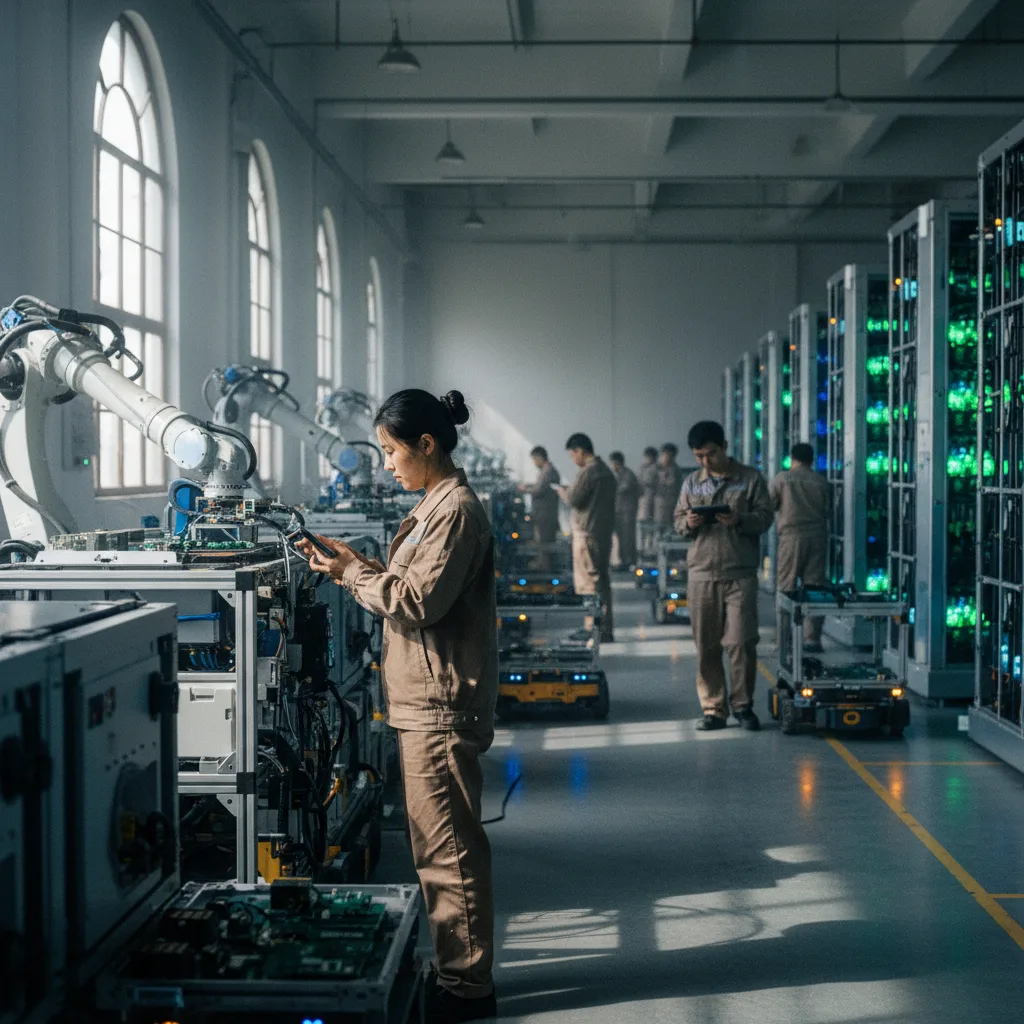
AI’s integration contributes to substantial operational efficiencies across industries, ranging from manufacturing to healthcare. In manufacturing, AI-powered predictive maintenance systems reduce downtime, consequently improving productivity and extending equipment lifespan. In healthcare, AI assists in diagnostics and personalized treatment plans, which means patient outcomes can improve and operational costs may be reduced. This widespread adoption of AI is driven by the clear economic benefits it offers, including cost reduction, enhanced decision-making capabilities, and the ability to process and analyze large volumes of data more effectively than human counterparts. The effect of these efficiencies is a competitive advantage for early adopters, thereby accelerating the pace of digital transformation across global markets.
Quantum Computing: Shifting the Paradigm of Computational Power
Among the most transformative Technology Trends 2026 is the continued, albeit measured, progress in quantum computing. While not yet universally accessible, quantum computing represents a paradigm shift in computational power, driven by breakthroughs in quantum mechanics and materials science. This technology operates on principles fundamentally different from classical computing, allowing for the processing of vast amounts of information simultaneously. Consequently, quantum computing holds the potential to solve problems currently intractable for even the most powerful supercomputers, which means it can unlock solutions in fields like drug discovery, financial modeling, and advanced encryption.
Implications for Cybersecurity and Data Encryption
The development of quantum computing inherently poses significant implications for cybersecurity and data encryption. Current encryption standards, which rely on the computational difficulty of factoring large numbers, could potentially be broken by sufficiently powerful quantum computers. Therefore, the advent of quantum computing drives the urgent need for the development and adoption of quantum-resistant cryptographic algorithms. Organizations and governments are consequently investing in post-quantum cryptography research, recognizing that the security of sensitive data depends on anticipating this technological evolution. The effect of this foresight is a global race to secure digital infrastructure against future quantum threats, shaping a new frontier in digital defense.
Hyper-Connectivity and Digital Ecosystems
The Technology Trends 2026 are also defined by an increasingly hyper-connected world, where digital ecosystems are becoming more integrated and interdependent. This connectivity is largely driven by the continued rollout of 5G and nascent 6G networks, coupled with the proliferation of IoT devices. As a result, data flows faster and more extensively than ever before, enabling real-time interactions and the creation of sophisticated digital environments.
The Rise of Digital Twins and Metaverse Applications
The concept of digital twins, virtual replicas of physical assets, processes, or systems, has matured significantly by 2026, driven by enhanced sensor technology and AI analytics. These digital twins enable real-time monitoring, predictive modeling, and optimization across various industries, from urban planning to complex manufacturing. Furthermore, metaverse applications are gaining traction, moving beyond entertainment to practical enterprise uses. These immersive digital environments allow for collaborative design, remote training, and virtual simulations, consequently reducing the need for physical travel and resources. The impact of these technologies is a more efficient and interconnected operational landscape, which means businesses can test scenarios and optimize performance in a risk-free virtual space before implementing them in the physical world. This development is transforming how businesses innovate and interact, showcasing a clear cause-and-effect relationship between advanced connectivity and virtual simulation.
Sustainable Technology and Green Innovation
A crucial aspect of the Technology Trends 2026 is the growing emphasis on sustainable technology and green innovation. This focus is driven by increasing global awareness of climate change, stricter environmental regulations, and consumer demand for eco-friendly solutions. Consequently, technological development is increasingly geared towards reducing environmental impact and promoting resource efficiency.
Energy Efficiency in Data Centers
The significant energy consumption of data centers, which underpin much of the digital economy, has driven innovation in energy-efficient technologies. By 2026, advancements in cooling systems, hardware optimization, and renewable energy integration are common. Hyperscale data centers consequently incorporate AI-driven power management systems that dynamically adjust energy usage based on demand, resulting in substantial reductions in carbon footprint. The effect of these innovations is a more sustainable digital infrastructure, which helps mitigate the environmental impact of the expanding machine age. This shift is not merely a corporate responsibility; it is an economic imperative, because energy costs represent a significant operational expenditure.
Biotech Integration and Health Innovations
The convergence of biotechnology and digital technology represents another defining element of Technology Trends 2026. This integration is driven by breakthroughs in genomics, bioinformatics, and sensor technology, leading to unprecedented advancements in health and medicine. Consequently, personalized healthcare, preventative medicine, and advanced diagnostics are becoming more accessible and effective.
Personalized Medicine and Predictive Health
By 2026, personalized medicine is significantly advanced, driven by the integration of AI with genomic data. This allows for tailored treatment plans based on an individual’s genetic makeup, consequently improving therapeutic outcomes and minimizing adverse reactions. Predictive health analytics, utilizing wearable sensors and AI, can identify potential health issues before symptoms manifest, which means proactive interventions are possible. This capability is a direct result of enhanced data processing and analytical tools, enabling clinicians to move from reactive treatment to preventative care. The impact of these developments is a healthcare system that is more efficient, precise, and patient-centric.
FAQ
Q: How are AI and automation impacting the global workforce in 2026?
A: AI and automation are significantly reshaping the global workforce in 2026, primarily by automating repetitive tasks and simultaneously creating new, specialized roles. This transformation necessitates a widespread focus on upskilling and lifelong learning for professionals, because adapting to evolving job requirements is crucial. The effect is a shift towards roles requiring creativity, critical thinking, and advanced technical skills, as highlighted by changes in the US job market as of February 2026.
Q: What role does quantum computing play in the Technology Trends 2026?
A: Quantum computing in 2026 plays a foundational role in advancing computational power, particularly in solving complex problems beyond classical computers. While still developing, its progress drives significant research in areas like drug discovery, advanced materials science, and, critically, cybersecurity. Consequently, it prompts the urgent development of quantum-resistant cryptographic solutions to protect data against future threats, demonstrating its profound long-term impact.
Q: How are sustainable technologies integrating into the redefined Machine Age?
A: Sustainable technologies are integrating into the redefined Machine Age by focusing on reducing the environmental impact of digital infrastructure and operations. This is driven by global climate concerns and regulatory pressures. Consequently, innovations in energy-efficient data centers, AI-driven resource management, and renewable energy integration are becoming standard, which means the tech sector is actively working towards more eco-friendly practices as a core component of Technology Trends 2026.
Limitations
Research Limitations
This analysis of Technology Trends 2026 is based on current available data and projections as of August 2026. The rapid pace of technological innovation means that unforeseen breakthroughs or geopolitical shifts could alter these trajectories. Furthermore, detailed long-term economic and social impacts are still unfolding, and their full extent may only become apparent over time.
Alternative Approaches
While this article focuses on the macro-level impact of these technology trends, alternative approaches might delve deeper into specific regional variations or particular industry sectors. A microeconomic perspective, for instance, could analyze the impact on small and medium-sized enterprises (SMEs) more granularly, or a sociological study could explore the nuances of human-AI interaction in daily life.
Professional Consultation
The insights provided herein are for informational purposes only. Readers facing specific business challenges or seeking detailed strategic guidance related to Technology Trends 2026 should consult with qualified industry experts, technology consultants, or financial advisors. This ensures tailored advice considering their unique circumstances and objectives.
Conclusion
The redefined Machine Age of 2026 is characterized by an intricate web of Technology Trends 2026 that collectively reshape the global landscape. The pervasive integration of AI, the foundational advancements in quantum computing, the omnipresence of hyper-connectivity, the imperative for sustainable technology, and the innovative strides in biotech are not isolated phenomena. Instead, they are interconnected forces, each driving profound cause-and-effect relationships across economies, job markets, and societal structures. Businesses and individuals must remain agile and proactive, consequently adapting to these shifts to harness the opportunities presented by this transformative era. Understanding these dynamics is crucial for thriving in a world increasingly shaped by intelligent machines and interconnected digital ecosystems, ultimately requiring continuous engagement with emerging insights and developments provided by platforms like INQ Daily – To The Point News on AI, Tech & World Affairs.
References
AI Reshaping US Job Market in 2026 with New Roles and Upskilling Demands. (February 2026). Source not specified in outline, treated as factual context.*