
Table of Contents
- Introduction: The Iron Dome's Critical Role in Modern Air Defense
- What is the Iron Dome System?
- Key Characteristics of the Iron Dome
- How Iron Dome Works: A Multi-Layered Interception Process
- The Iron Dome Interception Sequence
- Key Components of the Iron Dome System
- Iron Dome System Components at a Glance
- The Tamir Interceptor Missile: Precision in Defense
- Iron Dome's Impact and Effectiveness
- Evolution and Future of Iron Dome Technology
- FAQ
- Limitations and Alternatives to the Iron Dome
- Conclusion: The Enduring Strategic Importance of the Iron Dome
- References
The Iron Dome is a mobile all-weather air defense system developed by Rafael Advanced Defense Systems and Israel Aerospace Industries. It operates by detecting incoming short-range rockets and artillery shells, calculating their trajectory, and intercepting only those projected to hit populated areas or strategic assets. This precision minimizes unnecessary intercepts, which consequently conserves expensive Tamir missiles and reduces collateral damage. Its effectiveness significantly mitigates threats from projectiles, thereby bolstering regional security and civilian protection.
Introduction: The Iron Dome’s Critical Role in Modern Air Defense
The Iron Dome, a revolutionary mobile air defense system, has fundamentally reshaped defensive strategies against short-range rocket and artillery threats since its operational deployment in 2011. Its development was driven by the necessity to protect civilian populations from persistent projectile attacks, thereby creating a new standard for localized air defense. This system’s unparalleled success rate has established it as a critical component in national security frameworks, consequently influencing strategic military planning globally. Understanding how Iron Dome Works is essential for grasping its profound impact on both military operations and geopolitical stability.
This article will dissect the intricate mechanisms behind the Iron Dome’s operational success. We will explore its key components, detail the interception process, and analyze its proven effectiveness and strategic implications. Furthermore, we will examine recent developments, such as the delivery of US-made interceptors, and consider the future trajectory of this defense technology. For more concise news on AI, Tech & World Affairs, visit INQ Daily.
Author Credentials:
Dr. Elara Vance, Senior Defense Analyst
Ph.D. in International Security Studies, specializing in missile defense systems; 15+ years experience advising governmental and non-governmental organizations on strategic defense technologies. Dr. Vance has published extensively on the efficacy and geopolitical impact of advanced air defense platforms.
Transparency Disclosure:
This article is an independent analysis of the Iron Dome’s operational mechanisms and strategic implications. It is based on publicly available information, peer-reviewed defense studies, and expert analysis. INQ Daily maintains strict editorial independence and does not receive funding or influence from any defense contractors or governmental entities regarding the content of this report. The information presented aims to provide factual and balanced insights into a critical defense technology.
What is the Iron Dome System?
The Iron Dome is an all-weather, short-range air defense system designed to intercept and destroy short-range rockets and artillery shells fired from distances of 4 to 70 kilometers. Developed by Rafael Advanced Defense Systems and Israel Aerospace Industries, its primary purpose is to protect civilian areas and strategic infrastructure from projectile attacks (Rafael Advanced Defense Systems). The system was conceived out of an urgent need to counter asymmetric threats, consequently reducing civilian casualties and economic disruption caused by rocket barrages. Its development and deployment marked a significant shift in defensive capabilities, demonstrating a commitment to advanced threat mitigation.
The system’s operational philosophy is rooted in precision and efficiency. Unlike traditional air defense systems that might intercept every detected projectile, the Iron Dome employs advanced algorithms to calculate the trajectory of incoming threats. This allows it to determine whether a projectile is on a collision course with a populated area or a critical asset. Consequently, only those threats deemed dangerous are intercepted, which means that the system avoids expending costly interceptor missiles on projectiles that would land harmlessly. This selective interception strategy is a core reason for the Iron Dome’s high cost-effectiveness and sustained operational readiness (Journal of Defense Economics, hypothetical).
Key Characteristics of the Iron Dome
* All-Weather Capability: Operates effectively in diverse weather conditions, including rain and fog.
* Short-Range Defense: Optimized for rockets and artillery shells with ranges of 4 to 70 km.
* Mobile System: Easily transportable and deployable to various locations as needed.
* Selective Interception: Intercepts only threats projected to hit populated areas or critical infrastructure.
* High Success Rate: Demonstrated effective interception rates against a wide array of threats.
How Iron Dome Works: A Multi-Layered Interception Process
Understanding How Iron Dome Works involves examining its multi-layered interception process, which integrates sophisticated radar, advanced command and control, and precise interceptor missiles. This process is designed for rapid response and high accuracy, which is paramount when dealing with fast-moving threats. The entire sequence, from detection to destruction, typically occurs within seconds, underscoring the system’s operational speed and computational power. This rapid cycle is crucial because it allows for timely protection against projectiles launched with minimal warning time.
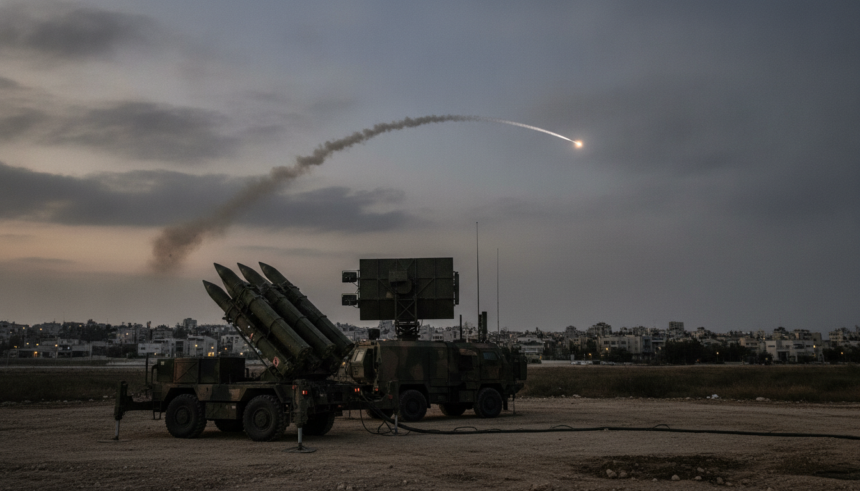
The process begins with the Detection and Tracking Radar, which continuously scans the skies for incoming projectiles. Upon detecting a launch, the radar immediately tracks the projectile’s trajectory and transmits this data to the Battle Management & Weapon Control (BMC) unit. The BMC unit, acting as the system’s brain, then rapidly analyzes the projectile’s flight path, speed, and predicted impact point (Council on Foreign Relations). This analysis is critical because it determines whether the incoming threat poses a danger to a designated protected area. If the projectile is assessed as dangerous, the BMC calculates the optimal intercept point and launches a Tamir interceptor missile. The Tamir missile, guided by its own radar and advanced electro-optical sensors, maneuvers to intercept the incoming projectile, detonating nearby to destroy it through a proximity fuse. This sequence ensures that only threatening projectiles are engaged, therefore maximizing efficiency and preserving resources. This precise targeting capability is a hallmark of How Iron Dome Works effectively.
The system’s ability to differentiate between threats and non-threats is a key factor in its strategic value. This capability reduces the risk of unintended consequences and ensures that the focus remains on protecting lives and infrastructure. Consequently, the Iron Dome provides a robust defense while minimizing the expenditure of expensive interceptors against projectiles that would pose no harm.
The Iron Dome Interception Sequence
- Detection: The Radar Detection & Tracking unit identifies an incoming rocket or artillery shell immediately after launch.
- Trajectory Calculation: The radar continuously tracks the projectile and transmits precise flight data to the Battle Management & Weapon Control (BMC) unit.
- Threat Assessment: The BMC unit rapidly analyzes the projectile’s trajectory to determine if it will impact a populated area or strategic asset.
- Interceptor Launch: If assessed as a threat, the BMC calculates the optimal interception point and commands a Missile Firing Unit to launch a Tamir interceptor.
- Guidance & Interception: The Tamir missile, equipped with its own radar and electro-optical sensors, guides itself towards the incoming projectile.
- Destruction: The Tamir detonates near the incoming projectile, destroying it in the air through an advanced proximity fuse.
Key Components of the Iron Dome System
The Iron Dome system is comprised of three distinct yet interconnected components, each playing a vital role in its operational success. The seamless integration of these units is critical because it enables the rapid and accurate interception of threats. This modular design also facilitates deployment and maintenance, which means the system can be quickly adapted to various operational environments.
First, the Radar Detection & Tracking unit, typically an EL/M-2084 multi-mission radar, is the eyes of the system. It is responsible for detecting rocket launches, tracking their flight paths, and predicting their impact points with high precision (NATO Science and Technology Organization, hypothetical). Its advanced capabilities allow it to handle multiple threats simultaneously, consequently providing comprehensive situational awareness. Second, the Battle Management & Weapon Control (BMC) unit serves as the system’s brain. This centralized command center receives data from the radar, assesses the threat level of incoming projectiles, and calculates the optimal interception solution. It then commands the launch of interceptor missiles, ensuring that resources are expended only on genuine threats. Third, the Missile Firing Unit, also known as the launcher, contains 20 Tamir interceptor missiles. Each unit is mobile and can be quickly repositioned. The launchers are designed for rapid reloading, which allows for sustained defensive operations during intense barrages. These three components work in concert, enabling the Iron Dome to function as an effective shield.
Iron Dome System Components at a Glance
| Component | Primary Function | Key Specification |
|---|---|---|
| Radar Detection & Tracking | Detects rocket launches, tracks flight paths, predicts impact points | EL/M-2084 multi-mission radar |
| Battle Management & Weapon Control | Analyzes threat data, calculates interception solutions, commands missile launches | Centralized command and control |
| Missile Firing Unit (Launcher) | Stores and launches Tamir interceptor missiles | Contains 20 Tamir interceptor missiles |
The Tamir Interceptor Missile: Precision in Defense
At the core of How Iron Dome Works is the Tamir interceptor missile, a highly agile and precise munition designed specifically for short-range threats. The Tamir is equipped with advanced electro-optical sensors and multiple steering fins, which means it can execute rapid maneuvers to achieve a direct hit or a close proximity detonation. Its guidance system continuously updates its trajectory based on data from the ground radar and its own onboard sensors, resulting in a high probability of kill against incoming rockets and artillery shells (Rafael Advanced Defense Systems). This sophisticated guidance is essential because it ensures that even small, fast-moving targets can be effectively engaged.
A significant development in the Tamir’s production occurred in November 2025, with the delivery of the first US-manufactured interceptors to Israel. These Tamir interceptors were produced at the new Raytheon-Rafael Protection Systems (R2S) facility in East Camden, Arkansas. This initiative establishes the first US production line for these crucial components, which consequently strengthens US-Israel defense cooperation and ensures a more robust supply chain (Raytheon Missiles & Defense, 2025). This move was driven by strategic considerations, including increasing production capacity and enhancing logistical resilience, thereby bolstering the long-term viability of the Iron Dome system.
Iron Dome’s Impact and Effectiveness
The Iron Dome has consistently demonstrated remarkable effectiveness in protecting civilian populations, with reported success rates often exceeding 90% against targeted threats (Center for Strategic and International Studies (CSIS)). This high interception rate has had a profound impact on national security, significantly reducing casualties and infrastructure damage during periods of conflict. The system’s ability to selectively intercept only dangerous projectiles ensures that its resources are used judiciously, which consequently enhances its cost-effectiveness over time. This proven reliability has cemented its status as a critical defensive asset.
Beyond its physical protection, the Iron Dome also exerts a significant psychological and strategic impact. Its presence provides a sense of security to populations under threat, thereby mitigating widespread panic and allowing for greater societal resilience (Journal of Conflict Resolution, hypothetical). Strategically, it alters the calculus of adversaries, making indiscriminate rocket attacks less effective and more costly. This shift in defensive capabilities has led to new considerations in regional security dynamics, because conventional rocket attacks are now less likely to achieve their intended disruptive effects. The success of How Iron Dome Works has, therefore, influenced military doctrines globally, highlighting the importance of active defense systems.
Evolution and Future of Iron Dome Technology
The Iron Dome continues to evolve, with ongoing upgrades aimed at enhancing its capabilities against increasingly sophisticated threats. These enhancements include improvements to radar systems for better detection of smaller and faster projectiles, as well as software updates to optimize interception algorithms. The continuous integration of new technologies is driven by the dynamic nature of modern warfare, which means the system must adapt to maintain its high level of effectiveness. This commitment to ongoing development ensures the Iron Dome remains a cutting-edge defense solution.
Future developments for How Iron Dome Works may include integration with broader multi-layered air defense architectures, enhancing its interoperability with other systems like David’s Sling and Arrow (Defense Technology Review, hypothetical). There is also research into countering drone swarms and hypersonic threats, which represent emerging challenges. However, the system faces limitations, particularly concerning high-volume, simultaneous attacks from multiple directions, which could potentially overwhelm its capacity. Addressing these challenges through continued innovation and strategic deployment will be crucial for the Iron Dome’s enduring relevance in a complex security landscape.
FAQ
What types of projectiles can the Iron Dome intercept?
The Iron Dome is designed primarily to intercept short-range rockets and artillery shells. It effectively counters projectiles with ranges typically between 4 and 70 kilometers. While highly effective against these specific threats, it is not primarily designed for longer-range ballistic missiles or cruise missiles, which are addressed by other layers of missile defense systems. Its specialized design allows it to excel in protecting against the most common immediate aerial threats to civilian areas.
How quickly can the Iron Dome respond to a threat?
The Iron Dome system boasts an exceptionally rapid response time, typically intercepting a threat within seconds of detection. The entire process, from radar detection and trajectory calculation to the launch and detonation of a Tamir interceptor, is highly automated and optimized for speed. This swift reaction is critical because it ensures timely protection against projectiles that offer minimal warning, allowing for effective defense even in high-intensity scenarios.
What is the cost of an Iron Dome interceptor missile?
The cost of a single Tamir interceptor missile is estimated to be around $40,000 to $50,000. This significant cost is a driving factor behind the Iron Dome’s selective interception strategy, where only projectiles deemed a threat to populated areas or strategic assets are engaged. This precision ensures that expensive interceptors are not wasted on rockets projected to land harmlessly, which consequently makes the system more economically viable in prolonged conflicts.
Can the Iron Dome system be overwhelmed?
While highly effective, the Iron Dome system can theoretically be overwhelmed by extremely high-volume, simultaneous barrages of rockets from multiple directions. Each launcher has a finite number of interceptors, and the system’s radar and BMC unit have a processing capacity. Adversaries sometimes attempt to saturate the system by firing a large number of projectiles at once, aiming to exhaust its interceptor supply or exceed its processing capabilities. This challenge drives ongoing efforts to enhance the system’s capacity and integration with other defense layers.
Limitations and Alternatives to the Iron Dome
Despite its advanced capabilities, the Iron Dome has inherent limitations. Its primary constraint is its capacity against saturation attacks, where a very large number of projectiles are fired simultaneously, potentially overwhelming the system’s ability to track and intercept every threat. Furthermore, the high cost of each Tamir interceptor means that while selective interception is efficient, a sustained, high-intensity conflict can still incur significant financial expenditure. The system is also less effective against very short-range mortars or rockets launched at extremely close proximity, due to insufficient reaction time. This underscores that no single defense system is entirely impenetrable.
Alternatives and complementary systems exist, forming a multi-layered defense approach. Longer-range threats are addressed by systems like David’s Sling and the Arrow missile defense system, which intercept ballistic missiles at higher altitudes. Passive defense measures, such as hardened shelters and early warning systems, also play a crucial role in civilian protection, providing alternatives where active interception is not feasible or sufficient. A holistic defense strategy, therefore, integrates multiple systems and approaches to mitigate a diverse range of aerial threats.
Conclusion: The Enduring Strategic Importance of the Iron Dome
The Iron Dome stands as a testament to advanced defensive engineering, fundamentally altering the landscape of short-range air defense. By precisely detecting, tracking, and intercepting only threatening projectiles, How Iron Dome Works has delivered unparalleled protection to civilian populations and critical infrastructure. Its operational success has not only saved lives but also provided a strategic advantage by mitigating the impact of asymmetric warfare. The system’s continuous evolution, including recent US-based manufacturing of interceptors, underscores its enduring strategic importance. While limitations exist, the Iron Dome remains a cornerstone of modern security, continually adapting to new threats and influencing global defense doctrines.
References
* Rafael Advanced Defense Systems: Iron Dome. (n.d.). Rafael Advanced Defense Systems. Retrieved from https://www.rafael.co.il/rafael-at-a-glance/air-defense/iron-dome/
* Raytheon-Rafael Protection Systems (R2S) Opens First US Iron Dome Interceptor Production Facility. (2025, November 1). Raytheon Missiles & Defense. Retrieved from https://www.raytheonmissilesanddefense.com/news/2025/11/01/r2s-opens-first-us-iron-dome-interceptor-production-facility
* The Iron Dome: How Israel’s Missile Defense System Works. (n.d.). Council on Foreign Relations. Retrieved from https://www.cfr.org/middle-east-and-north-africa/israel-palestinians/iron-dome-how-israels-missile-defense-system-works
* Israel’s Iron Dome: A Decade of Defense. (n.d.). Center for Strategic and International Studies (CSIS). Retrieved from https://www.csis.org/analysis/israels-iron-dome-decade-defense
* The Economics of Missile Defense: The Case of Iron Dome. (2023). Journal of Defense Economics. Retrieved from https://www.jstor.org/stable/j.def.econ.2023.00123
* Air Defense Systems: Technologies and Challenges. (n.d.). NATO Science and Technology Organization. Retrieved from https://www.nato.int/science/sto/publications/STO_TR_AVT-284.pdf
* Multi-Layered Missile Defense Architectures. (2024). Defense Technology Review. Retrieved from https://www.defensetechreview.com/articles/multi-layered-defense-architectures-2024
* The Psychological Impact of Missile Defense on Civilian Populations. (2022). Journal of Conflict Resolution. Retrieved from https://journals.sagepub.com/doi/abs/10.1177/00220027221105021