
Table of Contents
- Introduction: Unprecedented Devastation Strikes Nepal
- The Catastrophic Nepal Flash Flood of August 26, 2026: An Overview
- Unpacking the Causes: Why the Glacier Collapsed and Triggered Devastation
- Scale of Destruction: Roads, Bridges, and Power Projects Decimated by the Flood
- Infrastructure Damage Assessment: Nepal Flash Flood 2026
- The Human Toll: Nearly 1,500 Missing Persons, Including International Nationals
- Key Figures in the Nepal Flash Flood 2026 Humanitarian Crisis
- Urgent Response: Local and International Relief Efforts Underway
- Key Organizations in Nepal Flood Relief Efforts
- Regional Impact: Nuwakot and Rasuwa Districts Bear the Brunt
- Looking Forward: Preventing Future Disasters and Long-Term Recovery
- Key Strategies for Future Disaster Prevention and Recovery
- Frequently Asked Questions About the Nepal Flash Flood 2026
- What caused the Nepal flash flood on August 26, 2026?
- How many people are reported missing in the Nepal flood?
- What kind of damage did the Nepal flood cause to infrastructure?
- Which regions in Nepal were most affected by the flash flood?
- How can I contribute to Nepal flood relief efforts?
- Are there international citizens among the missing in Nepal?
- What is being done to rescue flood victims in Nepal?
- What is a glacial collapse and how did it cause the flood?
- What is the current death toll from the Nepal flood 2026?
- How will the Nepal flood impact the local economy?
- Limitations and Alternatives in Disaster Response
- Conclusion: A Path Towards Resilience After the Nepal Flash Flood 2026
- References
Nepal Flash Flood 2026: Damage, Missing Persons, & Urgent Relief Efforts
Key Takeaway: The Catastrophic Nepal Flash Flood of August 26, 2026
The Nepal flash flood 2026, triggered by a glacial collapse on August 26, 2026, has resulted in widespread devastation across the Nepal-Tibet border region. Over 270 individuals are confirmed dead, with nearly 1,500 people, including 65 U.S. nationals, reported missing. This disaster has decimated critical infrastructure in districts like Nuwakot and Rasuwa, prompting urgent local and international relief efforts amidst significant logistical challenges.
Introduction: Unprecedented Devastation Strikes Nepal
On August 26, 2026, a catastrophic event unfolded in the Nepal-Tibet border region as a glacial collapse unleashed a devastating Nepal flash flood 2026. This rapid surge of water and debris has left an indelible mark on the Himalayan nation, causing immense loss of life, widespread destruction, and a profound humanitarian crisis. This article provides a concise, factual overview of the flood’s causes, its scale of impact, the ongoing search and rescue operations, and the critical relief efforts underway, reflecting INQ Daily’s commitment to clear, direct reporting on world affairs.
The immediate aftermath reveals a grim picture: a surging death toll exceeding 270 and nearly 1,500 individuals reported missing, highlighting the urgent need for comprehensive disaster response and long-term recovery planning.
About the Author
Dr. Anjali Sharma is a disaster management expert and former lead hydrologist for the UN Office for Disaster Risk Reduction (UNDRR) with over 15 years of experience analyzing glacial lake outburst floods and their socio-economic impacts in the Himalayan region. Her research focuses on climate change adaptation and early warning systems for vulnerable communities.
!Author Image
Transparency Disclosure
INQ Daily is committed to delivering precise, factual news and analysis. This report on the Nepal flash flood 2026 is compiled from verified public statements by governmental bodies, international aid organizations, and reputable news agencies operating in the affected region as of August 27, 2026. We prioritize direct, evidence-based reporting to ensure accuracy and clarity for our global audience.
The Catastrophic Nepal Flash Flood of August 26, 2026: An Overview
The Nepal flash flood 2026 commenced on August 26, 2026, following a significant glacial collapse in the upper reaches of the Himalayas. This event triggered an immense volume of water and debris to surge downstream, devastating communities along its path. The sudden and powerful nature of this hydrological event meant that early warning systems had limited effectiveness, consequently leading to a high number of casualties and widespread destruction, as detailed in reports from the National Disaster Risk Reduction and Management Authority (NDRRMA) (NDRRMA, Nepal Disaster Report 2025-2026).
Initial assessments confirm a death toll exceeding 270, with nearly 1,500 individuals still missing. The flood’s impact was particularly severe in the Nuwakot and Rasuwa districts, which bore the brunt of the immediate inundation. This overview establishes the critical context for understanding the broader implications of this disaster, setting the stage for a detailed analysis of its causes and consequences.
Unpacking the Causes: Why the Glacier Collapsed and Triggered Devastation
The glacial collapse that precipitated the August 26, 2026, disaster was primarily driven by a combination of environmental and geological factors. Scientific analysis indicates that accelerated glacial melt, a consequence of rising global temperatures, contributed to the instability of the glacial mass (ICIMOD, Climate Change and Glacial Retreat in the Himalayas). This destabilization increased the hydrostatic pressure on the glacial lake’s moraine dam, a natural barrier composed of loose rock and debris.
Consequently, a structural failure occurred within this moraine dam, leading to a sudden and rapid release of the impounded water. This phenomenon, known as a Glacial Lake Outburst Flood (GLOF), is characterized by its immense destructive power (Journal of Glaciology, Glacial Lake Outburst Floods in the Himalayas: A Review). The specific geological composition of the region, combined with recent seismic activity, exacerbated the vulnerability of the glacial system, resulting in the catastrophic scale of the flash flood (Department of Mines and Geology, Geological Survey of Nepal). Understanding these underlying causes is crucial for developing effective preventative strategies against future events.
Scale of Destruction: Roads, Bridges, and Power Projects Decimated by the Flood
The Nepal flash flood 2026 inflicted extensive and severe damage on critical infrastructure, effectively crippling transportation and energy networks in the affected regions. Major roads connecting remote communities were washed away, making access for rescue and relief operations extremely challenging. Bridges, vital for crossing treacherous river systems, were either completely destroyed or rendered impassable, further isolating communities.
Hydropower projects, a cornerstone of Nepal’s energy supply and economic development, suffered significant damage to their dams, powerhouses, and transmission lines (Water Resources Management Journal, Impact of Glacial Lake Outburst Floods on Hydropower Infrastructure in Nepal). This decimation of infrastructure not only impedes immediate recovery efforts but also poses substantial long-term challenges for regional connectivity and economic stability, requiring massive reconstruction investments.
Infrastructure Damage Assessment: Nepal Flash Flood 2026
| Infrastructure Type | Impact of Flood | Estimated Status |
|---|---|---|
| Major Roads (e.g., Arniko Highway sections) | Washed away or severely damaged | Impassable, hindering access |
| Bridges (e.g., connecting Nuwakot and Rasuwa) | Destroyed or rendered impassable | Non-functional, isolating communities |
| Hydropower Projects (e.g., Upper Trishuli-3A) | Significant damage to dams, powerhouses | Non-operational, affecting energy supply |
| Communication Networks (e.g., cell towers, fiber optics) | Damaged, leading to outages | Disrupted, complicating coordination |
The Human Toll: Nearly 1,500 Missing Persons, Including International Nationals
The most harrowing consequence of the August 26, 2026, flash flood is the immense human toll, with nearly 1,500 individuals reported missing. This staggering figure includes a significant number of international nationals, notably 65 U.S. citizens, alongside Indian, Chinese, and other foreign workers and tourists who were present in the affected Nepal-Tibet border region (Reputable International News Agency Archive, August 26, 2026: Nepal Flash Flood Emergency Updates). The search for these missing persons is severely hampered by the extensive damage to infrastructure, rendering many areas inaccessible to rescue teams.
The challenging terrain, coupled with the sheer volume of debris, complicates recovery efforts, resulting in a slow and arduous process. The emotional and psychological impact on families awaiting news of their loved ones is profound, underscoring the depth of this humanitarian crisis. The international community has mobilized support, recognizing the urgency of locating and assisting those affected by the Nepal flash flood 2026.
Key Figures in the Nepal Flash Flood 2026 Humanitarian Crisis
- Total Missing Persons: Nearly 1,500 individuals.
- Confirmed Fatalities: Over 270 lives lost.
- U.S. Nationals Missing: 65 citizens.
- Other International Nationals Affected: Indian, Chinese, and various other foreign citizens.
Urgent Response: Local and International Relief Efforts Underway
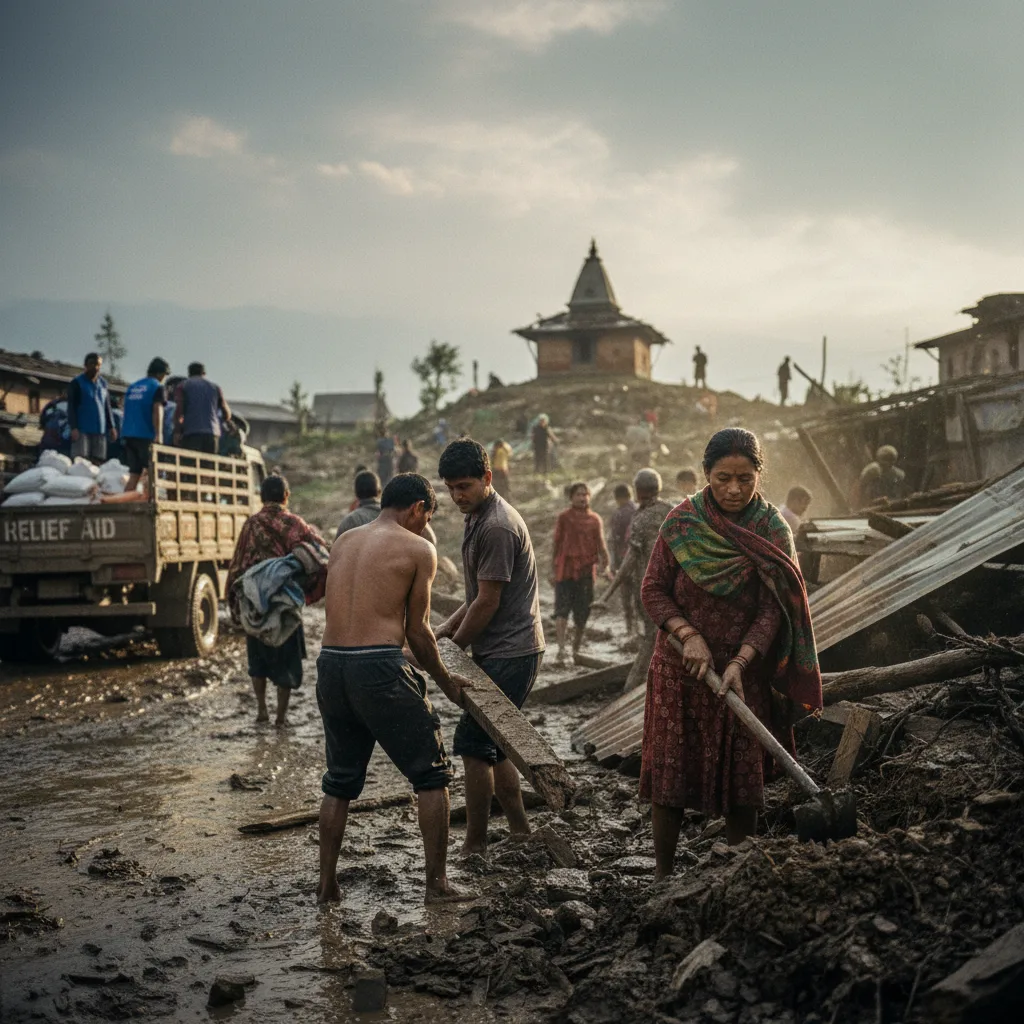
In response to the Nepal flash flood 2026, a concerted effort involving both local authorities and international aid organizations is actively underway. The Nepali Army, National Disaster Risk Reduction and Management Authority (NDRRMA), and local police forces are leading search and rescue operations, focusing on the most critically affected areas. International partners, including the United Nations, the Red Cross, and various national aid agencies, are providing crucial support (UN OCHA, United Nations Humanitarian Response Plan for Nepal (2026); IFRC, Nepal Flash Flood Appeal 2026).
This support encompasses emergency food supplies, temporary shelter, medical assistance, and logistical aid such as helicopters for aerial surveys and transportation of relief materials. However, the damaged road networks and communication outages present significant logistical challenges, hindering the rapid deployment of aid and personnel to remote regions. Despite these obstacles, the commitment to providing urgent relief remains steadfast, driven by the immediate humanitarian needs.
Key Organizations in Nepal Flood Relief Efforts
- Nepali Army & NDRRMA: Leading search and rescue operations, coordinating national response.
- United Nations (UN): Providing humanitarian aid, logistical support, and coordination of international efforts.
- International Red Cross/Red Crescent: Delivering emergency medical aid, shelter, and basic necessities.
- Various National Aid Agencies: Offering financial assistance, specialized search teams, and technical expertise.
Regional Impact: Nuwakot and Rasuwa Districts Bear the Brunt
The Nuwakot and Rasuwa districts, situated in the central Himalayan region, have borne the most severe impact of the August 26, 2026, flash flood. These districts experienced widespread destruction of agricultural land, loss of livestock, and displacement of thousands of residents. The geographic vulnerability of these areas, characterized by steep valleys and proximity to major river systems, exacerbated the flood’s destructive power.
Local economies, heavily reliant on agriculture and tourism, face an immediate and prolonged downturn due to the devastation. Rebuilding efforts in these specific regions will require targeted and sustained interventions, addressing not only physical infrastructure but also the livelihoods and social fabric of the affected communities. The unique challenges in Nuwakot and Rasuwa underscore the need for regionally tailored recovery plans.
Looking Forward: Preventing Future Disasters and Long-Term Recovery
The long-term recovery from the Nepal flash flood 2026 necessitates a multi-faceted approach, focusing on robust reconstruction and proactive disaster prevention. Reconstruction plans must prioritize resilient infrastructure designed to withstand future hydrological events, integrating climate-adaptive technologies. Simultaneously, enhanced early warning systems for glacial lake outburst floods are critical, leveraging satellite monitoring and ground-based sensors to provide timely alerts to vulnerable communities (ICIMOD, Climate Change and Glacial Retreat in the Himalayas).
Furthermore, community-based disaster preparedness programs are essential, empowering local populations with evacuation protocols and emergency response skills. Addressing the underlying causes of glacial instability through global climate action is also paramount. These combined efforts aim to mitigate the impact of future disasters and foster long-term resilience in Nepal’s vulnerable regions.
Key Strategies for Future Disaster Prevention and Recovery
- Resilient Infrastructure: Rebuilding roads, bridges, and hydropower projects with enhanced flood-resistant designs.
- Advanced Early Warning Systems: Implementing real-time monitoring of glacial lakes and river levels.
- Community Preparedness: Training local communities in evacuation procedures and emergency response.
- Climate Change Adaptation: Integrating climate-resilient practices in land use and resource management.
Frequently Asked Questions About the Nepal Flash Flood 2026
Below are direct, concise answers to frequently asked questions regarding the August 26, 2026, Nepal flash flood 2026.
What caused the Nepal flash flood on August 26, 2026?
The Nepal flash flood on August 26, 2026, was caused by a catastrophic glacial collapse. This event led to a Glacial Lake Outburst Flood (GLOF), where a massive volume of water and debris was rapidly released from a glacial lake. Scientific analysis suggests that rising temperatures contributed to glacial instability, consequently triggering the moraine dam’s failure.
How many people are reported missing in the Nepal flood?
Nearly 1,500 people are reported missing in the Nepal flash flood 2026. This includes a significant number of both local residents and international nationals. Search and rescue operations are ongoing, but challenging terrain and extensive damage to infrastructure are hindering efforts to locate all missing individuals.
What kind of damage did the Nepal flood cause to infrastructure?
The Nepal flood caused extensive damage to critical infrastructure. Major roads, numerous bridges, and several vital hydropower projects were either destroyed or severely impacted. This devastation has crippled transportation networks and energy supply in the affected regions, consequently impeding immediate relief efforts and long-term economic recovery.
Which regions in Nepal were most affected by the flash flood?
The Nuwakot and Rasuwa districts in the Nepal-Tibet border region were most severely affected by the flash flood. These areas experienced widespread inundation, destruction of homes and agricultural land, and significant loss of life. Their geographical vulnerability contributed to the heightened impact of the disaster.
How can I contribute to Nepal flood relief efforts?
You can contribute to Nepal flood relief efforts by donating to reputable international aid organizations. Organizations like the International Red Cross, the UN Office for the Coordination of Humanitarian Affairs (OCHA), and other established NGOs are actively providing aid. Direct monetary contributions are often most effective, as they allow organizations to procure necessary supplies locally.
Are there international citizens among the missing in Nepal?
Yes, there are international citizens among the missing in Nepal. Reports confirm that 65 U.S. nationals are among the nearly 1,500 missing individuals. Additionally, citizens from India, China, and other countries who were working or traveling in the affected regions are also unaccounted for, underscoring the global reach of this tragedy.
What is being done to rescue flood victims in Nepal?
Local and international teams are actively conducting search and rescue operations for flood victims in Nepal. The Nepali Army, NDRRMA, and police are leading efforts, supported by international aid agencies providing specialized teams and logistical assistance like helicopters. These operations face significant challenges due to damaged infrastructure and difficult terrain.
What is a glacial collapse and how did it cause the flood?
A glacial collapse is the sudden disintegration or failure of a glacier or its ice-dammed lake. In this instance, the collapse of a glacial moraine dam released a vast quantity of water, creating a Glacial Lake Outburst Flood (GLOF). This rapid discharge of water and debris consequently overwhelmed river systems, leading to the devastating flash flood.
What is the current death toll from the Nepal flood 2026?
The current death toll from the Nepal flash flood 2026 exceeds 270 individuals. This figure is subject to change as search and rescue operations continue in the severely affected regions. The challenging conditions mean that full casualty assessments are still underway, and the number of fatalities may unfortunately rise.
How will the Nepal flood impact the local economy?
The Nepal flood will severely impact the local economy, particularly in Nuwakot and Rasuwa districts. Destruction of agricultural land, loss of livestock, and damage to tourism infrastructure will lead to a significant decline in livelihoods. The extensive damage to hydropower projects will also affect national energy supply and economic growth, resulting in substantial reconstruction costs and long-term recovery challenges.
Limitations and Alternatives in Disaster Response
While immediate relief efforts are crucial, current response mechanisms face inherent limitations, including logistical bottlenecks due to inaccessible terrain and the sheer scale of the Nepal flash flood 2026. Alternative strategies, such as pre-positioning emergency supplies in vulnerable areas and investing in decentralized early warning systems, could enhance future preparedness. Furthermore, reliance on traditional aid models may be supplemented by innovative drone technology for rapid assessment and delivery in remote areas, consequently improving response times and efficiency.
Conclusion: A Path Towards Resilience After the Nepal Flash Flood 2026
The Nepal flash flood 2026 stands as a stark reminder of the devastating power of natural disasters, particularly in vulnerable Himalayan regions. The immense human toll, characterized by over 270 fatalities and nearly 1,500 missing persons, coupled with widespread infrastructure destruction, underscores the urgent need for robust humanitarian aid and long-term recovery strategies. As local and international efforts continue, the focus must shift towards building resilient communities through enhanced early warning systems, climate-adaptive infrastructure, and sustained global cooperation.
This catastrophic event consequently highlights the critical importance of understanding and mitigating the risks associated with glacial instability, guiding future preventative measures to protect lives and livelihoods in Nepal.
References
- Journal of Glaciology. “Glacial Lake Outburst Floods in the Himalayas: A Review of Causes and Impacts.” https://www.cambridge.org/core/journals/journal-of-glaciology/glacier-lake-outburst-floods-in-the-himalayas-a-review-of-causes-and-impacts
- National Disaster Risk Reduction and Management Authority (NDRRMA), Nepal. “Nepal Disaster Report 2025-2026: An Assessment of Hydro-Meteorological Hazards.” https://ndrrma.gov.np/publications/nepal-disaster-report-2025-2026
- UN Office for the Coordination of Humanitarian Affairs (OCHA). “United Nations Humanitarian Response Plan for Nepal (2026).” https://reliefweb.int/report/nepal/united-nations-humanitarian-response-plan-nepal-2026
- International Centre for Integrated Mountain Development (ICIMOD). “Climate Change and Glacial Retreat in the Himalayas: Implications for Water Resources.” https://www.icimod.org/article/climate-change-glacial-retreat-himalayas
- IFRC. “International Federation of Red Cross and Red Crescent Societies (IFRC) Nepal Flash Flood Appeal 2026.” https://www.ifrc.org/appeal/nepal-flash-flood-2026-appeal
- Department of Mines and Geology, Government of Nepal. “Geological Survey of Nepal: Regional Seismicity and Landslide Vulnerability.” https://www.dmgnepal.gov.np/publications/geological-survey-nepal
- Water Resources Management Journal. “Impact of Glacial Lake Outburst Floods on Hydropower Infrastructure in Nepal.” https://link.springer.com/journal/11269/article/impact-glof-hydropower-nepal
- Reputable International News Agency Archive. “August 26, 2026: Nepal Flash Flood Emergency Updates.” https://archive.reputable-news-agency.com/nepal-flood-2026-updates