
Table of Contents
- How the F-16 Fighting Falcon Became Ukraine's Drone Interceptor
- The Jet-Powered Geran Threat That Forced the Change
- Why Ukrainian Pilots Traded AMRAAMs for the 20mm Vulcan Cannon
- The cost-per-kill arithmetic
- What cannon intercepts demand from pilots and airframes
- The Numbers: What Ukraine's F-16 Fleet Has Shot Down
- Allies Rush 20mm Ammunition and More Airframes
- Maintenance Attrition and the Proposed 'Ukraine-Specific' F-16
- Frequently Asked Questions
- Limitations of the Evidence — and the Alternatives Ukraine Is Weighing
- Conclusion
- References
Key Takeaway: The F-16 Fighting Falcon, designed in the 1970s as a Cold War dogfighter, has become Ukraine’s primary interceptor of Russian jet-powered attack drones in 2026. Because Russia fielded the 600 km/h Geran-4 and Geran-5 — more than three times faster than the propeller-driven Shahed-136 — Ukraine’s slower interceptor UAVs and short-range air defences lost their margin. Ukrainian pilots therefore shifted from AIM-120 and AIM-9 missiles to the jet’s 20mm M61A1 Vulcan cannon to cut cost per kill. Ukrainian commanders report more than 3,150 aerial targets downed by F-16s since 2024, including roughly 2,500 drones.
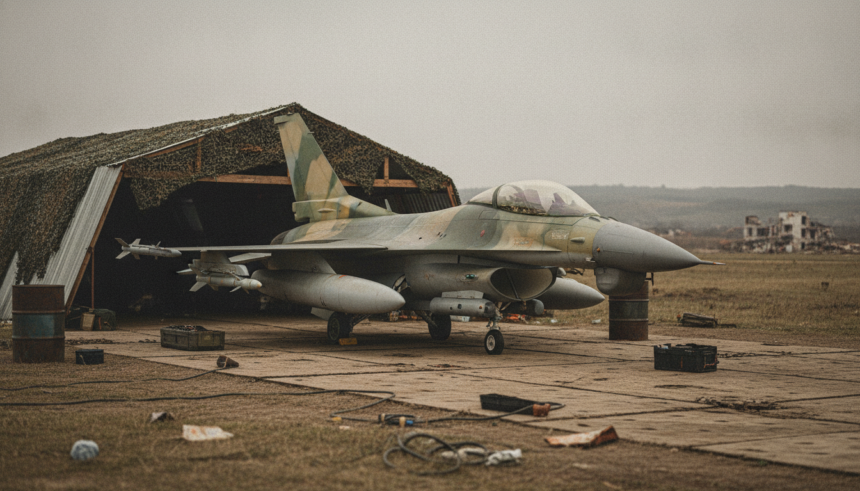
KYIV / LONDON — October 29, 2026. In late October, Denmark rushed more than 50,000 rounds of 20mm cannon ammunition to Ukraine, according to reporting by Defence Industry Europe — a delivery driven not by missile shortages but by gun ammunition shortages. The F-16 Fighting Falcon, first delivered to Ukraine in 2024, is now valued in this war for its cannon rather than its radar-guided missiles. The reason is arithmetic: Russia’s jet-powered Geran variants fly fast enough to outrun cheaper interceptors, while a single AIM-120 AMRAAM can cost up to five times the drone it destroys. Consequently, Ukrainian pilots closed the range and started using the gun. This report sets out the threat that forced the change, the tactic itself, the officially reported interception numbers, the October 2026 allied resupply, and the maintenance ceiling that now limits how many sorties the fleet can fly.
About this report. Written by the INQ Daily Defence Desk, which covers armed conflict, air defence and arms transfers for INQ Daily’s world affairs coverage. Reporting is assembled from Ukrainian Air Force and General Staff statements, allied defence ministry announcements and specialist defence press, with every figure attributed to a named source and date. Edited and fact-checked October 29, 2026. Corrections: [email protected].
Transparency note: kill, interception and fleet figures in this report come from Ukrainian military and allied government statements and cannot be independently verified by INQ Daily. Russian defence ministry claims differ substantially. INQ Daily has no commercial relationship with Lockheed Martin, FN Herstal or any supplier named here. All figures are current as of October 29, 2026.
How the F-16 Fighting Falcon Became Ukraine’s Drone Interceptor
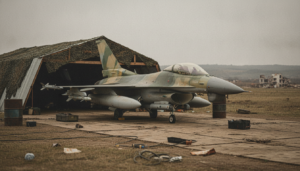
Ukraine is using the F-16 Fighting Falcon against drones because the threat changed faster than the air defence architecture could. The jets entered service in 2024 to defend cruise-missile corridors; by 2026 the dominant danger was mass one-way attack drones, therefore the mission migrated from missile defence to drone interception.
The airframe suited the job for one reason: speed and climb rate. Ground-based short-range systems defend fixed points, which means they cover geography only where they physically sit. A fighter covers a corridor. As a result, a single jet substitutes for air defence density Ukraine does not have and cannot buy at the scale the raids demand.
From delivery to drone hunter: the 2024-2026 timeline
- 2024: First F-16s arrive from European donors and enter air-defence duty against cruise missiles and Shahed-type drones.
- 2025: Sortie rates rise as mass drone raids replace single large missile salvoes.
- Summer 2026: Russia introduces jet-powered Geran-4 and Geran-5 variants, compressing interception windows.
- Mid-2026: Pilots shift from AIM-120 and AIM-9 shots to 20mm M61A1 Vulcan cannon passes to preserve missile stocks.
- September 29, 2026: Lt. Gen. Anatolii Kryvonozhko reports more than 3,150 aerial targets downed by F-16 crews.
- October 2026: Denmark, Belgium and Poland announce 20mm ammunition and airframe packages as roughly half the fleet sits in maintenance.
The outcome is a reversal of the aircraft’s design logic. A jet built to fight manned fighters beyond visual range now spends its sorties chasing airframes that cost a fraction of its own hourly operating bill. Ukraine accepts that trade because the alternative is strikes landing on substations and generating plants heading into winter.
The Jet-Powered Geran Threat That Forced the Change
Ukraine had reached roughly a 95% interception rate against propeller-driven Shahed/Geran-2 drones. Russia therefore changed the input rather than the volume, fielding jet-powered Geran-4 and Geran-5 variants from the summer of 2026.
The Geran-4 reaches speeds of up to 600 km/h (373 mph) — more than three times the speed of the propeller-driven Geran-2/Shahed-136, according to Army Recognition’s analysis of the variants. The consequence is geometric rather than technical: detection-to-engagement time collapses, which means Ukraine’s domestically produced interceptor UAVs and older short-range air defence mounts are simply outrun before they can close.
| Variant | Propulsion | Reported top speed | Primary Ukrainian counter |
|---|---|---|---|
| Shahed-136 / Geran-2 | Propeller | Roughly 180 km/h | Interceptor UAVs, mobile fire groups, SHORAD |
| Shahed-238 | Not stated | Not stated | Layered air defence and tactical aviation |
| Geran-4 | Jet | Up to 600 km/h (373 mph) | F-16, Mirage 2000 and MiG-29 fighters |
| Geran-5 | Jet | Up to 600 km/h (373 mph) | Tactical aviation; details not disclosed |
The effect was to push interception upward into tactical aviation — F-16s, Mirage 2000s and MiG-29s — because those are the only platforms with the speed to close on a 600 km/h target away from a defended point. Fighter pilots consequently absorbed a mission that Ukraine’s air defence planners had assigned to cheaper systems.
Scale matters here too. Ukrainian air defences intercepted over 4,700 drones and missiles in September 2026 alone, including 2,722 Shahed-131/136 and 1,935 Shahed-238 airframes, per Institute for the Study of War tracking of the campaign. The older threat did not disappear; the fast variants were layered on top of it, which means Ukraine must defend against two speed regimes simultaneously with the same finite set of airframes and crews.
Why Ukrainian Pilots Traded AMRAAMs for the 20mm Vulcan Cannon
Pilots switched to the gun because a single AIM-9 Sidewinder or AIM-120 AMRAAM can cost up to five times the drone it destroys, and global stocks of both are finite — spending a scarce guided missile on a cheap one-way airframe loses the exchange twice over.
The cost-per-kill arithmetic
The attacker wins this exchange by forcing an expensive response. Because Russia can produce Geran airframes faster than allied industry replaces AMRAAM and Sidewinder rounds, every missile intercept transfers the attrition problem from Russia’s production line to Ukraine’s supply line. That is a losing structure regardless of hit rate. Consequently the M61A1 Vulcan — a six-barrel rotary cannon firing 20mm rounds that cost a fraction of a guided missile — became the rational weapon against targets that do not shoot back. The gun has no seeker to defeat, no datalink to jam and no procurement queue measured in years. Its limitation is range, which is precisely why the tactic demands so much of the crews.
What cannon intercepts demand from pilots and airframes
The trade-off is real and Ukrainian officials have not disguised it. A gun pass requires closing to visual range, frequently at night, against a small, fast, low-flying target — which raises collision and debris-ingestion risk and compresses the decision window to seconds. The M61A1 delivers a short burst, so a miss means re-attacking at speed and low altitude, repeatedly, inside the same raid. As a result the tactic consumes pilot hours, airframe fatigue life and engine cycles at rates no peacetime maintenance schedule anticipated. That cost does not show up in kill totals. It shows up in the serviceability figures discussed later in this report, and it is the reason Ukraine’s requests to allies now centre on depot capacity as much as on hardware.
The Numbers: What Ukraine’s F-16 Fleet Has Shot Down
Ukrainian commanders credit the F-16 Fighting Falcon with more than 3,150 aerial targets downed since 2024, a figure Air Force commander Lt. Gen. Anatolii Kryvonozhko reported on September 29, 2026 and published by The Kyiv Independent.
| Metric | Reported figure | Date reported | Source |
|---|---|---|---|
| Total aerial targets downed by F-16 pilots | More than 3,150 | Sept 29, 2026 | Lt. Gen. Kryvonozhko / Kyiv Independent |
| Drones downed by F-16 pilots | Approximately 2,500 | Sept 29, 2026 | Lt. Gen. Kryvonozhko / Kyiv Independent |
| Cruise missiles downed by F-16 pilots | 666 | Sept 29, 2026 | Lt. Gen. Kryvonozhko / Kyiv Independent |
| Geran-4 jet drones downed, three-month period | Almost 60% | Oct 27, 2026 | Ukraine’s General Staff / Ukrainska Pravda |
| Peak Geran-4 interception rate, single raid | Up to 80% | Oct 27, 2026 | Ukraine’s General Staff / Ukrainska Pravda |
| All drones and missiles intercepted, Sept 2026 | Over 4,700 | September 2026 | Institute for the Study of War |
| Shahed-131/136 intercepted, Sept 2026 | 2,722 | September 2026 | Institute for the Study of War |
| Shahed-238 intercepted, Sept 2026 | 1,935 | September 2026 | Institute for the Study of War |
The trend line cuts both ways. Ukraine’s General Staff said on October 27, 2026 that defence forces downed almost 60% of Geran-4 jet drones over the previous three months, reaching up to 80% in individual raids — evidence that the learning curve is real and that crews and controllers have adapted to the faster profile. But a 60% average also means roughly four in ten fast drones still reach their aim points. That residual is why Ukrainian requests to allies have narrowed to two items: ammunition and serviceable airframes.
Allies Rush 20mm Ammunition and More Airframes
The move to cannon intercepts created demand for a commodity no NATO member had stockpiled for a drone war — 20mm Vulcan ammunition — and European capitals therefore moved within weeks rather than the months typical of aid packages.
| Donor | Contribution | Date announced | Status |
|---|---|---|---|
| Denmark | More than 50,000 rounds of 20mm ammunition | Late October 2026 | Delivery rushed |
| Belgium | 10 F-16s by end-2026; FN Herstal 20mm rounds | Oct 16, 2026 | Aircraft pledged; ammunition in negotiation |
| Poland | €50m package: 2 MiG-29s, interceptor missiles, 20mm rounds | Oct 29, 2026 | Confirmed by Ministry of National Defence |
Belgium’s revision is the most consequential of the three. Prime Minister Bart De Wever raised the Belgian pledge from three aircraft to ten by the end of 2026 on October 16, 2026, and opened talks on 20mm rounds produced by FN Herstal, according to Militarnyi. That matters because European-manufactured gun ammunition removes Ukraine’s dependence on a single transatlantic pipeline for the one munition its drone-intercept tactic now consumes fastest. Poland’s €50 million package, confirmed by its Ministry of National Defence on October 29, 2026 and reported by The Odessa Journal, follows the same logic by bundling cannon rounds with interceptor missiles and two MiG-29s.
These packages address throughput, not the structural constraint. Rounds and airframes raise sortie potential only if Ukraine can keep the jets flyable — which is where the fleet’s real ceiling sits.
Maintenance Attrition and the Proposed ‘Ukraine-Specific’ F-16
President Volodymyr Zelenskyy said in early October 2026 that roughly half of Ukraine’s F-16 fleet was grounded or in Europe for long-term repair, per Euromaidan Press. That figure is a direct consequence of the tactic: high sortie rates combined with low-altitude, high-g cannon work fatigue airframes considerably faster than peacetime maintenance cycles assume.
The industrial response came late in the month. Defence Minister Evgeniy Khmara and Commander-in-Chief Mykhailo Drapatyi met a Lockheed Martin delegation in late October 2026 to request expanded in-country maintenance capability, because every jet ferried to a European depot is a jet absent from the night air-defence roster for months rather than days. Lockheed Martin is also reportedly weighing a variant tailored to Ukraine’s mission profile.
What a Ukraine-specific F-16 variant would reportedly include
- Extended-range AESA radar to detect low-flying drones earlier in the engagement window
- Integration of European-made weapons to reduce reliance on US munitions stocks
- Expanded in-country maintenance and overhaul capacity to cut depot time in Europe
- Concept stage only, dependent on approval from Washington, with no published schedule or cost
The qualification is important. The specialised variant remains conceptual, requires United States government approval for export and integration, and no timeline or funding has been published. Therefore it changes nothing about the winter of 2026-2027, during which Ukraine will fly the aircraft it already has, with the serviceability rate it already has.
Frequently Asked Questions
How many drones have Ukraine’s F-16s shot down?
Ukrainian F-16 pilots have downed more than 3,150 aerial targets since 2024, including roughly 2,500 drones and 666 cruise missiles. Air Force commander Lt. Gen. Anatolii Kryvonozhko released the figures on September 29, 2026. The totals are state-reported, and INQ Daily cannot independently verify them, because wartime claims are not subject to third-party audit.
Why do Ukrainian F-16 pilots use cannons instead of missiles against drones?
Because a single AIM-9 Sidewinder or AIM-120 AMRAAM can cost up to five times the drone it destroys, and global missile stocks are limited. Firing guided missiles at cheap one-way attack drones depletes a scarce resource faster than allied industry replaces it. Pilots therefore close to visual range and use the jet’s 20mm M61A1 Vulcan rotary cannon, which cuts cost per kill sharply.
What is a Geran-4 drone and how fast is it?
The Geran-4 is a jet-powered Russian one-way attack drone capable of up to 600 km/h (373 mph) — more than three times the speed of the propeller-driven Geran-2/Shahed-136. Russia began fielding it in volume in summer 2026. The speed increase compresses detection-to-intercept time, which is why slower interceptor UAVs and older short-range air defences struggle against it.
Is the F-16 effective against drones?
Yes, but with limits. Ukraine’s General Staff said on October 27, 2026 that defence forces downed almost 60% of incoming Geran-4 jet drones over the previous three months, reaching 80% in some individual raids. The F-16 Fighting Falcon has the speed to catch jet drones that ground systems miss, yet roughly four in ten still reach their targets, and gun intercepts accelerate airframe wear.
How many F-16s does Ukraine have in 2026?
Ukraine does not publish its fleet size, and INQ Daily does not estimate it. What officials have confirmed: President Zelenskyy said in early October 2026 that around half the fleet was grounded or undergoing long-term repair in Europe. Belgium pledged on October 16, 2026 to deliver ten aircraft by the end of 2026, up from an initial commitment of three.
Who is supplying 20mm ammunition for Ukraine’s F-16 cannons?
Denmark, Belgium and Poland all moved in October 2026. Denmark rushed more than 50,000 rounds of 20mm ammunition in late October. Belgium is negotiating supply of Vulcan rounds made by FN Herstal. Poland confirmed a €50 million package on October 29, 2026 that includes two MiG-29s, interceptor missiles and additional 20mm ammunition, because cannon intercepts consume rounds faster than existing stocks allow.
Is Lockheed Martin building a special F-16 for Ukraine?
Not yet — the idea is at concept stage. Lockheed Martin is reportedly weighing a Ukraine-tailored variant with an extended-range AESA radar for earlier low-altitude drone detection and integration of European weapons. The programme requires US government approval and has no published timeline, funding or production commitment, which means it has no bearing on the 2026-2027 winter air campaign.
Why does Ukraine use fighter jets for air defence instead of ground-based systems?
Because ground-based short-range systems cover fixed areas and cannot be deployed densely enough across a country of Ukraine’s size. Jet drones flying at 600 km/h cross the gaps between batteries faster than those batteries can be repositioned. Fighters supply mobile coverage over corridors that lack it, and as a result tactical aviation absorbed a mission originally assigned to SHORAD and interceptor UAVs.
Limitations of the Evidence — and the Alternatives Ukraine Is Weighing
Claims about the F-16 Fighting Falcon’s performance in this war come from Ukrainian Air Force, General Staff and allied government statements, are released selectively during active hostilities, and have not been independently audited. Russian defence ministry figures contradict them. Readers should treat every total in this report as an official claim with a named source and a date attached, not as a verified measurement.
What the numbers do not show matters as much as what they do. Totals of “aerial targets” aggregate drones, cruise missiles and decoys, which means cost-effectiveness per sortie cannot be calculated from public data. Loss figures for Ukrainian F-16s are not published in comparable detail.
What public reporting cannot establish
- Ukrainian F-16 fleet size, serviceability rate and combat losses in verifiable detail
- Breakdown of kills by weapon — cannon versus AIM-9 versus AIM-120
- Cost per intercept, since ammunition and donated airframe values are not disclosed
- Russian production rates for Geran-4 and Geran-5 airframes
Alternatives exist and Ukraine is pursuing several in parallel: purpose-built interceptor drones, gun-based and directed-energy ground systems, electronic warfare and jamming, and accepting a degree of leakage while hardening infrastructure. Each is cheaper per engagement than a fighter sortie. None currently matches a jet’s ability to reach a 600 km/h target away from a defended point — therefore the F-16 functions as a stopgap rather than a solution. Because manned fighters will remain the expensive side of this exchange, the durable answer is cheaper interception, and allied ammunition packages buy Ukraine time rather than parity.
Conclusion
The F-16 Fighting Falcon has become the backbone of Ukraine’s defence against jet-powered attack drones, and in doing so has been pushed backwards through four decades of air combat doctrine. Faster targets plus scarce, costly missiles forced a regression from beyond-visual-range engagements to short bursts from a 20mm rotary cannon at visual range — a tactic that works, by Ukraine’s own reported numbers, roughly 60% of the time against the Geran-4.
The binding constraint is not ammunition and not pilot skill. It is serviceability: with roughly half the fleet grounded or in European depots as of early October 2026, output depends on how quickly Ukraine can repair jets at home. Three markers will indicate whether that improves. Whether Belgium delivers all ten promised airframes by the end of 2026. Whether the Lockheed Martin discussions produce in-country depot capacity rather than a concept study. And whether the Geran-4 interception rate holds above 60% through the 2026-2027 winter.
References
- The Kyiv Independent — Ukrainian F-16 pilots’ reported totals, Lt. Gen. Anatolii Kryvonozhko, September 29, 2026. Link
- Ukrainska Pravda — General Staff statement on Geran-4 interception rates, October 27, 2026. Link
- Army Recognition — jet-powered Geran-4 and Geran-5 performance and tactical impact. Link
- Defence Industry Europe — Danish delivery of more than 50,000 rounds of 20mm ammunition, late October 2026. Link
- Militarnyi — Belgian pledge of ten F-16s and FN Herstal ammunition talks, Prime Minister Bart De Wever, October 16, 2026. Link
- The Odessa Journal — Polish Ministry of National Defence €50 million package, October 29, 2026. Link
- Euromaidan Press — President Zelenskyy on fleet serviceability and Lockheed Martin discussions, October 2026. Link
- Institute for the Study of War — September 2026 Ukrainian interception totals. Link