
Table of Contents
- Inside the Zurich FIFA Council meeting of 15 October 2026
- What the FIFA Forward Enterprise proposal was, and why it collapsed
- What the $6.35 billion FIFA solidarity plan actually funds
- $25 million per association: how the money is split
- Where the $6.35 billion comes from: the 2023-2026 surplus
- Confederation reaction: UEFA, CONCACAF and the AFC
- Why the timing points to the November 18 candidacy deadline
- The governance review and what happens before December 2026
- Frequently asked questions
- What this story does not yet establish
- The bottom line
- References
ZURICH, 15 October 2026 | By the INQ Daily world affairs desk | Published 16 October 2026 | Last updated 16 October 2026
The Infantino apology delivered to the FIFA Council in Zurich on 15 October 2026 closed the FIFA Forward Enterprise affair and opened a $6.35 billion spending plan. Infantino apologised for “errors made in the conduct and communication” of the scheme to sell stakes in FIFA competitions to private investors. The proposal is permanently withdrawn. In its place FIFA proposes the FIFA Surplus Solidarity Programme — $6.35bn for 2027-2030, $25m to each of 211 member associations. Ratification is scheduled for December 2026, three weeks after the 18 November presidential candidacy deadline.
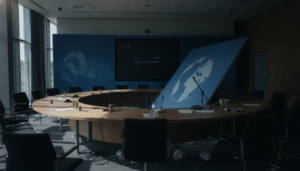
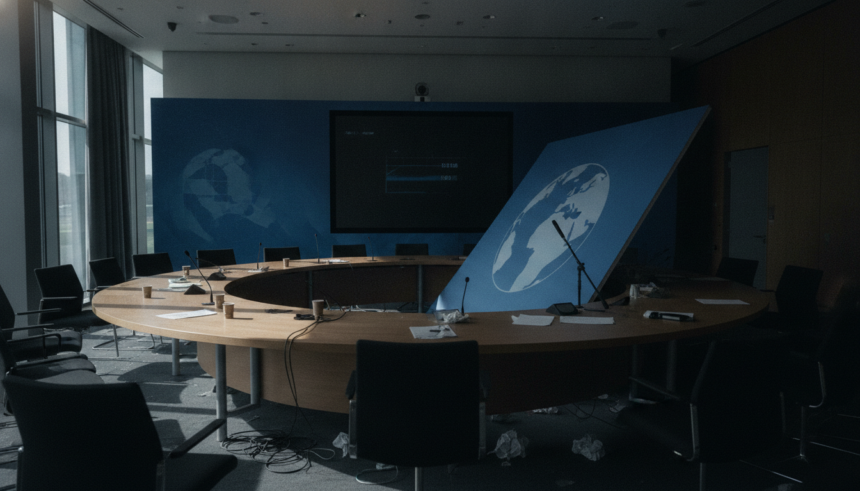
ZURICH, 15 October 2026 — The Infantino apology delivered by video to a closed-door FIFA Council meeting at FIFA’s Zurich headquarters was followed within the same session by a $6.35 billion solidarity proposal, announced after the collapse of the FIFA Forward Enterprise plan to sell stakes in FIFA’s premium competitions to private investors.
The causal spine runs backwards from there. The FIFA Forward Enterprise leaked in early August 2026, which triggered a confederation rebellion led by UEFA, CONCACAF and the Asian Football Confederation and cost Infantino his working council majority. As a result, the spending plan functions as both reparation and political insurance ahead of the 18 November 2026 candidacy deadline — a sequence worth following in INQ Daily world affairs coverage.
Reporting note: This account rests on FIFA’s own release of 15 October 2026, on independent reporting of the closed session, and on the subsequent on-the-record remarks of named council members. The financial figures are FIFA’s unaudited forecasts and are labelled as such throughout.
Inside the Zurich FIFA Council meeting of 15 October 2026
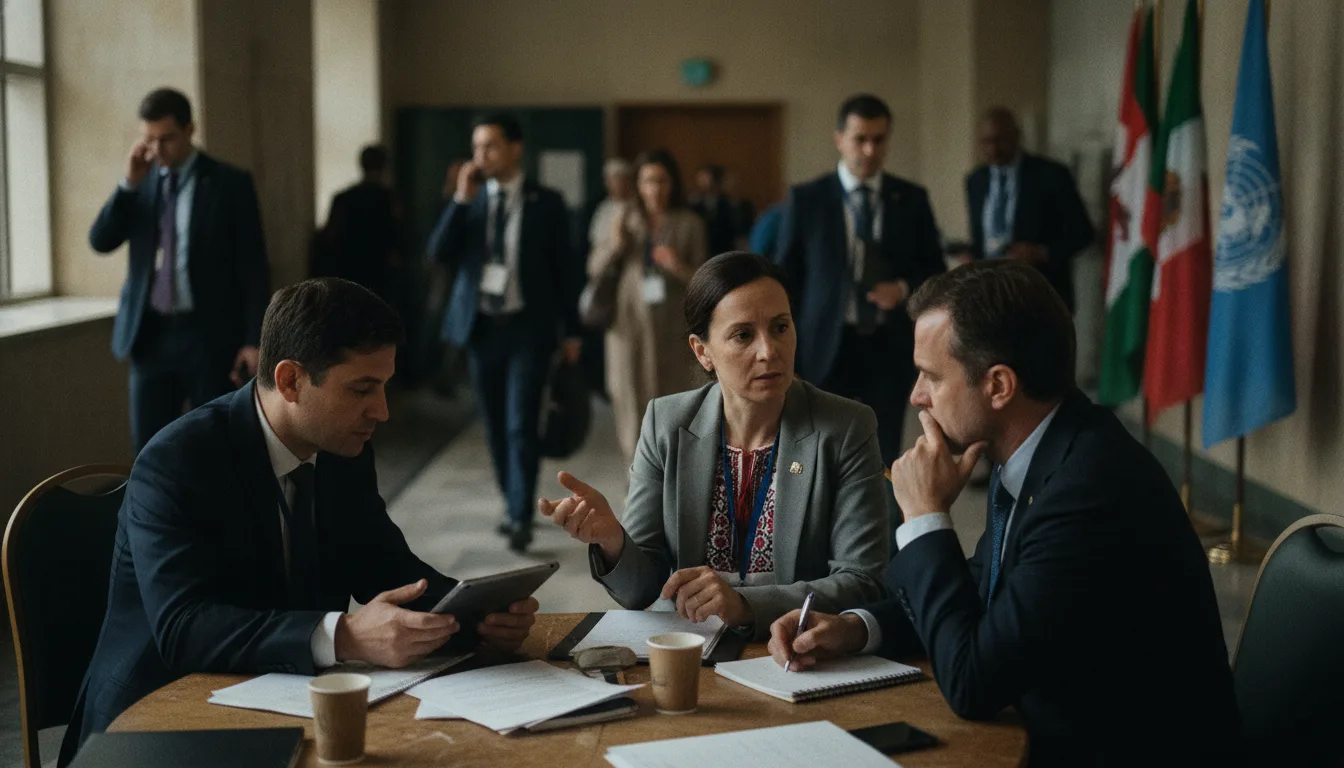
Infantino apologised by video statement to the 37-member FIFA Council at FIFA’s Zurich headquarters on 15 October 2026, in his first appearance before the body since the scandal broke. The session was held behind closed doors. The Infantino apology was therefore delivered to the same council whose confederation blocs had spent two months demanding answers, and in some cases his departure.
He apologised for “errors made in the conduct and communication” of the project, according to FIFA’s statement of 15 October 2026 and independent reporting of the session by The Athletic. What he did not apologise for matters as much. Infantino defended the underlying intent, describing the FIFA Forward Enterprise as a proposal to help FIFA invest more in its member associations rather than a decision already taken — which means the apology addressed process rather than substance.
“errors made in the conduct and communication”
— Gianni Infantino, FIFA president, video statement to the FIFA Council, Zurich, 15 October 2026
The procedural outcome was unambiguous. Infantino confirmed the proposal had been permanently withdrawn and would not be reintroduced, and as a result the council’s agenda moved directly to the solidarity package within the same session.
What the FIFA Forward Enterprise proposal was, and why it collapsed
The FIFA Forward Enterprise (FFE) was a plan to sell stakes in FIFA’s premium competitions, including the FIFA World Cup, to private sector investors. The scheme was authored under Infantino’s presidency and, according to FIFA’s own account, was intended to raise capital for investment in member associations. A completed World Cup stake sale would have transferred a commercial interest in FIFA’s single most valuable property to outside shareholders.
The plan leaked in early August 2026, which triggered an immediate rebellion by UEFA, CONCACAF and the Asian Football Confederation. Because those confederations control the bulk of council seats, the rebellion removed Infantino’s working majority, and consequently the project was withdrawn rather than put to a vote. Several confederation leaders went further than objection and demanded his departure outright. Al Jazeera reported on 14 October 2026 that Infantino arrived in Zurich to face what it described as FIFA rebels — framing that supports the claim that the president had lost control of the room before he spoke.
Not every council member read the failure the same way. Ahmed Yahya, president of the Mauritanian Football Federation, argued that the original project served the interests of the game and that the flaw lay in how it was managed and communicated rather than in the concept itself.
How the FIFA Forward Enterprise collapsed: August to October 2026
- Early August 2026 — details of the FIFA Forward Enterprise leak, revealing a plan to sell stakes in FIFA competitions including the World Cup to private investors
- August 2026 — UEFA, CONCACAF and the Asian Football Confederation object publicly; several leaders call for Infantino’s departure
- September 2026 — the rebellion costs Infantino his working majority on the 37-member FIFA Council, therefore no vote is tabled
- 14 October 2026 — Infantino arrives in Zurich to face council critics, reported by Al Jazeera as a confrontation with “FIFA rebels”
- 15 October 2026 — Infantino apologises by video statement and confirms the proposal is permanently withdrawn and will not be reintroduced
What the $6.35 billion FIFA solidarity plan actually funds
The FIFA Surplus Solidarity Programme allocates $6.35 billion to football development across the 2027-2030 cycle, more than doubling previous FIFA development funding, according to FIFA’s announcement of 15 October 2026. FIFA names women’s football, youth development, infrastructure and long-term regional projects as the target areas.
The package exists because the expanded 48-team 2026 World Cup produced commercial returns above FIFA’s own projections, resulting in a forecast surplus large enough to fund a distribution of this size while retaining reserves. The causal chain is straightforward: more teams meant more matches, more matches meant a larger broadcast and sponsorship inventory, and the effect of that expansion is the number on the table.
| Item | Figure or detail | Status |
|---|---|---|
| Total package | $6.35bn | Proposed |
| Cycle covered | 2027-2030 | Proposed |
| Payout per member association | $25m | Proposed |
| Member associations covered | 211 | Confirmed |
| Target areas | Women’s football, youth, infrastructure, regional projects | Announced |
| Ratification date | FIFA conference, December 2026 | Scheduled |
The programme is a proposal scheduled for ratification at the FIFA conference in December 2026, which means no money moves before 2027. Until that vote, the $6.35 billion is a commitment of intent rather than an approved budget line.
$25 million per association: how the money is split
Each of FIFA’s 211 member associations is set to receive $25 million across the 2027-2030 cycle, regardless of size, population or on-field performance, according to FIFA. Because payouts are equal, the Cayman Islands Football Association and the German Football Association receive the same $25 million, and consequently the relative gain is far larger for small federations whose annual budgets are a fraction of that sum — a point emphasised in regional coverage outside Europe by Leadership Nigeria.
Infantino supplied his own benchmark: each association received $1 million when he took office a decade ago. That comparison describes a twenty-five-fold increase in per-association FIFA development funding across roughly ten years, driven by World Cup commercial growth rather than by any new revenue stream.
| Measure | At Infantino’s election (2016) | 2027-2030 proposal |
|---|---|---|
| Funding per member association | $1m | $25m |
| Allocation basis | Not stated | Equal, per association |
| Number of associations covered | Not stated | 211 |
| Approval status | Historical | Pending December 2026 vote |
One qualification belongs with the headline figure: the $25m is a per-cycle total rather than an annual payment, and FIFA has not published the disbursement conditions attached to it.
Where the $6.35 billion comes from: the 2023-2026 surplus
The money is drawn from an unaudited forecast surplus of $5.2 billion to $5.6 billion for FIFA’s 2023-2026 financial cycle, generated principally by the 48-team 2026 World Cup, which expanded the match inventory and consequently the broadcast and sponsorship base.
The arithmetic deserves scrutiny. The proposed $6.35 billion distribution exceeds the upper bound of that unaudited forecast surplus, and FIFA also intends to retain $1.7 billion in hard reserves. Which means the programme depends on audited results landing at or above forecast, and on reserves accumulated in earlier cycles. FIFA has not published a reconciliation between the two numbers. Trade reporting by Tribal Football corroborates the figures as announced, but corroboration of an announcement is not verification of an account.
FIFA states the purpose of the hard reserves as protection against unforeseen global circumstances. Reserves of that scale exist because the 2023-2026 cycle ran without a major revenue interruption — the first full commercial cycle in recent memory to do so.
The money, and what remains unverified
- Forecast surplus, 2023-2026 cycle: $5.2bn-$5.6bn — unaudited FIFA forecast, not independently verified
- Hard reserves to be retained: $1.7bn — stated by FIFA as protection against unforeseen global circumstances
- Principal revenue driver: the expanded 48-team 2026 World Cup, whose commercial returns exceeded FIFA’s own projections
- Not published: an audited account, or a reconciliation between the forecast surplus and the $6.35bn commitment
Confederation reaction: UEFA, CONCACAF and the AFC
The apology did not restore confidence among European federation leaders, who said the council received critical questions but no satisfactory answers. Bernd Neuendorf, president of the German Football Association, said the council asked “a great many critical questions” but received “no satisfactory answers”, as reported by RFI on 15 October 2026. Therefore the rift between UEFA’s leading federations and Infantino remains open rather than closed by the Zurich session.
The second European position goes further. Debbie Hewitt, president of the English FA, echoed Neuendorf and reportedly said trust in Infantino had been lost, calling for new figures to bring fresh ideas to the federation. That signals a shift in posture: part of UEFA’s leadership appears prepared to back a challenger rather than extract concessions from the incumbent.
The reaction was not uniform. Ahmed Yahya of the Mauritanian Football Federation defended the original project’s intent, and ESPN reported that the FIFA board expressed “full support” for the president. Both accounts can be accurate at once, because support for the office and dissatisfaction with the conduct are not mutually exclusive in a 37-member body whose voting blocs differ sharply by region.
| Figure | Role | Stated position |
|---|---|---|
| Bernd Neuendorf | German Football Association | Critical — “no satisfactory answers” |
| Debbie Hewitt | English FA | Critical — trust lost, wants new figures |
| Ahmed Yahya | Mauritanian Football Federation | Supportive of the project’s intent |
| FIFA board (collective) | Governing board | “Full support” per ESPN |
Why the timing points to the November 18 candidacy deadline
The Infantino apology and the $6.35 billion plan arrived in the same session five weeks before the FIFA presidential candidacy deadline of 18 November 2026, and the sequencing is not coincidental. The voting mechanics explain why: under the FIFA Statutes in force in 2026, each of FIFA’s 211 member associations holds one vote in the FIFA presidential election, which means a federation with a few thousand registered players carries the same weight as Germany or England. Because the $25 million payout is equal and unconditional, its political value is concentrated precisely among the members whose votes are cheapest to consolidate.
The consequence follows directly. A challenger emerging before 18 November 2026 would have to campaign against a pledge already attached to every voter’s balance sheet. Therefore the plan raises the cost of mounting a challenge, even though UEFA’s leading federations have publicly withdrawn their confidence in the incumbent.
Three qualifications keep the analysis honest. FIFA has presented the programme as the product of World Cup commercial success rather than as electoral strategy. No council member has alleged vote-buying on the record. And the December ratification date falls after the candidacy deadline, which means the money is promised before it is approved.
The governance review and what happens before December 2026
FIFA has announced a broader governance review in response to the FIFA Forward Enterprise fallout, with three fixed dates ahead. The review was opened as a direct result of the FFE affair, according to FIFA’s statement of 15 October 2026. What is not known is more substantial than what is: terms of reference, chair and reporting date have not been published, which means the review’s independence cannot yet be assessed.
The causal link to the withdrawal defines the review’s likely central question. Because the proposal advanced far enough to leak in early August 2026 before the council had considered it, the obvious line of inquiry is how a plan to sell stakes in FIFA competitions reached that stage without council authorisation. A governance review that does not answer that question will not satisfy the federations that forced the withdrawal.
What happens next: the FIFA calendar
- 18 November 2026 — deadline for submitting FIFA presidential election candidacies
- December 2026 — FIFA conference votes on ratifying the $6.35bn FIFA Surplus Solidarity Programme
- After ratification — publication of audited 2023-2026 accounts, which will confirm or contradict the $5.2bn-$5.6bn surplus forecast
- 2027-2030 — disbursement cycle for the $25m per member association, subject to conditions FIFA has yet to publish
- Date unset — findings of the FIFA governance review opened in response to the FIFA Forward Enterprise affair
Frequently asked questions
What did Gianni Infantino apologise for at the FIFA Council meeting in Zurich?
He apologised for “errors made in the conduct and communication” of the FIFA Forward Enterprise proposal. The statement was delivered by video to the 37-member council at FIFA’s Zurich headquarters on 15 October 2026. He did not disavow the plan’s intent, only its handling, describing it as a proposal rather than a decision. FIFA confirmed the proposal is permanently withdrawn.
What is the FIFA Surplus Solidarity Programme?
A proposed $6.35 billion football development package for the 2027-2030 cycle. FIFA states it is funded from the unaudited forecast surplus for the 2023-2026 cycle, with $25 million going to each of 211 member associations. Target areas are women’s football, youth development, infrastructure and long-term regional projects. Ratification is scheduled for December 2026.
How much money will each FIFA member association receive?
$25 million across the four-year 2027-2030 cycle, if the plan is ratified in December 2026. Payouts are equal for all 211 associations regardless of size or performance. Infantino compared this with the $1 million allocated to each association when he took office a decade ago. Disbursement conditions have not been published by FIFA.
Where does the $6.35 billion come from?
From FIFA’s unaudited forecast surplus of $5.2bn-$5.6bn for the 2023-2026 financial cycle. The surplus is driven by commercial returns from the expanded 48-team 2026 World Cup, which exceeded FIFA’s own projections. FIFA will separately retain $1.7bn in hard reserves. The accounts remain unaudited, therefore the final figure can still move.
Why was the FIFA Forward Enterprise plan withdrawn?
Because UEFA, CONCACAF and the Asian Football Confederation rebelled after the plan leaked in August 2026, removing Infantino’s council majority. Several confederation leaders demanded his departure. As a result, FIFA withdrew the proposal permanently rather than putting it to a council vote. Infantino confirmed on 15 October 2026 that it will not be reintroduced.
Did FIFA ever sell a stake in the World Cup?
No. The FIFA Forward Enterprise was a proposal to sell stakes in FIFA’s premium competitions, including the World Cup, to private sector investors. It never reached a council vote. It was permanently withdrawn, and Infantino confirmed that status in his video statement of 15 October 2026. No stake was transferred to any investor.
How much is FIFA keeping in reserves?
$1.7 billion in “hard reserves”. FIFA states these protect the organisation against unforeseen global circumstances. The reserve sits outside the $6.35bn solidarity allocation rather than within it. The figure comes from FIFA’s own unaudited forecast for the 2023-2026 cycle and will be tested when the audited accounts are published.
When will the $6.35 billion plan be approved?
Ratification is scheduled for the FIFA conference in December 2026. The plan remains a proposal until that vote. Disbursement would then run across the 2027-2030 cycle. The vote falls roughly three weeks after the 18 November 2026 presidential candidacy deadline, which means the pledge precedes both the deadline and the approval.
Is Infantino’s position as FIFA president still secure?
It is contested but not lost. ESPN reported the FIFA board expressed full support, while Bernd Neuendorf said critical questions went unanswered and Debbie Hewitt said trust had been lost. Equal voting weight across 211 member associations favours the incumbent. The position will be clearer after the 18 November 2026 candidacy deadline.
What did FIFA Council members say after the apology?
Reactions split along regional lines. Neuendorf, of the German Football Association, said the council received “no satisfactory answers”. Hewitt, of the English FA, said trust had been lost and called for new figures. Ahmed Yahya, of the Mauritanian Football Federation, defended the project’s intent as serving the game. The board collectively voiced support, per ESPN.
What this story does not yet establish
The FIFA Council session of 15 October 2026 was closed to media, therefore every account of the apology rests on FIFA’s own release and on participants’ subsequent remarks. The central financial figures are FIFA’s forecasts of its own performance, published by an interested party ahead of a vote it wants to win.
Open questions as of 16 October 2026
- The 2023-2026 surplus is unaudited; the audited figure could fall below the $5.2bn lower bound, which would force the $6.35bn allocation to be revised
- FIFA has not published a reconciliation showing how a $6.35bn distribution and $1.7bn in retained reserves are both funded from the forecast surplus
- No conditions, milestones or audit requirements attached to the $25m per-association payments have been released
- The governance review has no published terms of reference, chair or reporting date, therefore its independence cannot be assessed
- No council member has alleged on the record that the solidarity plan is tied to the presidential election; the timing analysis in this article is INQ Daily’s assessment, not a reported claim
- No challenger has declared ahead of the 18 November 2026 candidacy deadline
The bottom line
The Infantino apology cost FIFA nothing; the plan that followed it commits $6.35 billion. Because the apology addressed conduct rather than the principle of selling stakes in FIFA competitions, the governance question survives the FIFA Forward Enterprise withdrawal intact. Consequently the December 2026 ratification vote and the 18 November candidacy deadline will settle whether the money buys the unity the apology did not.
Two tests will decide how this is read a year from now: the audited 2023-2026 accounts, which either validate the forecast surplus or shrink it, and the terms of reference of the governance review, which will show whether FIFA intends to examine how the plan got as far as it did. More from INQ Daily.
References
- FIFA — official statement and media release on the FIFA Council meeting, Zurich, 15 October 2026:
- FIFA Statutes, edition in force 2026 — composition of the FIFA Council and voting rights of member associations:
- The Athletic / The New York Times — Infantino apologises to FIFA Council, 15 October 2026:
- Al Jazeera — Infantino faces FIFA rebels in Zurich, 14 October 2026:
- RFI — Infantino apologises but offers “no answers”, 15 October 2026:
- ESPN — FIFA board voices “full support” for Infantino, 15 October 2026:
- Tribal Football — reporting on the FIFA Surplus Solidarity Programme figures, 15-16 October 2026:
- Leadership Nigeria — coverage of per-association development funding and small-federation reaction, October 2026: